Wide-Set Eyes: Meaning, Self-Check, and Styling Options
Learn what wide-set eyes mean, try a simple spacing self-check, account for photo distortion, and explore optional makeup and brow effects.
Wide-set eyes is an everyday description for eyes whose inner-corner gap appears greater than the visible width of one eye. This one-eye-width comparison is a visual guideline, not a medical standard or a measure of attractiveness.
Eye spacing is separate from eye shape, eyelid structure, and corner tilt. Naturally wide spacing can be part of ordinary facial variation. The label is most useful for describing proportions or choosing styling effects, not judging how eyes should look.
How to tell if your eyes look wide set
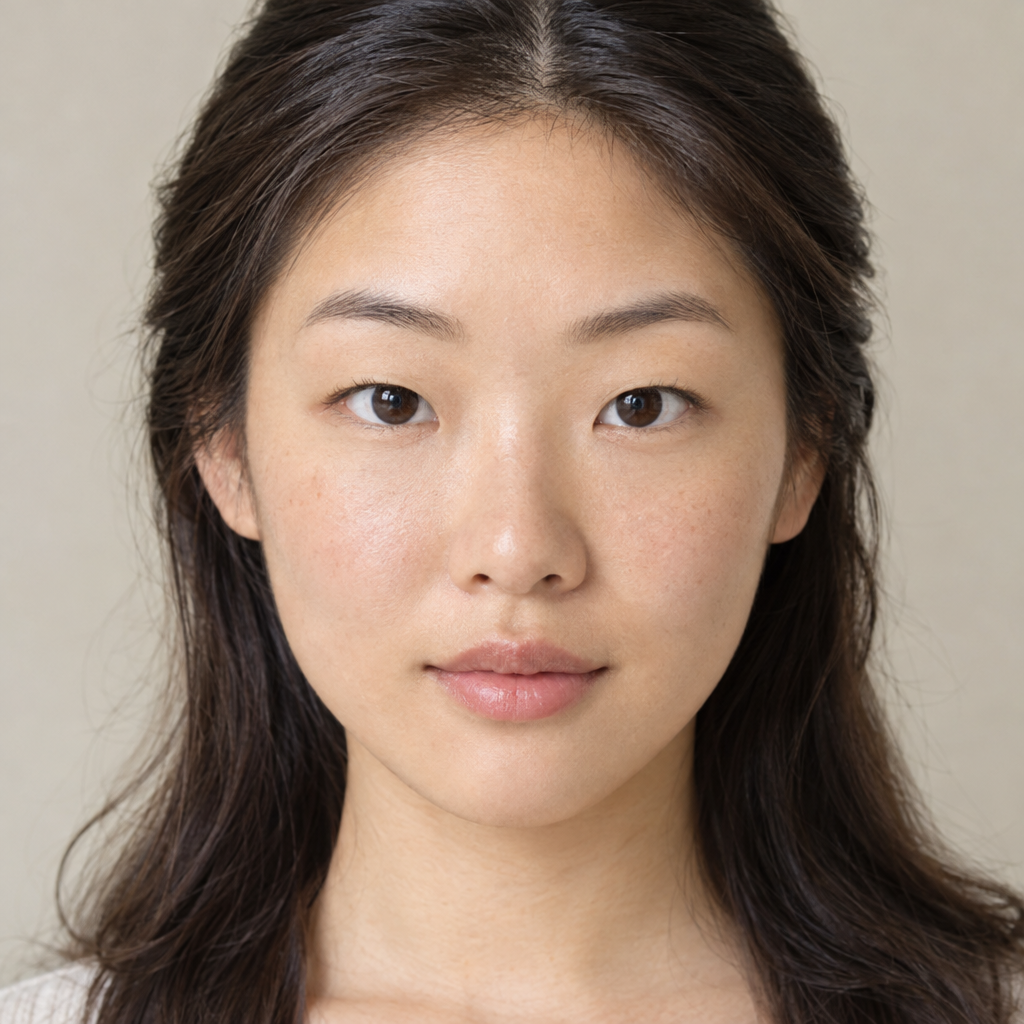
A relaxed, straight-on comparison is usually enough for ordinary styling decisions. Use these three steps:
-
Face forward with a relaxed, level gaze. Look in a mirror at a comfortable viewing distance, or use a straight-on portrait taken from farther away than a close selfie. Keep your head upright without turning, raising your eyebrows, squinting, or deliberately widening your eyes.
-
Compare the inner-corner gap with both eye widths. The gap runs between the two inner corners nearest your nose. Each visible eye width runs horizontally from that eye’s inner corner to its outer corner. Exclude lashes, eyeliner, and shadow from the comparison.
-
Use the average width and interpret conservatively. If the eyes differ only slightly in visible width, add their widths and divide by two. Describe the spacing as visually wide set only when the inner-corner gap is clearly greater than that average. If the difference is small or difficult to see, “borderline” or “roughly one eye-width apart” is more useful than forcing a label.
For example, suppose the visible eye openings measure 30 and 32 units. Their average width is 31 units. A 40-unit inner-corner gap would be clearly larger in that image, while a 32-unit gap would be a near-tie and would not support a confident wide-set classification. These comparisons are illustrative only. They are not validated numerical thresholds or clinical cutoffs.
Averaging is less useful when one opening looks noticeably narrower than the other. First check for head rotation, squinting, a partly obscured inner corner, uneven gaze, or hair and glasses covering a landmark. If the openings remain difficult to compare in a clear, relaxed view, leave the spacing unclassified rather than forcing a result through averaging.
The one-eye-width rule is a guideline, not a universal standard
This rule compares two things that vary naturally: the space between the eyes and the width of the visible eye openings. Someone with narrower openings may appear more widely spaced under this rule than someone with wider openings, even if their inner-corner gaps are similar.
Two facial measurements are worth distinguishing:
- Intercanthal distance: the distance between the inner eye corners.
- Interpupillary distance: the distance between the centers of the pupils.
The everyday one-eye-width check concerns the inner-corner gap, not pupil distance. Looking at where the pupils sit is not a substitute for locating the inner corners.
Neither a selfie nor this cosmetic guideline provides a clinical measurement or a medical conclusion. There is also no universal “ideal” gap that every face should match. The comparison offers descriptive language, not a standard of normality or beauty.
Eye spacing is different from eye outline and eyelid anatomy
Several descriptions can apply to the same eyes because they describe different features.
| Feature | What you observe | Example descriptions |
|---|---|---|
| Eye spacing | Inner-corner gap relative to eye width | Wide, close, roughly one-width apart |
| Eye outline | Contour of the visible opening | Almond, round, mixed |
| Eyelid structure | Crease visibility and lid coverage | Monolid, visible crease, hooding |
| Canthal tilt | Outer corner’s height relative to inner | Upward, level, downward |
Wide spacing does not tell you whether an opening is round or elongated, whether an eyelid crease is visible, or whether the outer corners sit higher than the inner corners.
For example, “wide-set, almond-shaped eyes with hooding” combines three separate observations. That is more informative than treating “wide set” as a complete classification.
Why your eyes may look farther apart in some photos
Apparent spacing can change between a mirror, a portrait, and a close selfie without any change in the underlying anatomy. Before relying on one image, consider these variables:
- Close-camera perspective. A nearby camera changes the apparent relationship between central and outer facial features. Wide-angle lenses, particularly near the frame edges, can introduce additional distortion. Moving the camera farther away is generally more helpful than judging a tightly framed selfie.
- Gaze direction. Looking sideways changes pupil and iris positions within the openings. This may alter your impression of spacing even though the inner corners remain in place.
- Visible eye-opening width. Squinting, widened eyes, expression, and partial obstruction change the outline you are comparing. A relaxed gaze gives a more useful reference.
- Nasal bridge appearance. The bridge’s contours and shadows frame the space between the eyes. That framing can make the same gap seem more or less prominent.
- Eyebrow and makeup placement. Brow beginnings, extended eyeliner, inner-corner highlight, and concentrated shadow redirect attention. Their visual effects should not be mistaken for a change in spacing.
- Glasses and hair. Frame bridges, lens effects, and hair covering the sides of the face can change how the eye area relates to the rest of the portrait.
There is also an important landmark issue: epicanthal folds, which are folds of skin near the inner corners, can partly cover a corner and affect where the visible opening appears to begin. This makes an appearance-based comparison less precise. Do not pull the skin aside or guess a hidden endpoint. If the corner is unclear, treat the result as uncertain.
A useful perception check: compare a relaxed mirror view with a normal-distance portrait. If the impression changes noticeably, use “looks wider in this photo” rather than assuming the photo reveals a fixed proportion.
Makeup and brow choices for different visual effects
Styling can draw attention toward the center, extend the eyes outward, or leave spacing relatively unobtrusive. None of these effects is a correction. Choose according to the look you enjoy.
For a more centered impression
Adding visual weight near the inner third of the eyes can make the gap appear less prominent. Try a small amount of softly blended, medium-depth shadow on the inner third of the upper lid, or subtle definition along the inner upper lash line.
Keep the effect on the external lid and away from the tear duct. A little definition may be enough. A dense block of shadow can dominate a small amount of visible lid space.
Brow placement can support the same effect. If you have sparse hairs at the natural beginnings of your brows, light, hairlike strokes there can concentrate attention toward the center. You do not need to extend the brows far beyond their natural boundaries.
For an outward, elongated effect
A longer eyeliner wing or shadow concentrated beyond the outer corner draws attention laterally. This can make the eye area appear more spread out, although the result depends on the rest of the makeup.
An emphasized brow arch or tail can reinforce that outward movement. This approach suits someone who wants to highlight elongation or create a more dramatic outer-eye effect, regardless of their natural spacing.
For a more neutral effect
Follow the upper lash line with a relatively even line and keep the outer extension short. Blend shadow without strongly concentrating it at either end.
Inner-corner highlight is not a reliable “closer” or “farther apart” switch. Brightness attracts attention to the inner eye area, but its effect on perceived spacing depends on the size of the highlight, its intensity, and the surrounding shadow. A small satin accent reads differently from a broad reflective patch.
A simple choice framework is:
- Want a centered impression? Add subtle inner-third definition and softly defined brow beginnings.
- Want outward emphasis? Focus liner, shadow, or brow definition toward the outer ends.
- Want little emphasis on spacing? Keep definition balanced and extensions modest.
Adapt placement to your eye outline and visible lid space. Check the result with your eyes open and your expression relaxed, since makeup that looks balanced on a closed lid may sit differently during everyday wear.
Wide-set eyes are not a clinical diagnosis
“Wide-set eyes” is neutral appearance language. Telecanthus and orbital hypertelorism are clinical concepts with different meanings:
- Telecanthus concerns increased distance between the inner eye corners, without necessarily increased distance between the bony eye sockets.
- Orbital hypertelorism concerns increased separation of the bony eye sockets.
Both require appropriate measurements and professional context. Neither can be identified from a selfie or the one-eye-width guideline. An appearance label should not be used to infer either condition.
Stable spacing that has always been part of your appearance is often simply facial variation. Looking widely spaced, by itself, is not a reason to assume a health problem.
A noticeable new change, injury, double vision, or difficulty with vision deserves medical advice rather than cosmetic measurement. Sudden double vision, vision loss, severe eye pain, or a significant eye injury warrants urgent assessment.
What eye spacing can and cannot tell you
Eye spacing describes one visual relationship within a face. It can be useful when discussing makeup, eyewear, or how facial proportions appear in a portrait, but it does not objectively determine attractiveness, personality, ethnicity, or health.
There is no universal ideal proportion that every face should match. If your spacing looks close to the one-eye-width reference, a flexible description is enough. You do not need a precise category to make styling choices you like.