CHECK YOUR FACIAL SYMMETRY
Face Symmetry Checker
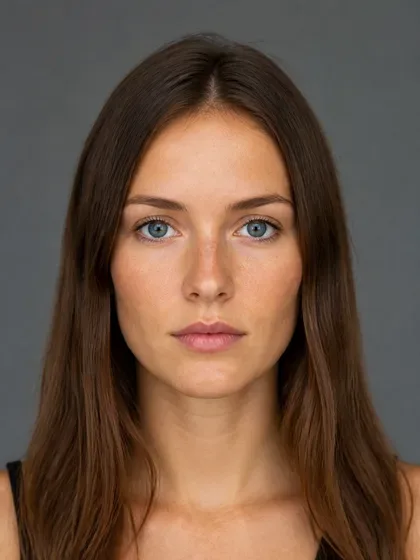
Upload one selfie to explore your facial symmetry. Compare the left and right sides of your face and discover visible differences between your features.


Use a clear, front-facing selfie with good lighting and your face fully visible.
How it works
How it works
- 01
Upload Your Selfie
Choose a clear, front-facing photo where your entire face is visible. Keep your head straight and use a neutral expression for the most representative comparison.
- 02
Compare Your Facial Features
Facefy examines visible relationships between the left and right sides of your face, including the positioning and proportions of key facial features.
- 03
Explore Your Facial Symmetry
Discover where your face appears relatively balanced and where natural differences between the two sides may be visible.
Guide
How Symmetrical Is Your Face?
No human face is perfectly symmetrical.
Look closely enough at almost anyone and you will find small differences between the left and right sides. One eye may sit slightly higher. One eyebrow may have a different curve. One side of the jaw may appear a little more angular than the other.
Most of these differences are completely ordinary.
Facefy's Symmetry Checker helps you explore those visible relationships from your own photo.
Instead of simply asking whether your face is “symmetrical” or “asymmetrical,” the more interesting question is where the similarities and differences appear.
Facial symmetry is not an all-or-nothing characteristic.
Some areas of your face may appear highly balanced while others show more noticeable variation. Your photograph can also influence how symmetrical you appear, which makes image selection especially important.
The goal of a face symmetry test is not to find a perfectly mirrored face.
It is to understand the natural balance of your own features.
What Is Facial Symmetry?
Facial symmetry describes how closely the features on one side of the face correspond with those on the other.
Imagine a vertical line running through the center of your face.
You could compare the position of the left eye with the right eye, the shape of each eyebrow, the two sides of the nose, the corners of the mouth and the outline of the jaw.
If both sides were perfectly identical, the face would have perfect bilateral symmetry.
Real faces do not work like that.
Human development produces natural variation, and the two sides of a face are rarely exact mirror images.
That means a useful facial symmetry analysis looks at degrees of similarity and difference rather than trying to decide whether a face passes or fails a symmetry test.
Why Is My Face Asymmetrical?
Small facial asymmetries can arise naturally from the way your features develop.
The shape and position of the eyes may differ slightly. Eyebrows can grow differently. The nose may not align perfectly with the center of the face. The jaw can have small left-to-right variations.
Muscle movement also contributes.
Most people do not use both sides of their face in exactly the same way when smiling, talking or making expressions.
Even a supposedly neutral expression may contain subtle differences.
This is one reason you may suddenly notice asymmetry in a photograph that you had never noticed in the mirror.
The camera freezes one fraction of a second, making small differences easier to inspect.
That does not mean those differences dominate how other people perceive your face in everyday life.
Which Facial Features Can Be Compared?
Facial symmetry can be explored across several regions rather than reduced to one measurement.
Eyes
The eyes can differ slightly in height, openness, orientation or visible eyelid area.
If you want to explore your eye characteristics separately, Facefy's Eye Shape tool provides a more focused analysis.
Eyebrows
One eyebrow may naturally sit higher or have a different arch from the other. Facial expression can make this difference more noticeable.
Nose
The nose sits near the central axis of the face, so small deviations can influence the overall impression of symmetry.
Mouth
The corners of the mouth may sit at slightly different heights, particularly when smiling or speaking.
Jawline
The left and right sides of the lower face may differ in width, contour or visible definition.
Facefy's Jawline Rating can be used if you want to examine the lower face more specifically.
Together, these features create the overall impression of facial balance.
Is One Side of Your Face Different From the Other?
Probably at least slightly.
One interesting way to notice natural facial asymmetry is to compare photographs created by mirroring each half of a face.
If you take the left half and reflect it to create a complete face, then do the same with the right half, the two resulting images can look surprisingly different.
That happens because the original face contains subtle variations between its sides.
But those mirrored images are artificial.
People normally see your complete face, not two identical copies of its left or right half.
This distinction matters.
A facial symmetry checker can reveal differences that are difficult to notice casually, but finding those differences does not mean they are visually important in normal interactions.
Why Do I Look Different in the Mirror and in Photos?
This is one of the most common reasons people become curious about facial symmetry.
You are accustomed to seeing your mirror image.
A photograph may show the non-mirrored version of your face instead.
Because your face has natural left-to-right differences, reversing the image changes the arrangement you are used to seeing.
To everyone else, the non-mirrored orientation may look completely normal.
To you, it can feel strange simply because it is less familiar.
Smartphone apps can make this even more confusing because some camera previews are mirrored while the saved image may be flipped.
So if you suddenly notice that one eyebrow, eye or side of your mouth looks different in a photograph, part of the reaction may come from seeing an unfamiliar orientation of your own face.
Camera Angle Can Create Apparent Facial Asymmetry
A symmetry test depends heavily on the photograph you use.
If your head is rotated even slightly, one side of the face becomes closer to the camera.
That can make it appear larger.
One eye may seem wider, one cheek may appear more prominent and the jawline may look different on each side.
Head tilt creates another problem.
If one side of the face is higher than the other in the image, the eyes and eyebrows may appear vertically misaligned even when the difference is primarily caused by pose.
This is why a casual selfie taken from the side is not ideal for checking facial symmetry.
For a cleaner comparison, your face should be positioned as straight toward the camera as possible.
Lighting Can Change How Symmetrical Your Face Looks
Symmetry is not only about physical outlines.
Shadows influence how we perceive facial structure.
If a strong light source comes from your left, that side of your face may appear brighter and flatter while the opposite side contains deeper shadows.
Those shadows can change the apparent size and definition of the cheeks, eyes, nose and jaw.
The underlying facial structure has not changed, but the photograph may look less balanced.
For a symmetry check, even lighting is therefore preferable.
Natural daylight facing a window can work well, provided direct sunlight is not creating strong shadows across one side of the face.
You do not need studio lighting.
You simply want both sides of your face to be similarly visible.
Facial Symmetry and Eye Position
The eye area is often one of the first places where people notice natural asymmetry.
One eye might appear slightly higher.
One may look more open.
The eyelid crease may be more visible on one side.
The outer corner of one eye may also appear to have a slightly different orientation.
But be careful when interpreting these differences.
Eyebrow movement, squinting, head position and perspective can all change the appearance of the eye area.
If the specific orientation of your eyes interests you, Facefy's Canthal Tilt tool examines the relationship between the inner and outer eye corners.
For broader classification, use the Eye Shape tool.
Symmetry, eye shape and canthal tilt are related areas of facial analysis, but they are not interchangeable measurements.
Facial Symmetry and Your Jawline
The lower face is another area where left-to-right differences can become visible.
One side of the jaw may appear slightly wider or more angular.
The chin may not align perfectly with the visual center of the face.
Muscle development and the way you hold your jaw can also affect its appearance in a photograph.
Lighting is especially important here because shadows underneath and beside the jaw can exaggerate differences.
If your main interest is the structure of your lower face rather than overall symmetry, Facefy's Jawline Rating provides a more specific look at jaw shape, width and visible definition.
The Symmetry Checker instead considers the jaw as one part of the broader left-to-right facial comparison.
Facial Symmetry vs. Facial Proportions
Symmetry and proportion are often discussed together, but they describe different characteristics.
Symmetry compares the two sides of the face.
Facial proportions compare the relative size and positioning of different facial regions and features.
For example, your left and right eyes could be positioned very similarly, creating strong symmetry in that area, while the overall distance between your eyes and other features is a question of proportion.
Likewise, a face can have harmonious proportions without being perfectly symmetrical.
If you are interested in how different measurements relate to one another across the face, Facefy's Facial Ratios provides a more relevant analysis.
Understanding the distinction prevents one facial characteristic from being mistaken for another.
Facial Symmetry vs. the Golden Ratio
The golden ratio is another concept frequently associated with facial aesthetics.
It involves comparing proportional relationships rather than simply comparing the left and right sides of a face.
A symmetry score therefore does not tell you whether your facial proportions correspond with golden-ratio-based models.
And a face that appears relatively symmetrical does not automatically match any particular proportional formula.
If you are curious about that specific concept, Facefy's Golden Ratio Face tool explores it separately.
It is best to treat these tools as different ways of examining facial geometry rather than multiple versions of the same beauty score.
Does Facial Symmetry Determine Attractiveness?
Facial symmetry has been studied in relation to how people perceive faces, but attractiveness cannot be reduced to symmetry alone.
A perfectly mirrored face is not automatically the most attractive possible face.
In fact, artificially creating a face from two identical halves can sometimes produce an appearance that feels less natural than the original.
Real faces contain character, expression and small differences between sides.
Attractiveness is also influenced by many other factors, including overall facial structure, expression, styling and individual preference.
Cultural and personal differences further complicate any attempt to define one universal standard.
So a high or low symmetry result should not be interpreted as an objective attractiveness score.
If you specifically want to explore appearance from that broader angle, Facefy's Attractiveness Test addresses a different question.
Is a Perfectly Symmetrical Face Better?
Not necessarily.
Perfect symmetry sounds appealing as a mathematical idea, but human faces are biological structures, not computer-generated geometric objects.
Natural variation is expected.
Some asymmetries may even contribute to what makes a face recognizable.
When you smile, for example, your expression may not move identically on both sides. That asymmetry becomes part of the way your expressions look.
The objective of a face symmetry checker should therefore not be to tell you how far you are from “perfection.”
A better use is to observe how your features relate across both sides and understand your own facial structure more clearly.
Can Facial Symmetry Change With Age?
Your visible facial balance can change over time.
Skin, soft tissue and facial contours naturally change with age, and these changes may not occur identically on both sides.
But comparing photographs taken years apart can be misleading if the images use different lighting, angles, expressions or cameras.
Even photographs taken on the same day can show different apparent symmetry if your head position changes.
If your primary question is about age rather than symmetry, Facefy's Face Age is designed to estimate apparent age from a photo.
The two analyses answer fundamentally different questions.
What Photo Should You Use for a Face Symmetry Test?
The best image is a straightforward front-facing portrait.
Your entire face should be visible, and your head should be centered rather than rotated or tilted.
Try to keep a neutral expression.
A broad smile can intentionally move facial features and may make left-to-right differences more noticeable.
For the clearest comparison:
- Face the camera directly.
- Keep your head level.
- Look straight ahead.
- Use even lighting.
- Keep your full face visible.
- Use a relaxed expression.
- Avoid strong beauty filters.
- Avoid extreme camera angles.
- Use a sharp, recent photograph.
Do not worry about producing a perfectly clinical image.
A normal, clear selfie under neutral conditions is enough.
Explore Your Facial Structure Beyond Symmetry
Facial symmetry tells you about the relationship between the two sides of your face, but it does not describe everything about your facial structure.
Your overall outline can be explored with the Face Shape Detector.
Your lower facial structure can be examined with the Jawline Rating.
You can explore proportional relationships with Facial Ratios or investigate golden-ratio-based comparisons with Golden Ratio Face.
For a broader overview rather than focusing on one characteristic at a time, use Facefy's Face Report.
Your face does not need to be perfectly symmetrical to be distinctive, balanced or attractive.
The interesting part is discovering the combination of characteristics that makes it uniquely yours.
FAQ
Frequently asked questions
What is facial symmetry?
Facial symmetry describes how closely the features and contours on one side of the face correspond with those on the other side.
How can I check my face symmetry?
Upload a clear, front-facing photograph to Facefy's Symmetry Checker. Keeping your head straight and using even lighting helps reduce differences caused by the photo itself.
Is anyone's face perfectly symmetrical?
Perfect facial symmetry is extremely uncommon. Small differences between the left and right sides are a normal part of human facial variation.
Why is one side of my face different from the other?
Natural development, facial structure and muscle movement can all contribute to visible differences. Camera angle, expression and lighting can make them appear more pronounced in photographs.
Why does my face look asymmetrical in photos but normal in the mirror?
You are accustomed to your mirrored appearance. Photographs may show your face in the opposite orientation, making familiar asymmetries suddenly more noticeable.
Can camera angle make my face look more asymmetrical?
Yes. Rotation, head tilt and short camera distances can change apparent facial proportions. A straight, front-facing photograph is preferable for symmetry analysis.
Is facial symmetry the same as facial proportions?
No. Symmetry compares the left and right sides of the face, while facial proportions examine relationships between different facial regions. You can explore these separately with Facefy's Facial Ratios.
Does a symmetrical face mean an attractive face?
Not necessarily. Symmetry is only one characteristic of facial appearance, and attractiveness cannot be objectively determined from symmetry alone.
Is facial symmetry related to the golden ratio?
They are different concepts. Symmetry compares corresponding sides, while golden-ratio analysis considers proportional relationships. Facefy's Golden Ratio Face explores that separately.
What photo should I upload?
Use a clear, recent, front-facing photo with even lighting, a natural head position and minimal filtering.
Can I analyze my whole face instead of only symmetry?
Yes. Facefy's Face Report provides a broader overview, while the Face Shape Detector, Jawline Rating and Eye Shape let you explore individual characteristics in more detail.
Explore how balanced your face looks left to right
Upload one selfie to compare both sides of your face and spot visible symmetry differences.
Check my symmetryNo signup required · Your photo stays private