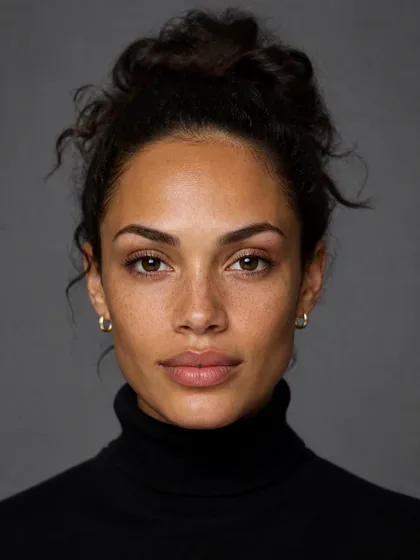
GET YOUR COMPLETE FACE ANALYSIS
AI Face Report
Upload one selfie for a complete AI face analysis. Explore your face shape, symmetry, proportions, jawline, eyes, and other facial characteristics.


Use a clear, front-facing selfie with good lighting and your face fully visible.
How it works
How it works
- 01
Upload Your Selfie
Choose a clear, front-facing photo where your entire face is visible. Use neutral lighting and avoid strong filters or extreme camera angles.
- 02
Analyze Your Facial Features
Facefy examines multiple visible characteristics across your face rather than focusing on a single feature or measurement.
- 03
Discover Your Face Report
Explore your results and learn more about your face shape, proportions, symmetry, eyes, jawline and other facial characteristics.
Guide
Discover What Your Face Says About Your Features
Your face contains far more information than a single score or measurement can describe.
You have an overall face shape, but also individual proportions within that shape.
Your eyes have their own structure and orientation.
Your jawline creates the outline of your lower face.
The two sides of your face contain natural similarities and differences.
All of these characteristics work together to create your appearance.
Facefy's Face Report brings multiple areas of facial analysis into one broader experience.
Instead of checking only your face shape or receiving a single face rating, you can upload a photo and explore several visible characteristics of your face together.
Think of it as your starting point for understanding your facial structure.
If one part of your report particularly interests you, you can then continue to Facefy's specialized tools for a more focused analysis.
What Is an AI Face Report?
An AI Face Report analyzes visible facial characteristics from a photograph and organizes the results into an easy-to-understand overview.
The key difference between a Face Report and a single-purpose facial tool is scope.
A face-shape tool focuses on your facial outline.
A symmetry tool compares the two sides of your face.
A jawline tool concentrates on the lower facial structure.
The Face Report takes a broader view.
This is useful if you are starting with a simple question such as:
“What can I learn about my face?”
Rather than deciding which characteristic to analyze first, the report gives you an overview and lets you explore from there.
What Can a Face Analysis Tell You?
Facial analysis can describe visible characteristics and relationships within a photograph.
Depending on the analysis, this can include areas such as:
- overall face shape,
- facial proportions,
- visible symmetry,
- jaw structure,
- eye characteristics,
- feature relationships,
- apparent facial age,
- and broader appearance-related observations.
Each category describes something different.
That matters because facial analysis becomes less useful when every characteristic is compressed into one generic score.
Knowing that your face appears oval, for example, tells you something completely different from knowing how symmetrical your features appear.
The Face Report gives you the broader picture while Facefy's individual tools let you explore specific characteristics in greater depth.
Discover Your Face Shape
One of the most recognizable aspects of facial structure is face shape.
Common categories include oval, round, square, heart, diamond and oblong.
Your face shape is influenced by the relationship between areas such as your forehead, cheekbones, jaw and overall facial length.
For example, a relatively broad jaw can contribute to a squarer appearance, while a narrower lower face may create more taper toward the chin.
But face-shape categories are simplifications.
Two people can both have oval faces and still look completely different because their internal facial proportions and features differ.
Your Face Report can provide broader context around your facial structure.
If you specifically want to identify and understand your shape in more detail, continue to Facefy's Face Shape Detector.
Explore Your Facial Symmetry
Human faces are naturally asymmetrical.
One eye may sit slightly higher than the other.
One eyebrow may have a different curve.
The two sides of the jaw may not create perfectly identical outlines.
These differences are normal.
Facial symmetry analysis explores the relationship between corresponding areas on the left and right sides of your face.
It does not determine whether your face is “good” or “bad,” and perfect symmetry should not be treated as a requirement for attractiveness.
The photograph itself can also influence apparent symmetry.
Head rotation, lighting and expression may make natural differences look more pronounced.
If this part of your Face Report interests you, Facefy's Symmetry Checker lets you examine left-to-right facial balance more specifically.
Understand Your Facial Proportions
Facial proportions describe how different dimensions of the face relate to one another.
Instead of simply asking whether a feature is large or small, proportional analysis places it in context.
A jaw can appear broad relative to the cheekbones.
The face can appear relatively long compared with its width.
Different vertical facial regions can occupy different proportions of the total face.
These relationships contribute to your overall facial structure.
They also help explain why two people with seemingly similar individual features can still have very different appearances.
If you want to go deeper into these measurements, Facefy's Facial Ratios tool focuses specifically on proportional relationships across the face.
Explore Your Jawline
The jawline forms much of the lower boundary of the face.
Its shape can be angular, rounded, broad, narrow or tapered, with many variations between those descriptions.
Visible jaw definition can also change depending on lighting, head position and the photograph used.
The jaw does not exist independently from the rest of the face.
Its appearance is influenced by its relationship with the cheekbones, chin and overall facial width.
This is why Facefy's broader Face Report can be useful before examining the jaw in isolation.
If you want a more focused look at your lower facial structure, continue to the Jawline Rating.
Discover Your Eye Characteristics
Eyes are among the most distinctive facial features.
But describing the eye area requires more than simply identifying eye color.
Visible characteristics can include eye shape, eyelid structure, openness and orientation.
Common eye-shape descriptions include almond, round, hooded, monolid, upturned and downturned, although individual eyes can combine characteristics from more than one category.
Facefy's Eye Shape tool lets you explore this region in greater detail.
Another characteristic is canthal tilt, which describes the visible orientation between the inner and outer corners of the eye.
If that specific measurement interests you, continue to Facefy's Canthal Tilt analysis.
Explore How Old Your Face Appears
Your actual age and your apparent facial age are not necessarily the same thing.
A photograph can make someone appear younger or older depending on lighting, expression, styling and visible facial characteristics.
This is why apparent-age analysis should not be confused with biological or medical age.
It simply explores how old a face appears within a particular photograph.
If you are curious specifically about the question “How old do I look?”, Facefy's Face Age tool provides a dedicated apparent-age estimate.
The Face Report, by contrast, is designed to give you a broader picture of your facial characteristics rather than focusing on age alone.
Face Report vs. Face Rating
A face report and a face rating serve different purposes.
A rating reduces the experience to a simple result.
A report provides context.
If your main question is simply “What is my face score?”, Facefy's Rate My Face is designed around that direct experience.
The Face Report is more appropriate when you want to know why your face has the appearance it does.
Rather than focusing only on one number, it allows you to explore several individual characteristics.
The two experiences can therefore complement each other.
Start with a rating if you want something quick.
Use the Face Report when you want to understand more of the structure behind your appearance.
Face Report vs. Attractiveness Test
The Face Report should also be distinguished from an attractiveness test.
Facefy's Attractiveness Test is built around the specific question of perceived attractiveness.
The Face Report is broader and more descriptive.
Face shape is not inherently attractive or unattractive.
Eye shape is not inherently attractive or unattractive.
A facial ratio is simply a relationship between measurements.
Keeping these characteristics descriptive makes the report useful even if you have no interest in receiving an attractiveness score.
You can explore what your face looks like without turning every observation into a judgment about beauty.
Face Report vs. PSL Score
The PSL Score represents another specific type of facial-aesthetics experience.
PSL terminology is commonly associated with online communities that discuss facial structure and appearance through particular rating frameworks.
The Face Report is designed for a much broader audience.
You do not need to understand facial-aesthetics terminology.
You simply upload your photo and explore the visible characteristics of your face.
If you specifically want a PSL-style rating, use PSL Score.
If you want a broader analysis covering multiple areas without centering everything around one rating framework, Face Report is the better starting point.
Explore Your Golden Ratio
One famous concept in facial analysis is the golden ratio.
Approximately equal to 1.618, the golden ratio is a mathematical relationship that has been discussed in geometry, design, art and facial aesthetics.
Some facial-analysis methods compare selected facial proportions with golden-ratio-based references.
It is an interesting mathematical way to explore facial structure, but it should not be interpreted as a scientifically definitive formula for beauty.
Matching a mathematical ratio does not prove that a person is attractive.
If this concept interests you, Facefy's Golden Ratio Face provides a dedicated analysis rather than mixing golden-ratio comparisons into every part of your Face Report.
What Makes Every Face Different?
Even faces that share the same general shape can look dramatically different.
That happens because appearance comes from a combination of characteristics.
Imagine two people with square faces.
One may have rounder eyes and a relatively shorter lower face.
The other may have more hooded eyes, a broader jaw and different facial proportions.
The face-shape label is the same.
The complete faces are not.
The same principle applies to symmetry, ratios and individual features.
This is why a complete facial analysis is more interesting than trying to find one measurement that supposedly defines your entire appearance.
Your face is a system of relationships.
The Face Report helps you explore those relationships together.
Can a Face Report Tell You What Hairstyle Suits You?
Facial analysis can provide useful context when choosing a hairstyle.
The overall outline of your face, the visibility of your jaw and the proportions around the forehead and cheeks can all influence how different hairstyles frame your features.
But identifying facial structure and choosing a hairstyle are different tasks.
That is why Facefy provides dedicated styling tools.
Once you understand your face, use the Hairstyle Finder to explore haircut directions that may suit your appearance.
You can then visualize different styles on your own photo using the AI Hairstyle Try-On.
This turns facial analysis into something practical rather than leaving you with information you cannot use.
Explore Hair Colors That Complement Your Look
Hair color can also change the way your face is perceived.
Dark hair may create stronger contrast around certain complexions, while lighter hair can create a softer overall frame.
Warm and cool shades can interact differently with your natural coloring.
If your Face Report makes you curious about changing your appearance, you can explore possible color directions through Facefy's Color Analysis.
Then use the Hair Color Try-On to visualize different shades on your own photo.
Your underlying facial structure remains the same.
The styling surrounding it can create a very different overall impression.
Why the Photo You Upload Matters
Any analysis performed from a photograph depends on the visual information available in that photograph.
A close camera distance can alter apparent facial proportions.
Head rotation can change visible symmetry.
Strong side lighting can make one side of the jaw appear more defined than the other.
Expression changes the cheeks, eyes, eyebrows and mouth.
Beauty filters can go even further by modifying the apparent shape or position of features.
For this reason, your Face Report should be based on a relatively neutral image if you want a more representative overview.
You do not need a passport photograph.
You simply want to avoid conditions that significantly distort your normal appearance.
What Photo Should You Use for Your Face Report?
A straightforward, front-facing portrait is ideal.
Choose a recent photograph where your facial features are clearly visible.
For a cleaner analysis:
- Face the camera directly.
- Keep your head straight.
- Keep your full face visible.
- Use a relaxed expression.
- Choose even or natural lighting.
- Use a natural camera distance.
- Avoid extreme selfie angles.
- Avoid face-reshaping filters.
- Avoid heavily edited images.
- Use a sharp, good-quality photo.
Hair does not need to be completely pulled back, but your facial outline should be reasonably visible if you want the report to consider overall facial structure.
Can Your Face Report Change With Another Photo?
Yes.
Different photographs can create different visual representations of the same face.
This does not necessarily mean the analysis is contradicting itself.
If one photograph is taken extremely close to the camera and another from farther away, apparent proportions can change.
If you smile in one photograph and remain neutral in another, some features move.
Lighting can also alter visible contours.
Small differences between reports are therefore expected.
For the most meaningful comparison, use similar photographs taken under neutral conditions.
AI Face Analysis Has Limits
AI can identify and compare visible patterns in images, but it is important to understand what a face analyzer cannot determine from a selfie.
A photograph does not reveal your personality.
It cannot measure your intelligence.
It cannot determine your health.
It cannot establish your personal worth.
And appearance-based analysis should not be treated as a substitute for medical or professional assessment.
Facefy's Face Report is designed for appearance exploration.
It helps you examine visible facial characteristics in an accessible way.
Keeping that purpose clear makes the results much more useful.
One Report, Multiple Ways to Explore Your Face
The advantage of starting with the Face Report is that you do not need to know exactly what you want to analyze.
Upload your photo and begin with the broader picture.
Then follow whichever characteristic interests you.
Curious about your outline? Explore the Face Shape Detector.
Interested in left-to-right balance? Try the Symmetry Checker.
Want to understand proportional relationships? Open Facial Ratios.
Interested in your lower face? Continue to the Jawline Rating.
Want to explore your eyes? Use Eye Shape or Canthal Tilt.
The Face Report gives you the overview.
The specialized tools let you go deeper.
Go Beyond Facial Structure
Your face can also be explored from perspectives that are not primarily about geometry.
For example, Facefy includes an AI Ancestry Report experience for users curious about AI-based visual origin exploration.
This type of result should be understood differently from measurements such as facial ratios or symmetry.
A photograph cannot reliably determine your genetic ancestry, ethnicity or biological heritage. Real ancestry research requires evidence such as family records, genealogical research or DNA testing.
Face-based ancestry experiences are therefore best treated as entertainment and visual exploration rather than factual ancestry testing.
If that is the experience you are looking for, you can continue to Facefy's AI Ancestry Report after completing your facial analysis.
FAQ
Frequently asked questions
What is an AI Face Report?
An AI Face Report analyzes visible facial characteristics from a photograph and brings several areas of facial analysis into one broader overview.
What can Facefy analyze about my face?
Facefy provides tools for exploring characteristics including face shape, symmetry, facial proportions, jawline, eye shape, canthal tilt and apparent facial age.
How do I analyze my face online?
Upload a clear, front-facing photograph to Facefy's Face Report to begin exploring your visible facial characteristics.
Is an AI face analysis accurate?
AI can analyze visible patterns in a photograph, but results can be influenced by lighting, camera angle, expression and image quality. Facefy's tools are intended for appearance exploration rather than medical analysis.
Can Facefy tell me my face shape?
Yes. You can explore it in greater detail with Facefy's Face Shape Detector.
Can I check how symmetrical my face is?
Yes. Facefy's Symmetry Checker is specifically designed to explore visible left-to-right facial balance.
Can I analyze my facial proportions?
Yes. Use Facefy's Facial Ratios to explore proportional relationships between different areas of your face.
Is Face Report the same as Rate My Face?
No. Rate My Face focuses primarily on an overall face rating, while Face Report provides a broader analysis of multiple facial characteristics.
Can a Face Report tell me how attractive I am?
Face Report is primarily descriptive rather than an objective beauty judgment. If you specifically want an appearance-based rating experience, Facefy offers a separate Attractiveness Test.
What photo should I upload?
Use a recent, clear, front-facing photograph with even lighting, your full face visible and no strong face-altering filters.
Can AI determine my ancestry from my face?
A photo cannot reliably determine genetic ancestry or ethnicity. Facefy's AI Ancestry Report should be treated as an entertainment and visual-exploration experience rather than a substitute for DNA testing or genealogical research.
What should I explore after my Face Report?
You can continue into whichever feature interests you most, including Face Shape, Facial Ratios, Symmetry, Jawline Rating or the AI Ancestry Report.
Get your complete AI face analysis
Upload one selfie for shape, symmetry, proportions, jawline, eyes, and more in one report.
Build my face reportNo signup required · Your photo stays private