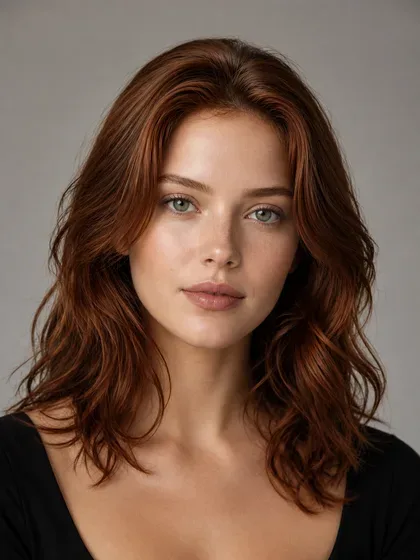
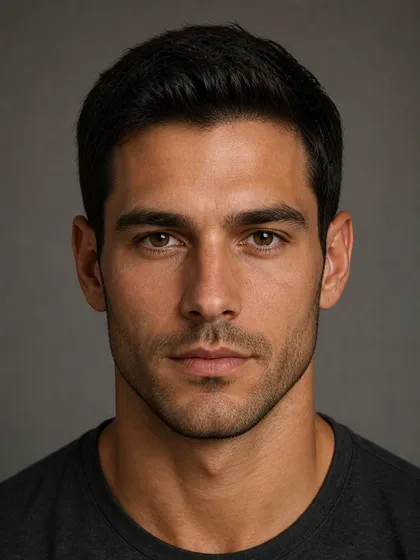
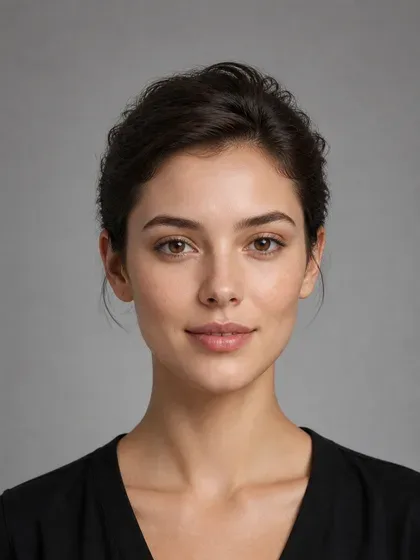
DISCOVER YOUR FACE SHAPE
Face Shape Detector
Upload one selfie to discover your face shape. Find out whether your face is oval, round, square, heart, diamond, or oblong.

Use a clear, front-facing selfie with good lighting and your face fully visible.
How it works
How it works
- 01
Upload Your Selfie
Choose a clear, front-facing photo where the outline of your face is easy to see. For the best result, keep your hair away from the sides of your face when possible.
- 02
Let Facefy Analyze Your Facial Proportions
Facefy examines visible characteristics such as the relative width of your forehead, cheekbones and jaw, along with the overall length and outline of your face.
- 03
Discover Your Face Shape
Explore your closest face-shape match and use it as a starting point for hairstyles, styling choices and other Facefy tools.
Guide
Find Your Face Shape From a Photo
Have you ever looked in the mirror and wondered: What is my face shape?
It sounds like a simple question, but determining your own face shape can be surprisingly difficult.
You may look round in one photograph and more oval in another. Your hairstyle can hide the sides of your forehead or jaw. Camera angles can change the apparent length of your face, while lighting and expression can make certain features look more or less prominent.
Facefy's Face Shape Detector gives you a simple way to explore your facial shape from a photo.
Instead of trying to compare yourself manually with dozens of diagrams, you can upload a clear selfie and examine how your overall facial proportions relate to common face-shape categories such as oval, round, square, heart, diamond and oblong.
Knowing your approximate face shape can then become a useful starting point for exploring hairstyles and understanding the overall structure of your face.
It is not about putting every face into a perfect box.
It is about understanding your proportions more clearly.
What Determines Your Face Shape?
Face shape is based on the overall outline and proportions of the face rather than one individual feature.
Several areas contribute to that outline.
The forehead can appear wider, narrower or similar in width to the lower face.
The cheekbones may form the widest point of the face or sit relatively close to the width of the forehead and jaw.
The jawline can appear rounded, tapered, angular or broad.
Finally, the relationship between the length and width of the face plays an important role in distinguishing longer face shapes from shorter or wider ones.
These characteristics work together.
For example, two people may both have prominent cheekbones, but one may have a narrow tapered jaw while the other has a broader jaw. Their overall face shapes may therefore be categorized differently.
This is why looking at only one feature is rarely enough.
If the lower part of your face is what interests you most, Facefy's Jawline Rating lets you explore your jawline separately.
Oval Face Shape
An oval face is generally characterized by a face length that is greater than its width, combined with relatively balanced proportions through the forehead, cheekbones and jaw.
The jawline usually appears softer rather than strongly angular.
Oval faces are often described as versatile when discussing hairstyles because their overall proportions can work visually with many different cuts and lengths.
However, having an oval face does not mean every hairstyle will automatically suit your preferences.
Hair texture, density, forehead visibility, personal style and maintenance requirements remain important.
The value of identifying an oval face shape is simply that it gives you a clearer description of the overall structure you are working with.
Round Face Shape
A round face typically appears relatively similar in length and width, with softer contours around the cheeks and jaw.
The cheeks may form one of the widest parts of the face, while the jawline generally appears less angular than in square or rectangular face shapes.
Hairstyles can influence how those proportions are visually framed.
Longer layers, changes in volume, fringe placement and hair length can all alter the overall impression without changing the actual structure of the face.
If you have a round face and want haircut inspiration, you do not need to search only for styles labeled “for round faces.”
Instead, use your face shape as one piece of information and explore the styles you genuinely like with Facefy's Hairstyle Finder.
Square Face Shape
A square face is generally associated with stronger angularity and relatively similar widths through several areas of the face.
The forehead, cheekbones and jaw may appear more closely aligned in width, while the jawline can look broader or more defined.
This does not mean every square face looks the same.
Some people have a very pronounced angular jaw, while others have softer transitions despite maintaining broadly square proportions.
Hair placement around the jaw and temples can noticeably change how those angles are emphasized.
If you want to see how different cuts interact with your facial outline, you can use Facefy's AI Hairstyle Try-On after identifying your approximate face shape.
Heart-Shaped Face
A heart-shaped face is commonly described as being wider through the upper part of the face and becoming narrower toward the chin.
The forehead may appear relatively broad, while the jawline tapers toward a smaller or more pointed chin.
Some heart-shaped faces also have prominent cheekbones.
Hairstyles that change the distribution of volume around the forehead, cheeks and lower face can produce very different effects on this shape.
Bangs are another factor because they change how much of the forehead is visible and therefore alter the perceived balance of the upper face.
Again, these are styling observations rather than rules.
Your face shape should help you understand the effect of a hairstyle, not tell you what you are allowed to wear.
Diamond Face Shape
Diamond-shaped faces are often characterized by prominent cheekbones combined with a comparatively narrower forehead and jawline.
The widest point of the face may therefore sit around the cheek area.
Because the forehead and lower face taper away from the cheekbones, hairstyles that change volume around those regions can alter the overall balance of the facial outline.
Diamond and heart-shaped faces can sometimes be confused because both may include noticeable cheekbones and narrowing toward the chin.
One of the distinctions is usually the relative width of the forehead.
A heart-shaped face tends to have more width through the upper face, while a diamond shape generally narrows more noticeably toward the forehead.
Oblong or Rectangular Face Shape
An oblong face is generally longer than it is wide.
Depending on the classification system, the terms oblong and rectangular may sometimes be used separately, with rectangular faces typically described as having more angular jawlines.
The important characteristic is the stronger vertical proportion.
Hairstyles can influence how that length is visually framed. Bangs can reduce the amount of visible forehead, while volume at the sides can create a different balance around a longer facial outline.
That does not mean someone with a long face needs to make it appear shorter.
The purpose of understanding the proportion is simply to give you more control over the visual effect you want to create.
Can You Have More Than One Face Shape?
Yes, and this is one of the most important things to understand about face-shape analysis.
Real faces do not exist as six or seven perfectly separated categories.
Face-shape names are simplified ways of describing a continuous range of human facial proportions.
You might have the overall length of an oval face but a more angular jaw. You might have the cheekbone width associated with a diamond shape while your forehead resembles a heart-shaped face.
That does not mean the analysis is wrong.
It simply means your face sits somewhere between commonly used categories.
When two shapes appear close, focus on the characteristics they describe rather than becoming obsessed with choosing one label.
The useful question is not necessarily, “Which exact category am I?”
A better question can be: What are the main proportions and contours of my face?
For a more detailed look at proportional relationships, Facefy's Facial Ratios tool explores facial geometry beyond broad shape categories.
Face Shape vs. Facial Ratios: What Is the Difference?
Face shape and facial ratios are related, but they are not the same thing.
A face shape is a broad description of the overall facial outline. It considers characteristics such as length, width, jaw shape and where the face appears widest.
Facial ratios, on the other hand, compare specific proportional relationships between different parts of the face.
Someone can therefore have the same general face shape as another person while having noticeably different internal proportions.
The distinction matters because face shape is particularly useful for understanding how hairstyles, glasses and other elements frame the outer face, while ratios provide a more detailed look at facial geometry.
If you are curious about mathematical proportions specifically, Facefy also offers a Golden Ratio Face tool.
The golden ratio is a particular mathematical concept, whereas ordinary facial-ratio analysis can examine many different proportional relationships without assuming there is one ideal proportion.
Face Shape vs. Facial Symmetry
Face shape is also different from facial symmetry.
Symmetry looks at similarities and differences between corresponding areas on the left and right sides of the face.
Face shape looks at the overall outline.
A person can have an oval face with visible natural asymmetry, just as someone with a square face can have relatively balanced left and right sides.
Natural facial asymmetry is extremely common.
If you want to explore this separately, Facefy's Symmetry Checker focuses specifically on visible left-to-right facial balance.
Keeping these concepts separate makes it easier to understand what each analysis is actually telling you.
How Face Shape Can Help You Choose a Hairstyle
Hairstyle selection is one of the main reasons people want to identify their face shape.
Hair creates a visual frame around the face.
Changing the length, volume, layers or fringe can therefore change the way facial proportions are perceived.
For example, bangs alter how much of the forehead is visible. Layers around the cheeks can emphasize or soften width in that area. A shorter haircut may expose more of the jawline, while longer hair creates a different vertical frame.
But there is an important distinction between understanding these effects and following rigid hairstyle rules.
You do not need to avoid a haircut because an online guide says it is “wrong” for your face shape.
If you love the style, that matters more.
A better approach is to understand your face shape and then experiment.
Start with the Hairstyle Finder if you want help discovering potential styles. Once you have a few ideas, use the AI Hairstyle Try-On to explore different cuts on your photo before making a real change.
Does Your Hair Change Your Face Shape?
Your hairstyle does not change the underlying proportions of your face, but it can absolutely change how those proportions appear.
This is one reason people sometimes struggle to identify their face shape.
Hair covering the sides of the forehead can make the upper face appear narrower. Volume around the cheeks can visually increase width. Bangs can shorten the visible vertical space of the forehead.
Even pulling your hair tightly away from your face can make your facial outline look different from the way it appears with your everyday hairstyle.
For the purpose of identifying your face shape, it is therefore helpful to keep as much of the facial outline visible as possible.
Afterward, you can put the hair back into the equation and explore how different hairstyles change the overall impression.
Use the Right Photo to Find Your Face Shape
Photo quality matters when you are trying to determine facial proportions.
The ideal image is a clear, front-facing portrait with your head in a neutral position.
Avoid tilting or rotating your face significantly.
Camera distance matters too. A phone held extremely close to the face can exaggerate central features and change apparent proportions because of perspective.
You should also avoid strong filters that modify the jawline, cheeks, eyes or other facial features.
For the clearest starting point:
- Face the camera directly.
- Keep your head level.
- Use even lighting.
- Keep your facial outline visible.
- Move hair away from the sides of your face when possible.
- Avoid strong beauty filters.
- Avoid extreme wide-angle selfies.
- Use a natural, relaxed expression.
You do not need to measure your face manually with a ruler.
The goal is simply to provide a photo that represents your natural facial proportions as clearly as possible.
Discover More Than Just Your Face Shape
Your face shape is only one part of your overall facial structure.
Once you know it, you may want to explore other characteristics in more detail.
You can examine the lower face with Facefy's Jawline Rating, explore proportional relationships through Facial Ratios, or look at left-to-right balance with the Symmetry Checker.
If you prefer to see several characteristics together rather than using individual tools, the Face Report provides a broader overview.
Each tool answers a different question.
Face shape tells you about your overall outline. Ratios describe proportional relationships. Symmetry compares the two sides of the face. Individual feature tools focus on specific areas.
Together, they can help you understand your facial characteristics without pretending that one measurement defines your entire appearance.
FAQ
Frequently asked questions
What is a face shape detector?
A face shape detector helps identify which common face-shape category most closely matches the visible outline and proportions of your face.
What are the main face shapes?
Common face-shape categories include oval, round, square, heart, diamond and oblong or rectangular. Different classification systems may use slightly different names.
How do I know what my face shape is?
You can compare the relative width of your forehead, cheekbones and jaw together with the overall length of your face. Facefy's Face Shape Detector simplifies this process by letting you start from a photo.
Can I have a combination of two face shapes?
Yes. Face-shape categories are simplified descriptions, and many people have characteristics associated with more than one shape.
Which face shape is the most attractive?
There is no objectively most attractive face shape. Beauty preferences vary between individuals and cultures, and overall appearance depends on far more than the outline of the face.
What hairstyle suits my face shape?
Different cuts can frame facial proportions differently, but there is no mandatory hairstyle for any face shape. Use Facefy's Hairstyle Finder to explore ideas and the AI Hairstyle Try-On to visualize different directions.
Is face shape the same as jaw shape?
No. Your jawline contributes to your overall face shape, but the forehead, cheekbones and face length also play important roles. You can explore the lower face separately with Facefy's Jawline Rating.
Is face shape the same as facial symmetry?
No. Face shape describes the overall facial outline, while symmetry compares corresponding areas on the left and right sides of the face.
Can my hairstyle make my face look like a different shape?
It can change the appearance of your proportions by adding or removing visible volume around different areas, but it does not change your underlying facial structure.
What photo should I use for the Face Shape Detector?
Use a clear, front-facing image with your head level, even lighting and minimal filters. Keeping your hair away from the sides of your face can make the outline easier to evaluate.
Can I use my face shape to choose a haircut?
Yes. Face shape can provide useful context when exploring haircuts, particularly when considering length, layers, bangs and volume. It should be treated as inspiration rather than a strict rule.
Discover the face shape that guides your best look
Upload one selfie and learn whether you are oval, round, square, heart, or another shape.
Detect my face shapeNo signup required · Your photo stays private