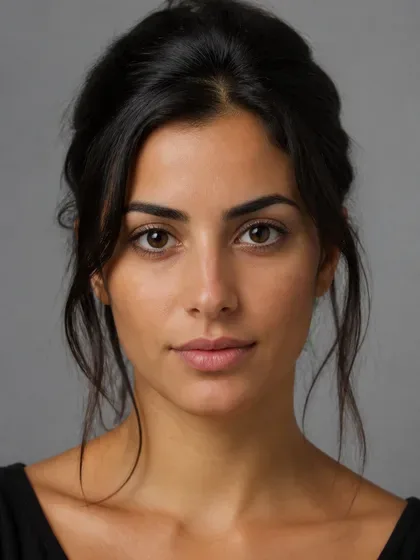
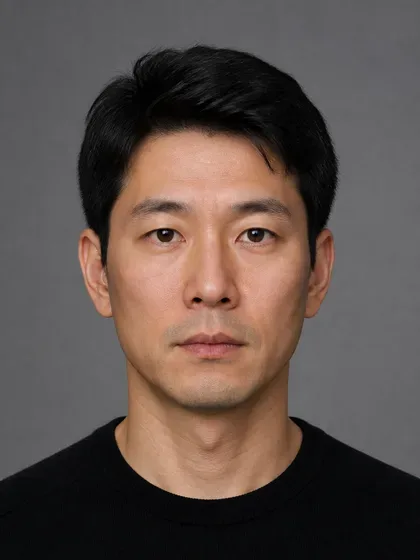
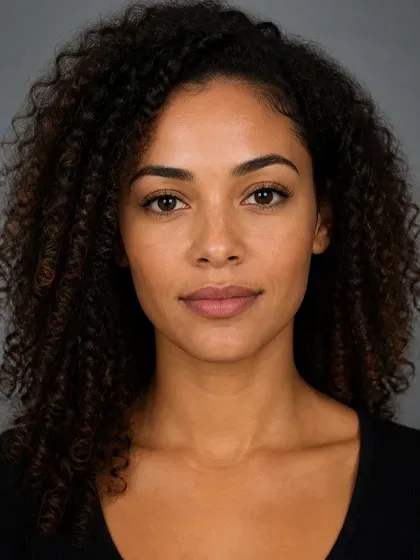
EXPLORE YOUR ORIGINS WITH AI
AI Ancestry Report
Upload one selfie and explore an AI-generated origin-inspired report based on visible facial patterns and characteristics.


Use a clear, front-facing selfie with good lighting and your face fully visible.
How it works
How it works
- 01
Upload Your Selfie
Choose a clear, front-facing photo where your facial features are visible. Use a recent image with neutral lighting and avoid strong filters.
- 02
Explore Visual Facial Patterns
Facefy analyzes visible patterns and characteristics in your photo to create an AI-generated origin-inspired interpretation.
- 03
Discover Your AI Ancestry Report
Explore your results and see the regions or population patterns suggested by the visual analysis, together with an easy-to-understand breakdown.
Guide
Explore Your Origins With an AI Ancestry Test
Have you ever looked at your face and wondered where some of your features might come from?
Perhaps people have guessed that you have roots in a country you have never visited.
Maybe different members of your family have noticeably different facial characteristics.
Or perhaps you are simply curious to see what AI says when it analyzes your face.
Facefy's AI Ancestry Report turns that curiosity into an interactive visual experience.
Upload a clear photo and receive an AI-generated interpretation based on visible facial patterns.
The experience is designed to be fast, simple and interesting: one selfie can give you a completely new way to explore your appearance.
However, there is an important distinction between an AI ancestry test from a photo and actual genealogical or genetic ancestry testing.
A photograph cannot reliably determine someone's genetic ancestry, ethnicity or biological heritage.
Facefy therefore provides an AI-generated visual interpretation for entertainment and exploration, not a DNA test or scientifically verified ancestry determination.
That distinction allows you to enjoy the experience without confusing a visual AI result with your actual family history.
What Is an AI Ancestry Test From a Photo?
An AI ancestry test from a photo is an image-based experience that analyzes visible facial characteristics and generates an origin-inspired result.
Unlike DNA ancestry testing, it does not examine genetic material.
There is no saliva sample, genetic sequencing or access to your family tree.
Instead, the experience begins with the visual information contained in your photograph.
Your face contains many visible characteristics: overall shape, proportions, eyes, jaw, nose, brows and numerous smaller relationships between features.
AI image systems can analyze patterns across those characteristics and use them to generate a visual interpretation.
That can make an AI ancestry test entertaining and interesting.
But visual resemblance is not proof of ancestry.
People from completely different backgrounds can share similar facial characteristics, while close relatives can sometimes look surprisingly different.
Can AI Really Tell Your Ancestry From Your Face?
Not reliably in the way a DNA test can investigate genetic ancestry.
This is one of the most important things to understand before interpreting an AI ancestry result.
Your physical appearance is influenced by genetics, but appearance alone does not provide enough information to reconstruct your actual ancestry.
Human populations are diverse and overlapping.
Migration and population mixing have occurred throughout history.
Many visible characteristics appear across multiple populations and geographic regions.
There is therefore no reliable one-to-one relationship between a particular facial feature and a specific country or ethnicity.
Facefy's AI Ancestry Report should be viewed as a visual AI experience not proof that your ancestors came from the regions suggested by the result.
AI Ancestry Test vs. DNA Ancestry Test
These experiences are fundamentally different.
A DNA ancestry test examines genetic information collected from a biological sample.
Companies offering genetic ancestry services can compare parts of that genetic information with reference datasets to estimate population relationships.
Facefy does not do that.
An AI ancestry test from a photo works with visual information.
That makes it dramatically easier to try you only need a photograph but it also means the result cannot provide the same type of evidence as genetic testing.
If you want to investigate your actual genealogy, family records and DNA-based ancestry research are more appropriate.
If you want a quick and entertaining AI interpretation based on your appearance, Facefy's AI Ancestry Report provides that experience.
What Can an AI Origin Scan Explore?
An AI origin scan can examine visible patterns across the face and turn them into a simplified result.
The interesting part is not necessarily finding one supposedly definitive origin.
Human appearance rarely fits into such simple categories.
Instead, the experience can highlight different visual influences or regional patterns suggested by the analysis.
Your result might therefore be more interesting when viewed as a combination rather than as one label.
Think of the report as answering:
“What origin-related visual patterns does this AI associate with my photo?”
rather than:
“What is my scientifically proven ancestry?”
Those questions sound similar, but they are fundamentally different.
The first can be explored visually.
The second requires evidence that a photograph alone cannot provide.
Why Can People From Different Origins Look Similar?
Human facial variation does not follow modern national borders.
Countries are political and geographic entities, while human populations have moved, mixed and changed for thousands of years.
As a result, a facial characteristic that appears frequently in one region may also appear in many others.
There is also enormous variation within individual populations.
Two people from the same country can look very different.
Two people whose families come from distant regions can occasionally share surprisingly similar features.
This is one reason an AI face-origin test should never be interpreted too literally.
Visual similarity is interesting.
It is not the same as genealogical evidence.
Can Your Face Reveal What Country You Are From?
Not reliably.
A face cannot prove nationality.
Nationality can be based on citizenship and has no necessary relationship with appearance.
Even ancestral geography cannot be accurately reduced to a country simply by examining a selfie.
Modern countries often contain people from many different ancestral backgrounds, while the same historical populations can extend across several present-day borders.
So if an AI origin result associates your appearance with a particular geographic area, interpret that as part of the visual experience.
It does not mean the system has discovered your nationality or proven that your family originated there.
Why Do Family Members Sometimes Look So Different?
One of the fascinating things about families is the amount of visible variation that can exist between relatives.
Siblings inherit different combinations of genetic material from their parents.
As a result, one sibling may resemble one side of the family much more strongly, while another appears closer to the other side.
Some characteristics can also appear more visibly in one generation than another.
This means your face is not a complete visual summary of your entire family history.
An ancestor may have contributed genetically to you without producing an obvious facial characteristic that an image-based system could identify.
This is another reason visual ancestry exploration and genetic ancestry analysis should remain clearly separated.
What Facial Characteristics Can Make Origins Interesting to Explore?
People often become curious about ancestry because they notice specific characteristics in their own appearance.
Perhaps your eye shape resembles one side of your family.
Maybe your jawline or overall face shape reminds relatives of a grandparent.
These observations can be personally interesting even when they cannot establish ancestry scientifically.
Facefy lets you explore many of these characteristics individually.
For example, you can identify your overall facial outline using the Face Shape Detector.
You can explore your eyes using Eye Shape or examine the proportional relationships across your face with Facial Ratios.
These tools describe visible characteristics without attempting to turn a single feature into proof of geographic origin.
AI Ancestry Report vs. Face Report
The AI Ancestry Report is a specialized experience within Facefy's broader facial-analysis ecosystem.
The Face Report focuses on visible characteristics of your face itself.
It can help you explore areas such as face shape, proportions, symmetry, eyes and jaw structure.
The AI Ancestry Report asks a different question.
Instead of simply describing your facial structure, it provides an origin-inspired AI interpretation based on visible patterns.
If you want to understand what your facial characteristics are, start with the Face Report.
If you are specifically curious about an AI-generated interpretation of possible origin-related visual patterns, continue with the AI Ancestry Report.
AI Ancestry Report vs. Face Shape Detector
Face shape can be described from visible geometry.
For example, the relationship between the forehead, cheekbones and jaw can help categorize a face as oval, round, square, heart, diamond or oblong.
That is fundamentally different from ancestry.
Having a particular face shape does not prove that you come from a particular population.
Oval faces exist across populations.
So do square, round, heart-shaped and other facial structures.
If your primary curiosity is simply “What face shape do I have?”, use Facefy's Face Shape Detector.
Do not interpret a face-shape result as evidence of ancestry.
Can Facial Ratios Reveal Your Ethnicity?
Facial ratios can describe relationships between visible measurements.
They may show how face length relates to width or how different facial regions compare proportionally.
But those measurements cannot reliably determine an individual's ethnicity.
Population-level research can identify statistical differences in certain measurements across groups, but applying broad averages to one person's photograph is not enough to establish that person's ancestry.
Individuals overlap enormously.
If you want to explore your own proportions without attaching an ancestry label to them, Facefy's Facial Ratios provides a dedicated analysis.
This keeps two different questions separate: what your facial geometry looks like and what your actual ancestry is.
Is an AI Ethnicity Test the Same as an Ancestry Test?
The terms are frequently used interchangeably in online searches, but ethnicity and ancestry are not identical concepts.
Ancestry generally refers to family descent and genealogical origins.
Ethnicity can involve culture, language, traditions, history, community and self-identification in addition to ancestry.
A photograph cannot establish those aspects of a person's identity.
For that reason, an “AI ethnicity test from a photo” should not be interpreted as determining someone's actual ethnicity.
Facefy's experience is better understood as an AI ancestry-inspired visual report.
It can generate an interesting appearance-based result without claiming to determine a person's cultural identity.
Why Your Photo Can Affect Your AI Origin Result
Any visual analysis depends on the photograph being analyzed.
Lighting can change the apparent color and contrast of visible features.
Camera angle can change facial proportions.
A close selfie can distort the apparent size of features near the center of the face.
Filters can modify skin appearance, eyes, jaw shape and other characteristics.
Even expression can change how some facial features appear.
This means two very different photographs of the same person may not provide identical visual information.
For a more consistent experience, use a straightforward image that represents your normal appearance.
What Photo Should You Use for an AI Ancestry Test?
Choose a recent, clear, front-facing photograph.
Your facial features should be easily visible.
For the best starting point:
- Face the camera directly.
- Keep your entire face visible.
- Keep your head in a natural position.
- Use even or natural lighting.
- Choose a sharp image.
- Use a relaxed expression.
- Avoid strong beauty filters.
- Avoid filters that reshape facial features.
- Avoid colored lighting.
- Avoid extreme camera angles.
A simple selfie is enough.
The goal is to provide a clear representation of your appearance rather than an artificially modified version of it.
Can Makeup or Hair Color Affect the Result?
Potentially.
Anything that significantly changes the visual information in a photograph can influence an image-based analysis.
Heavy contouring, for example, can change how facial structure appears in a two-dimensional image.
Colored contact lenses can change the visible eye area.
Hair color can alter contrast around the face.
If you want the result to reflect your more natural appearance, use a relatively neutral photograph.
You do not necessarily need to remove all makeup or change your hairstyle.
The important thing is to avoid heavily altering the visible structure of your face.
If you are more interested in exploring how different colors change your appearance, Facefy's Color Analysis and Hair Color Try-On are better suited to that purpose.
Why AI Ancestry Results Should Be Treated as Entertainment
An AI-generated result can feel surprisingly convincing, especially when it includes percentages, regions or detailed explanations.
But detail does not automatically mean scientific certainty.
A percentage generated by a visual model is not equivalent to a percentage derived from genetic ancestry analysis.
This distinction is essential.
The Facefy AI Ancestry Report is designed to satisfy curiosity and create an engaging way to explore your appearance.
You might discover an unexpected visual association.
You might compare results with family members.
You might simply enjoy seeing how AI interprets your photo.
All of those are perfectly valid reasons to use the tool.
The problem only arises when an entertainment result is mistaken for verified genetic information.
Can You Compare Your AI Ancestry Results With Family Members?
You can compare the visual results for fun, provided each person chooses to use their own photo.
It can be interesting to see whether relatives receive similar or very different AI-generated interpretations.
But do not expect the results to reconstruct a family tree.
Even close relatives can look quite different, and visual resemblance does not map neatly onto genetic inheritance.
If two siblings receive different visual results, that does not mean they have different actual ancestry.
Likewise, similar AI results do not prove a genetic relationship.
The comparison is best enjoyed as part of the visual experience.
How to Learn About Your Actual Ancestry
If your Facefy result makes you genuinely interested in your family origins, there are more appropriate ways to continue the research.
Start with what your family already knows.
Speak with parents, grandparents and older relatives.
Look at birth, marriage and immigration records where available.
Historical documents, family names and geographic records can help build a genealogical picture.
DNA ancestry services can provide another form of evidence by comparing genetic information with reference populations.
Even these methods can contain uncertainty, and ancestry estimates can evolve as databases and methodologies change.
But they provide fundamentally different evidence from an image-based AI experience.
Use Facefy for visual exploration.
Use genealogy and genetic evidence when you want to investigate actual ancestry.
Your Face Is Part of Your Story, Not Your Entire History
It is natural to be curious about where your appearance comes from.
Families often pass visible characteristics across generations.
You may recognize your eyes in a parent, your jawline in a grandparent or your face shape in an old family photograph.
Those connections can be meaningful.
But your face cannot contain a complete readable map of your ancestry.
Family history is much larger than appearance.
It includes generations of people, migration, relationships, cultures and places that cannot be reconstructed from a selfie.
Facefy's AI Ancestry Report gives you one entertaining perspective on your appearance.
It is a starting point for curiosity, not the final answer to your family history.
Explore More Than Your Origins With Facefy
After exploring your AI Ancestry Report, you can discover the individual characteristics that make up your appearance.
Start with the broader Face Report to explore multiple facial features together.
Use the Face Shape Detector to identify your overall facial outline or Facial Ratios to examine proportional relationships.
You can compare left-to-right facial balance with the Symmetry Checker and explore your eyes with the Eye Shape tool.
Facefy gives you different ways to explore your appearance.
The AI Ancestry Report is one of them not a substitute for knowing who you are or where your family actually comes from.
FAQ
Frequently asked questions
What is an AI ancestry test from a photo?
An AI ancestry test from a photo analyzes visible facial patterns and generates an origin-inspired interpretation. It does not analyze DNA and should be treated as a visual entertainment experience.
Can AI determine my ancestry from my face?
Not reliably. A photograph alone cannot establish someone's genetic ancestry or genealogical history. Facefy's result is an AI-generated visual interpretation rather than a verified ancestry determination.
Can AI tell what country I am from by my face?
No. Facial appearance cannot reliably establish nationality or prove that someone's family comes from a specific country.
Is Facefy's AI Ancestry Report a DNA test?
No. Facefy analyzes a photograph and does not examine genetic material. DNA ancestry testing is fundamentally different.
Can AI determine my ethnicity from a photo?
A photograph cannot reliably establish someone's ethnicity. Ethnicity can also involve culture, history, language and self-identification that cannot be inferred from facial appearance.
Why does my AI ancestry result show multiple regions?
Visual characteristics can overlap across many populations. A multi-region result should be interpreted as part of the AI-generated visual experience rather than as a genetic ancestry breakdown.
Can two siblings get different AI ancestry results?
Yes. Siblings can have visibly different combinations of facial characteristics, and different photographs can also influence image-based results. This does not mean their actual ancestry is different.
Can my photo affect my ancestry result?
Yes. Lighting, camera angle, filters, expression and image quality can change the visual information available to an image-based system.
What photo should I upload?
Use a recent, clear, front-facing photograph with even lighting, a natural expression and no strong filters or facial reshaping.
How is AI ancestry different from facial analysis?
Facial analysis describes visible characteristics such as shape, proportions or symmetry. An AI ancestry experience uses visual patterns to create an origin-inspired interpretation. You can explore your facial characteristics separately with Facefy's Face Report.
How can I discover my real ancestry?
Family records, genealogical research and DNA-based ancestry testing provide more appropriate evidence for investigating actual family origins. A facial photograph alone cannot reliably determine genetic ancestry.
Can I analyze other features of my face?
Yes. Facefy also lets you explore your Face Shape, Facial Ratios, Symmetry, Eye Shape and other visible facial characteristics.
Explore an AI origin-inspired face report
Upload one selfie to see a personalized ancestry-style readout based on visible facial patterns.
Get ancestry reportNo signup required · Your photo stays private