Negative Canthal Tilt: Meaning, Photo Self-Check and Common Misconceptions
Learn what negative canthal tilt means, how to check it in level photos, what can distort the result, and when eyelid changes need medical care.
A negative canthal tilt means the outer corner of the eye sits lower than the inner corner when the head and camera are level. It is a normal anatomical variation that can differ between your eyes. By itself, it does not determine attractiveness, health, personality, or personal worth.
Casual selfies can exaggerate or even reverse an apparent tilt. A useful self-check looks at each eye separately across several consistently positioned photos, with borderline results treated as estimates rather than fixed labels.
What negative canthal tilt means
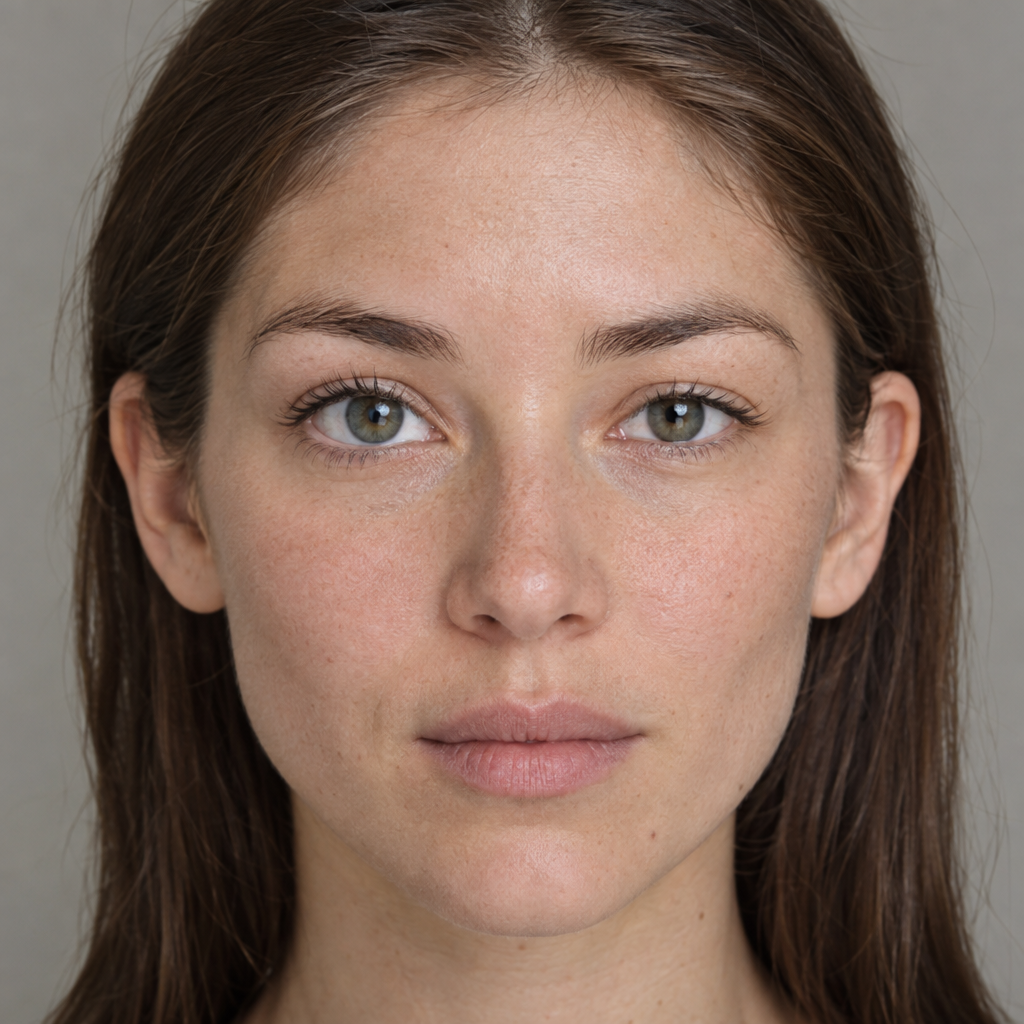
The medial canthus is the inner eye corner, nearest your nose. The lateral canthus is the outer corner, nearest your temple.
Canthal tilt describes the angle of an imaginary line connecting these two points. This line represents the orientation of the palpebral fissure, the opening between the upper and lower eyelids.
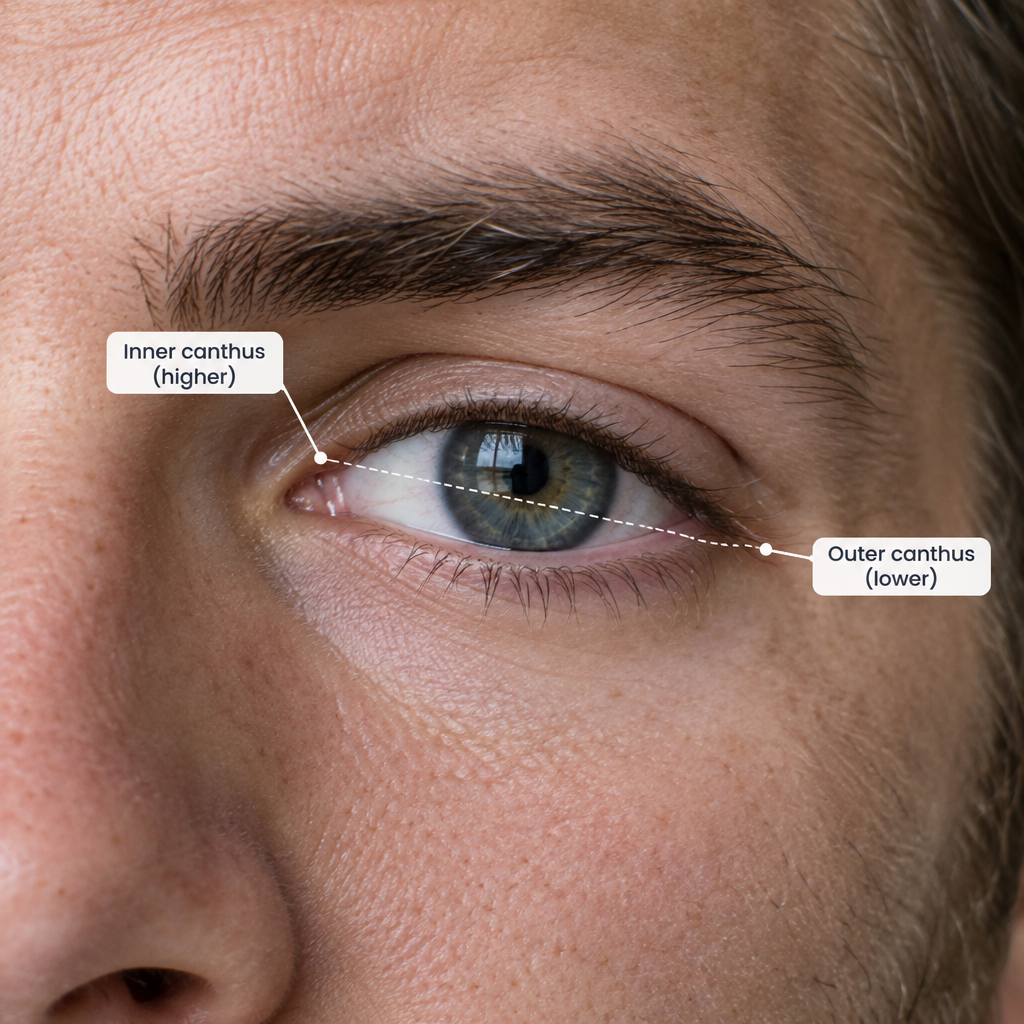
With your head upright and the image level:
- Negative tilt: The outer corner sits below the inner corner.
- Neutral tilt: The two corners sit approximately level.
- Positive tilt: The outer corner sits above the inner corner.
Always follow the line from the nose toward the temple. Reading both eyes from left to right across a photograph can cause confusion because their inner-to-outer directions are opposite.
Each eye deserves its own description. One may look approximately neutral while the other slopes slightly downward. Small left-to-right differences are common, and there is no universal angle that should be presented as ideal for appearance or health.
How to check your apparent canthal tilt in a photo
This method estimates visible eye-corner orientation. It is not a clinical measurement or an attractiveness assessment.
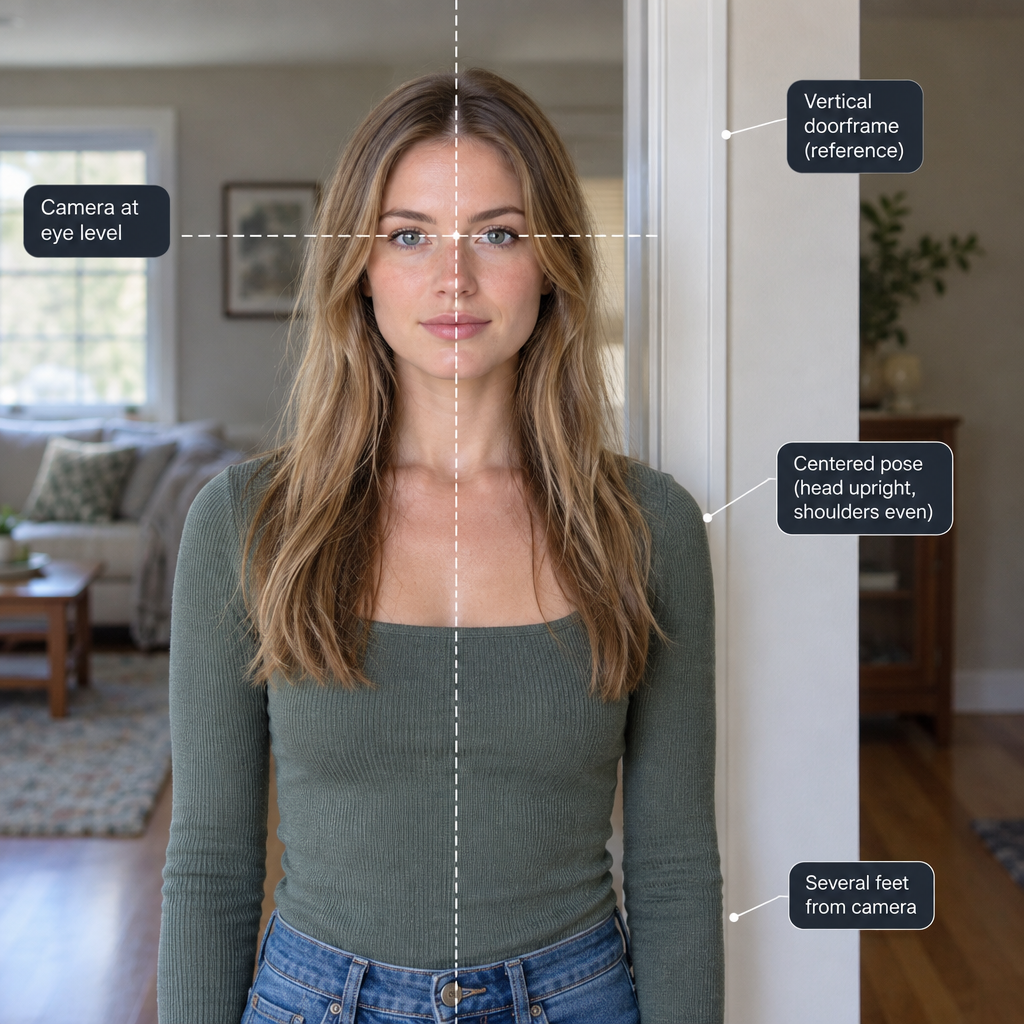
- Set the camera at eye height. Face it directly rather than looking up, down, or over one shoulder. Avoid an extremely close, wide-angle selfie. If possible, move the camera farther away and crop afterward.
- Keep your head upright. Do not tip one ear toward your shoulder, lift your chin, or tuck it downward. A level camera cannot compensate for a tilted head.
- Check the camera’s alignment. Use a straight doorframe or dependable wall edge near the center of the image to spot camera roll. This helps establish image orientation, not whether your head is upright.
- Relax your expression. Look ahead with your eyelids resting naturally. Avoid squinting, smiling broadly, raising your eyebrows, or deliberately widening your eyes.
- Make both corners visible. Move hair aside and use even, front-facing light. Glasses, heavy liner, false lashes, blur, or shadows can make the actual corners harder to identify.
- Assess each eye separately. Locate the points where the upper and lower lids meet. Trace a line from the inner corner to the outer corner, ignoring eyebrow angle and eyeliner wings.
- Compare at least three similarly framed photos. Look for a consistent direction rather than chasing a precise number. A slight downward slope that disappears with a small pose adjustment is better described as borderline.
A useful description might be: “The right eye appears slightly negative; the left appears approximately level.” That is more informative than assigning one label to the whole face.
If you would like another way to estimate the same feature, Facefy’s Canthal Tilt Test offers a photo-based assessment of visible eye orientation. Its AI-generated result depends on pose and image quality, just like the manual method. It cannot establish eye health or objectively judge attractiveness.
Why selfies can change the apparent result
A photograph is a two-dimensional view of a three-dimensional face. Small changes in how you hold your head or camera can affect the apparent relationship between the eye corners.
Head tilt and camera roll
Tilting your head changes the corners’ height relative to the image. Rolling the camera sideways rotates the entire scene. Either can make one eye look more negatively tilted while the other looks more positively tilted, despite no anatomical change.
If the doorframe behind you appears slanted, level the image against that reference before reassessing. Do not rotate the photo until both eyes appear symmetrical because that assumes the answer you are trying to observe.
Image leveling also cannot fully correct a turned face or a raised chin. Retaking the photo is more useful than trying to repair a strongly angled view.
Perspective, expression, and corner visibility
Other common sources of error include:
- A camera above or below eye level: This changes the viewing perspective.
- Very close selfies: Close camera distance can distort facial proportions, especially with wide-angle framing.
- A turned face: One outer corner may be less visible than the other.
- Smiling or squinting: The eyelid contours change, making the endpoints harder to identify.
- Raised brows or partly closed lids: These can influence how the surrounding eye area is interpreted.
- Uneven lighting, hair, makeup, or blur: These may conceal a corner or create a misleading edge.
A simple decision framework
Use these criteria instead of forcing every photo into a category:
- The slope is consistent across clear, level photos: Describe the apparent orientation separately for each eye.
- A small leveling adjustment changes the category: Call it “approximately neutral” or “borderline.”
- One corner is obscured: Do not estimate from that photo.
- Otherwise consistent photos give different answers: Stop measuring rather than forcing a fixed label.
More photographs do not necessarily create more certainty. A subtle feature may simply resist a reliable home classification.
Negative canthal tilt vs downturned eyes and related features
Several observations can look similar without describing the same thing.
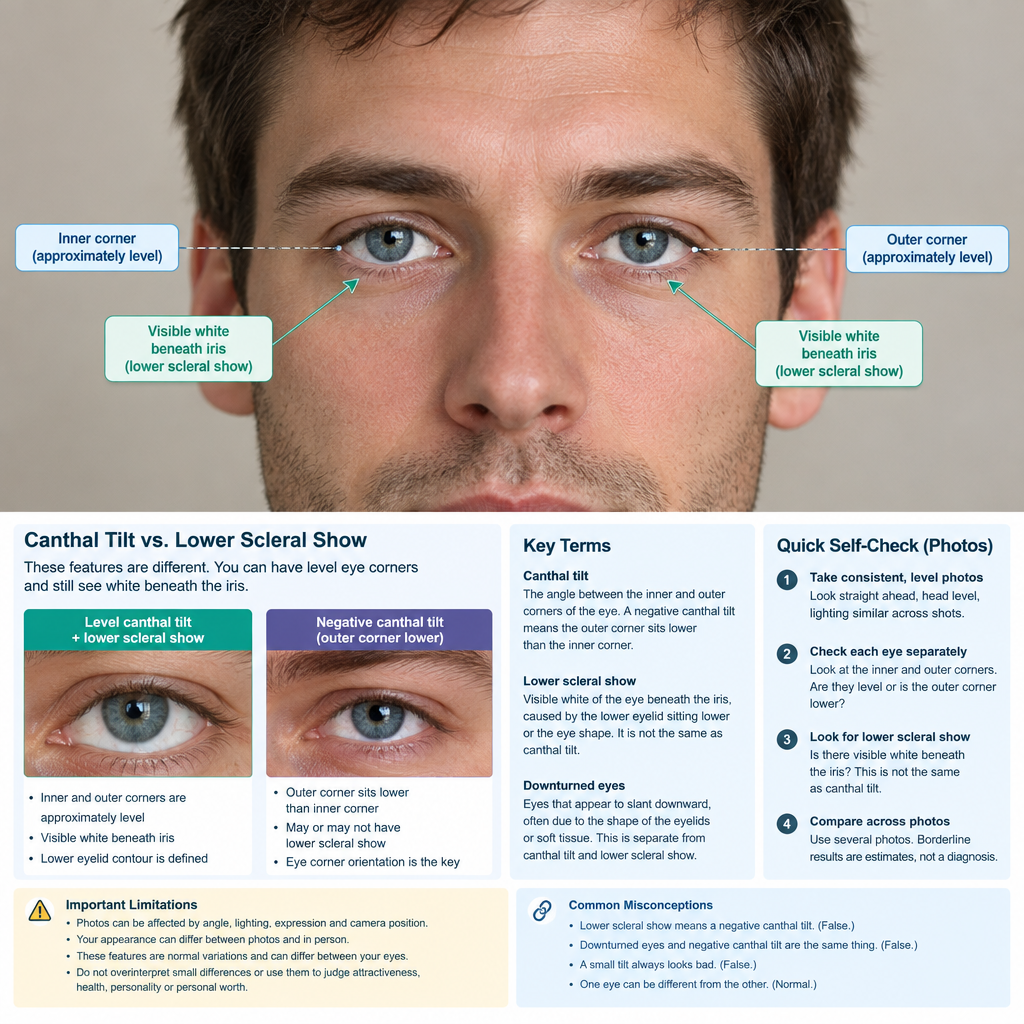
- Negative canthal tilt: Describes the relative height of the inner and outer corners. It does not establish overall eye shape or eyelid function.
- Downturned eyes: Describes the broader impression of the eye’s outer contour. This can overlap with negative tilt, but the terms are not automatically interchangeable.
- Lower scleral show: Means visible white below the iris. It concerns the relationship between the lower eyelid and iris, not the angle between the eye corners.
- Facial asymmetry: Describes left-to-right differences across the face. Head position, brow height, and eyelid contour can contribute to its appearance.
- Eyelid laxity: Concerns looseness in the eyelid’s supporting tissues. It needs professional assessment, not a beauty label.
- Ectropion: Means an eyelid turns outward, usually the lower lid. It is an eyelid-position condition, not another term for negative tilt.
If your question concerns the whole eye contour, you can estimate your eye shape separately from corner orientation. Keep that description distinct from any concern about irritation, closure, or eyelid support.
Similarly, photographs can help you explore visible facial symmetry, but appearance analysis cannot explain why a difference exists or diagnose an eyelid condition.
What canthal tilt does and does not say about you
Negative canthal tilt is a physical description, not a defect or diagnosis.
Appearance-scoring communities sometimes treat eye orientation as a ranking factor. Those rankings reflect subjective preferences, not objective measures of beauty or worth. Canthal tilt alone cannot reliably establish someone’s:

- Attractiveness
- Masculinity or femininity
- Personality or temperament
- Ancestry
- Health
- Likely social or relationship outcomes
Overall appearance involves many interacting features, expressions, styling choices, and personal or cultural preferences. The angle between two eye corners cannot capture that complexity.
Be especially cautious with comparisons drawn from edited portraits, dramatic lighting, or photos taken at different angles. A relaxed straight-on image and a smiling, tilted selfie are not equivalent reference points.
Repeatedly checking a borderline feature or converting it into an attractiveness score is unlikely to produce a more reliable answer. “Slightly downward in this photo” may be all the image supports.
Options range from no action to professional procedures
The appropriate next step depends on whether you are simply curious, interested in styling, or experiencing an actual eyelid change.
No action is necessary for a stable, symptom-free feature
A longstanding negative tilt that causes no symptoms does not require correction. You do not need to change it because an online guide assigns it a label.
If curiosity was your only reason for checking, understanding the definition may be enough.
Styling can change emphasis without changing anatomy
Makeup and hair can redirect attention around the eyes. These are creative choices, not treatments for a flaw.
For a more upward visual emphasis, you might:
- Angle a short eyeliner wing toward the temple, rather than extending it downward along the outer contour.
- Keep outer-corner liner relatively light, particularly if a thick line obscures the corner.
- Direct mascara upward through the outer lashes, rather than sweeping them downward.
- Brush brow hairs outward and slightly upward, without assuming everyone needs a high arch.
- Experiment with face-framing hair that opens the temple area, if you want the eyes more visible.
Check makeup with your eyes open and your face relaxed. A wing that looks balanced with the eyelid closed may sit differently once the lid folds naturally.
None of these choices permanently moves the canthi.
Avoid DIY structural manipulation
Pulling, taping, massaging, exercising, or applying devices around the eyes cannot be recommended as permanent structural treatments for canthal tilt. Traction, pressure, and adhesives can irritate or injure this sensitive area.
A temporary pulled appearance is not evidence of a safe or lasting anatomical change.
Structural procedures require individualized specialist advice
Canthopexy generally refers to supporting or tightening structures near the outer eye corner. Canthoplasty generally involves more extensive reconstruction or repositioning of the outer eyelid support. Techniques vary, and the terms are not interchangeable beauty hacks.
Eye-area procedures carry risks, including asymmetry, scarring, altered eyelid position, dry-eye or exposure symptoms, and possible revision surgery.
Anyone considering a structural procedure needs an individualized consultation with a qualified ophthalmologist, particularly an oculoplastic surgeon with relevant expertise. A photo-based angle does not establish whether a procedure is appropriate or which technique might be considered.
When a change in eyelid position needs medical attention
A stable difference between your eyes can be ordinary facial asymmetry. A new or progressing change should not automatically be labeled ordinary canthal tilt.
Arrange professional assessment if you notice:
- A sudden one-sided change in eyelid position
- Increasing asymmetry
- An eyelid turning outward
- A change following an injury
- Persistent irritation, redness, excessive tearing, or dryness
Seek prompt care for pain, vision symptoms, incomplete eye closure, or visible eye-surface exposure. Sudden vision loss, severe eye pain, or a significant eye injury warrants urgent medical attention.
Eyelid support and surrounding tissues can change over time, but a home photo comparison cannot determine the cause. Do not use an appearance assessment to diagnose ectropion, eyelid laxity, nerve problems, or an injury.
An ophthalmologist can assess eye health and eyelid function. An oculoplastic surgeon specializes in the eyelids and surrounding structures, including both functional conditions and procedures.
Common questions about negative canthal tilt
Can one eye have a different tilt?
Yes. Stable left-to-right differences are common, so assess each eye separately rather than averaging them into one label. A new one-sided change deserves medical attention, especially if symptoms accompany it.
Can a selfie make the tilt look more negative?
Yes. Camera roll, head tilt, camera height, close perspective, and expression can change the apparent slope. A level image does not guarantee a level head, so check both.
Can makeup make eyes look more lifted?
Makeup can create an upward visual emphasis through liner direction, lash styling, and brow shape. It does not permanently reposition the eye corners. Judge the effect with your eyes open and relaxed.
Can massage or exercises change canthal tilt?
There is no established basis for recommending massage or eye exercises as safe, permanent ways to reposition the canthi. Avoid pulling or applying pressure to the eyelids.
Can canthal tilt change with age?
Eyelid support and surrounding tissues can change with age, which may alter the eye area’s appearance. That does not mean every perceived difference in photographs represents structural change. Marked, progressing, or symptomatic changes should be assessed professionally.
Does a negative tilt make someone unattractive?
No single eye measurement objectively determines attractiveness. Negative tilt is one anatomical variation, and preferences cannot be reduced to a universal corner angle.
For a photo-based estimate, start with the level-photo method above. If you choose an AI assessment, use it as a descriptive aid, not a verdict about your appearance.