Hooded Eyes vs. Deep Set Eyes: How to Tell the Difference
Compare hooded and deep set eyes using lid coverage, brow bone, shadows, and side views, with a practical self-check and makeup guidance.
Hooded eyes and deep set eyes describe two different features. Hooding refers to upper-lid skin folding over the crease or mobile lid, while deep set eyes sit farther beneath the brow bone, often creating more natural socket shadow. You can have either feature, both, or neither clearly dominant.
The useful distinction is lid coverage versus eye depth. Look at those separately rather than using a hidden crease or a shadow alone to decide which description fits.
Hooded Eyes vs. Deep Set Eyes at a Glance
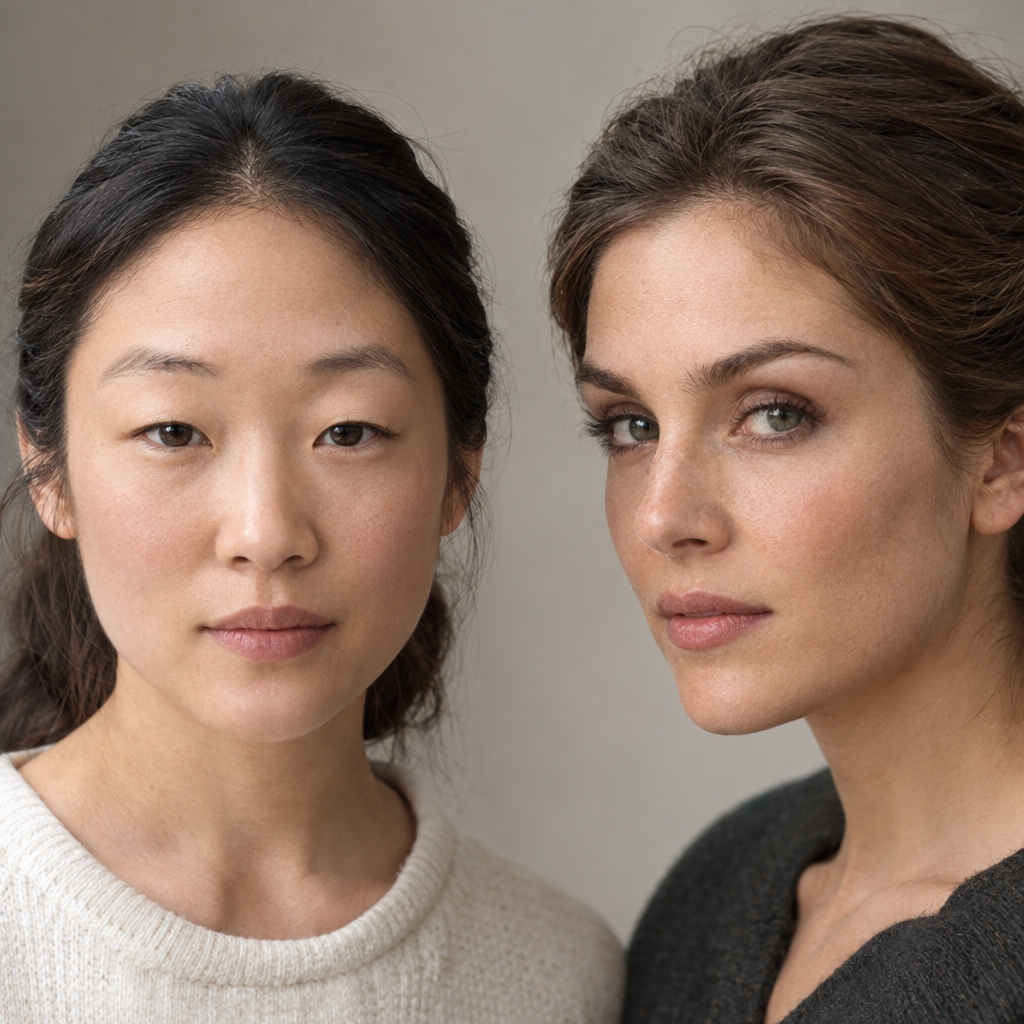
The mobile lid is the part of the upper eyelid between the lash line and the crease. How much of it you see with your eyes naturally open helps describe hooding, but does not establish how deep set your eyes are.
| Cue | Hooded eyes | Deep set eyes |
|---|---|---|
| Upper-lid fold | Overlaps the crease or mobile lid | May or may not overlap the crease or lid |
| Crease visibility with eyes naturally open | Often partly or largely concealed | May remain clearly visible |
| Visible mobile lid | Often reduced by the fold | Varies according to the accompanying lid structure |
| Brow-bone prominence | Not a defining feature | Often projects noticeably above the eyes |
| Apparent eye depth from a slight side view | Not necessarily recessed | Appears recessed beneath the brow bone |
Hooding does not require the eyes to look recessed, and deep set eyes do not require an overlapping upper-lid fold. The two features can also coexist.
Read the cues together. A visible crease does not rule out hooding. The fold may cover only the outer portion of the lid or conceal some lid space while leaving the crease partly visible.
Likewise, shadow beneath the brow bone is a clue, not proof of deep set eyes. Directional lighting can produce similar shadows. Natural socket shadow is also not necessarily the same as dark circles or a skin concern.
How to Check Your Eye Area from Three Views
Use a mirror or a few photographs taken at a comfortable distance. If possible, remove heavy eye makeup so you can see the fold and lash line. Keep your head level and avoid widening your eyes deliberately.
1. Look straight ahead with relaxed brows
Let your forehead relax and look directly ahead with your eyes naturally open.
Notice:
- Does skin above the crease fold over it?
- Is the mobile lid visible across its full width, or mainly near the inner corner?
- Does the fold cover more of the outer lid than the inner lid?
These observations describe coverage, not depth. You do not need to see the entire crease disappear for hooding to be present.
2. Repeat in soft frontal light
Face a source of diffuse light, such as a window without direct sun. Avoid relying on a ceiling light alone.
Check whether the apparent depth remains when strong shadows are reduced. If the eyes look much less recessed in even light, the earlier impression may have come largely from lighting. The upper-lid fold should also be easier to distinguish from a dark makeup line or cast shadow.
3. Use a slight side view
Turn your head slightly while keeping it level, enough to see the relationship between the brow bone and the eye beneath it.
Ask whether the eye appears to sit noticeably behind a projecting brow bone. This is more useful for assessing depth than judging the darkness of the crease straight on. A slight side view is still a visual clue, not a measurement of the eye socket.
One posed selfie is not enough for a confident visual description. Expression, camera distance, head position, and lighting can change all three views.
After this check, Facefy’s Eye Shape Detector can offer a photo-based estimate of your broader eye shape. Treat it as a visual guide rather than a definitive classification, since lighting, expression, image quality, and angle can influence the result.
You Can Be Hooded, Deep Set, Both, or Neither
Instead of asking “Which one am I?”, answer two separate questions:
- Does an upper-lid fold cover part of my crease or mobile lid?
- Do my eyes appear recessed beneath the brow bone from a slight side view?
That gives you four possible descriptions:
- Hooded but not noticeably deep set: A fold covers part of the crease or lid, but the eye does not appear especially recessed beneath the brow bone.
- Deep set but not hooded: The eye appears farther beneath the brow bone, while the crease and mobile lid remain relatively unobstructed.
- Both hooded and deep set: The fold reduces visible lid space, and the eye also appears recessed beneath the brow area.
- Neither clearly dominant: There is no strong overlapping fold, and the eye does not appear notably recessed.
You do not have to force an either-or conclusion. These are flexible appearance descriptions, not measures of attractiveness or personal worth. The two sides can also differ somewhat without needing different labels. If you want to explore other facial features alongside your eye shape, Facefy’s Face Report provides a broader photo-based facial analysis. Treat its results as exploratory estimates rather than definitive classifications or judgments about appearance.
Why Expression, Lighting, and Photos Can Change the Result
Try one simple expression check: look straight ahead with your brows relaxed, then deliberately raise them.
Raising the brows can lift the skin above the crease and temporarily expose more mobile lid, making hooding less apparent. Return to your resting expression when deciding how makeup will look during normal wear.
Several other variables can change the cues:
- Overhead lighting: Deepens the shadow beneath the brow bone, potentially making the eyes look more recessed than they do in even frontal light.
- Wide-angle close-up perspective: Taking a photograph very close to the face can distort relative depth, changing the apparent relationship between the brow, eyes, and surrounding features.
- Head tilt: Looking up or down changes how much mobile lid is visible and how far the brow bone appears to project.
- Dark eye makeup: Shadow placed through the socket can exaggerate depth or make the natural crease harder to distinguish.
- Thick liner, mascara, or long lashes: Can obscure the lash line and visible mobile lid, making available lid space difficult to judge.
- Squinting or smiling: Changes the opening of the eyes and surrounding folds.
A useful comparison keeps the expression, distance, and head position similar while changing only the viewing angle or light. There is no need to keep collecting photos once you have a practical understanding of your lid coverage and depth.
Makeup Placement for Each Eye-Area Feature
The most useful makeup choices depend on what remains visible with your eyes open and how much shadow is already present. Neither feature requires correction.
For hooded eyes: check placement with the eyes open
A line or shadow shape that looks clear on a closed lid may disappear beneath the fold when the eye opens.
Apply a little product, look straight ahead with relaxed brows, and check where it remains visible. For example:
- Preserve visible lid space: Keep liner thin along the inner and middle lash line if a thicker line covers most of the exposed lid.
- Place a visible shadow edge: With your eyes open, lightly mark where you want the upper edge of the shadow to show. Then blend with the lid lowered.
- Plan a wing around the fold: Sketch its direction while looking straight ahead rather than stretching the skin taut.
- Reduce transfer: Notice where lid skin touches surrounding skin, and let liner or cream shadow set before fully opening your eyes.
There is no single required eyeliner shape. A short outer-corner accent may suit someone who wants definition without a full line, while a broader graphic shape can be an intentional choice.
For deep set eyes: account for existing socket shadow
The brow bone and socket may already create a dark-looking area. Adding a deep shade directly into that shadow can produce a stronger effect than expected.
Start with a small amount of a medium-depth shade and assess it in even frontal light. If you want more contrast, add deeper color gradually at the outer lash line or outer lid rather than automatically darkening the entire crease.
A lighter or softly reflective lid shade can draw attention to the visible lid through contrast. Dark, smoky makeup is still an option. The point is to choose its intensity deliberately, not to avoid it.
For eyes with both features: combine the two approaches
Check placement with your eyes open, then build darker tones slowly around the existing socket shadow. Keep enough contrast between the visible lid and surrounding shadow for the effect you want.
Makeup can change emphasis and the impression of openness or lift. It does not physically enlarge, lift, or reshape the eyes.
Commonly Confused Eye Features
Monolids and hooded eyes are not synonymous. A monolid generally has no prominent visible upper-lid crease. A hooded eye may have a crease that is partly concealed by an overlapping fold. Crease visibility alone is therefore not enough to distinguish them.
Hooding does not have to cover the whole lid. Some people have more overlap toward the outer corner while retaining visible lid space closer to the nose.
Age does not define the category. Hooding can be longstanding or become more noticeable over time as the surrounding skin and tissues change.
Canthal tilt is a separate feature. It describes the relative angle between the inner and outer eye corners. It does not tell you whether the lid is hooded or the eye is deep set.
Natural Eye Structure vs. a New Eyelid Change
Longstanding, similar eye-area structure is different from sudden drooping or a new marked change on one side.
Ptosis refers to drooping of the upper eyelid itself, not simply skin folding over the crease. It is not another name for naturally hooded eyes. An article, photograph, or AI result cannot diagnose ptosis or determine the cause of an eyelid change.
Seek prompt medical assessment for new drooping, eye pain, or an eyelid that obstructs vision. Sudden drooping, especially with double vision, weakness, or a sudden vision change, warrants urgent medical attention.
For everyday styling, the practical distinction remains simple: look at what the upper-lid fold covers and how the eye sits beneath the brow bone. Those observations are more useful than forcing your eyes into one label.