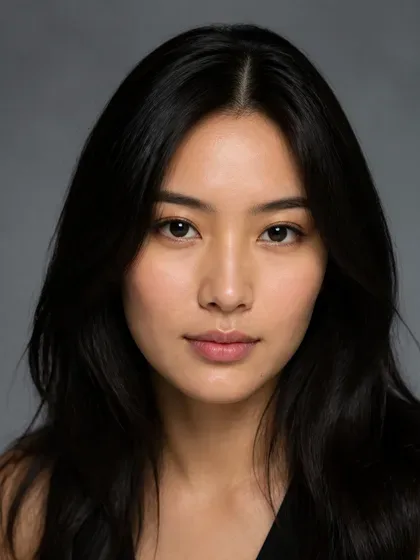
Deep Set Eyes: How to Identify Them and Apply Makeup
Learn how to identify deep set eyes, distinguish them from hooded eyes, assess photos accurately, and adapt eyeliner and eyeshadow.
Deep set eyes appear to sit farther back beneath the brow ridge, often making the brow bone look more pronounced and creating natural shadow above the upper eyelid. Depth is only one eye feature. Your eyes can also be almond or round, hooded or non-hooded, close-set or wide-set.
For a useful self-check, compare straight-on, three-quarter, and relaxed side views in soft frontal light. Look at the apparent projection of the eye relative to the brow ridge, not upper-lid shadow alone. Lighting, expression, and camera position can all change how recessed the eye area looks.
What Deep Set Eyes Look Like
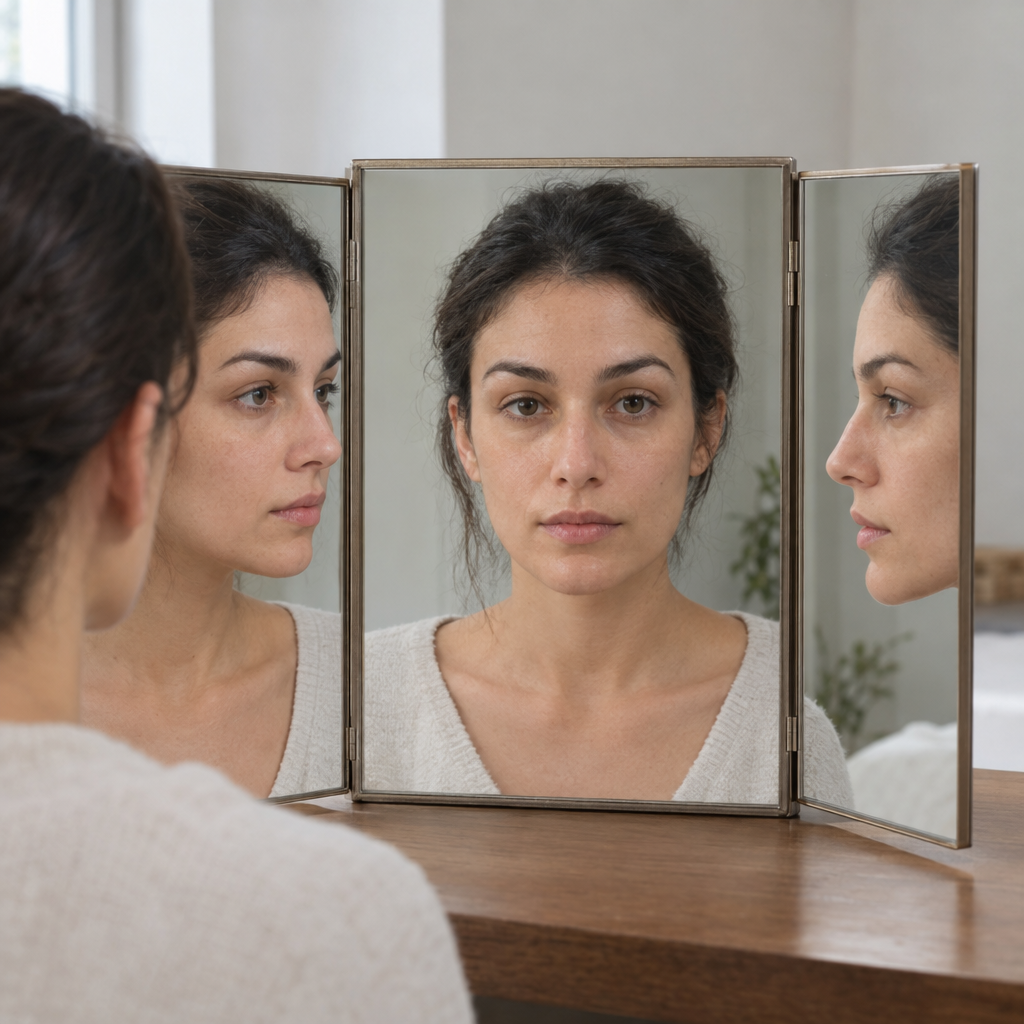
The main visual cue is a recessed appearance beneath the brow ridge, particularly when viewed from a three-quarter angle or the side. You may notice:
- The brow ridge appears to project forward relative to the eye.
- The area beneath the brow has a natural shadow.
- The upper lid looks more sheltered beneath the brow than it does in a straight-on view.
None of these signs confirms depth by itself. A prominent brow bone can cast a strong shadow even when the eye does not appear especially recessed from other angles.
Deep set eyes are a normal appearance variation, not something that inherently needs correction. The description also does not automatically mean “sunken eyes.” People use sunken loosely to describe hollowness, shadows, or a change in the surrounding tissues. A long-standing eye-depth feature and a newly hollow-looking eye area are different observations.
Five Separate Dimensions Describe Your Eyes
“Deep set” does not describe your entire eye shape. Separating five dimensions gives you a more useful description, especially when choosing makeup placement.
| Dimension | What you observe | Common descriptions |
|---|---|---|
| Depth | Apparent projection relative to the brow ridge | Deep set, less recessed, prominent |
| Opening shape | Outline between the upper and lower lids | Almond, round |
| Upper-lid coverage | How much of the mobile lid is covered when the eyes are open | Little, partial, or substantial coverage |
| Spacing | Apparent gap between the eyes | Close-set, average-set, wide-set |
| Corner tilt | Outer corner relative to the inner corner | Upturned, level, downturned |
The mobile lid is the moving part of the upper eyelid, between the lashes and crease. Hooding describes upper-lid skin folding over the crease or mobile lid when the eye is open. The amount of coverage can range from slight to substantial.
Crease structure is a separate observation. A monolid generally has no clearly defined or continuously visible upper-lid crease. It is not a degree of hooding, and neither crease appearance nor hooding establishes how deeply the eye sits.
Canthal tilt describes the relative height of the inner and outer corners, not how deeply the eye sits.
For example, someone can have deep set, almond-shaped, hooded, slightly upturned eyes. Each term answers a different question:
- Deep set: How recessed does the eye appear?
- Almond-shaped: What outline does the opening have?
- Hooded: How much does the upper fold cover?
- Slightly upturned: Where is the outer corner relative to the inner one?
These are flexible appearance descriptions, not rigid biological categories. They do not establish personality, ancestry, health, or attractiveness.
A Three-View Check for Deep Set Eyes
A mirror or a small set of photos can help you describe visible features. Neither can measure the anatomy inside the eye socket.
Set up a neutral view
Face a window with diffuse daylight rather than direct sun. Avoid relying on a ceiling light, which can exaggerate shadow beneath the brow.
If practical, remove dark eyeshadow and heavy liner. Temporarily take off glasses if the frames obscure the area. Keep your eyebrows relaxed, your eyes comfortably open, and your camera near eye level. Avoid beauty filters and very close selfies.
For photos, moving the camera farther away and cropping afterward can reduce close-range perspective distortion.
1. Start straight-on
Look ahead without lifting your eyebrows or widening your eyes.
Observe the brow ridge, any shadow beneath it, and how much mobile lid you can see. Keep those observations separate. A narrow strip of visible lid may reflect hooding rather than depth.
Ask: Does the eye area appear recessed, or am I mainly noticing a dark patch?
2. Turn to a three-quarter view
Turn your head roughly 30 to 45 degrees while keeping your chin level. Use broad, soft light so that one side does not fall into a harsh shadow.
Compare the eye’s apparent projection with the brow ridge above it. This angle often makes that relationship easier to see than a frontal photo.
Ask: Does the brow project forward relative to the eye even where the lighting is soft?
3. Check a relaxed side view
Use a side photo or a second mirror. Keep your brow relaxed rather than raising it to reveal the lid.
Look at the relationship between the brow ridge, eyelids, and visible eye area. Do not judge by the lashes, which extend beyond the eye and can confuse the outline.
Ask: Does this view support the recessed appearance I noticed from three-quarter?
Interpret the views together
- Recessed appearance across multiple views: “Deep set” may be a useful description.
- Strong shadow only under overhead light: Lighting may explain much of the impression.
- Little visible lid without clear recession: Upper-lid coverage may be the more relevant feature.
- Unclear or conflicting views: A precise depth label may not be useful.
If one photo is ambiguous, a brief mirror check in softer light is enough. There is no need to keep photographing or measuring your eyes until they fit a category.
Deep Set vs Hooded vs Prominent Eyes
These terms describe different things. Deep set and prominent concern apparent projection, while hooded concerns the upper-lid fold. Hooding can therefore coexist with either depth pattern.
| Feature | Criterion | Typical observation |
|---|---|---|
| Deep set | Position beneath brow | Appears recessed relative to brow |
| Deep set | Crease visibility | Varies and may remain visible |
| Deep set | Mobile-lid visibility | Depends on upper-lid coverage |
| Deep set | Three-quarter view | Recession beneath the brow becomes clearer |
| Hooded | Position beneath brow | No specific depth implied |
| Hooded | Crease visibility | Partly or fully concealed by the upper fold |
| Hooded | Mobile-lid visibility | Partly covered when the eye is open |
| Hooded | Three-quarter view | Fold overlaps the moving lid |
| Prominent | Position beneath brow | Appears farther forward |
| Prominent | Crease visibility | Varies and may remain visible |
| Prominent | Mobile-lid visibility | Depends on upper-lid coverage |
| Prominent | Three-quarter view | Forward projection becomes clearer |
Prominent eyes are also a normal appearance variation when that look is long-standing. Crease visibility and mobile-lid space vary in every group, so neither establishes depth on its own.
Why the Classification Is Not Always Clear
Deep set and hooded traits can coexist
An eye can appear recessed beneath the brow while an upper-lid fold covers part of the moving lid. For makeup, both observations matter. Depth influences natural shadow, while hooding affects which areas remain visible with the eyes open.
A combined description is more useful than trying to choose between the two.
The two eyes may show different amounts of lid
You may see more crease or mobile-lid space on one side. Small, long-standing differences are common and do not necessarily mean the eyes have different depths. If you want to explore visible differences between the two sides of your face, Facefy’s Symmetry Checker offers a photo-based way to examine facial symmetry. Its results are appearance estimates that can be affected by lighting, camera angle, and expression.
For makeup, compare the visible result with both eyes open. Matching the appearance may require slightly different placement on each side rather than identical placement on closed lids.
A pronounced brow ridge is not enough
Brow projection contributes to a deep-set impression, but it is only part of the relationship. Brow position, eyelid structure, lashes, glasses, and expression can change what stands out.
If “a strong brow ridge with some hooding” describes what you see more clearly than a depth label, that is a useful stopping point.
How Photos Can Exaggerate Eye Depth
Several conditions can create a false impression of extra recession:
- Overhead lighting: The brow blocks light and casts a dark band over the upper lid.
- A raised or tense brow: This changes the apparent brow-to-lid relationship and crease exposure.
- Dark shadow above the crease: Makeup can imitate or intensify a natural socket shadow.
- Close-range wide-angle perspective: A close camera exaggerates differences between nearer and farther facial features.
Other influences include a high or low camera angle, squinting, dense lashes, strongly drawn eyebrows, and bright concealer beside a darker area. Contrast alone can make a shadow look deeper.
For a more neutral comparison, use diffuse frontal light, an eye-level camera, a relaxed expression, and a consistent distance. If the recessed impression largely disappears when the lighting changes, shadow was contributing substantially. That still does not establish the underlying anatomy from a photograph.
Three Makeup Approaches for Deep Set Eyes
There is no single correct way to apply makeup to deep set eyes. Choose placement according to the effect you want, then adjust for visible lid space, hooding, glasses, and comfort.
| Goal | Main placement | Tradeoff |
|---|---|---|
| Brighten the recessed area | Light shade on the lid and hollow | Reflective textures may transfer |
| Define without deepening | Medium shade near the lashes and outer corner | Softer than a full smoky eye |
| Create dramatic sculpting | Darker outer socket and lash line | Can emphasize apparent recession |
1. Brighten the recessed area
Choose this approach if you want the visible lid to look lighter and more noticeable.
Apply a light shade close to your skin depth, or slightly lighter, over the mobile lid. Add a small amount of soft satin shadow to the recessed area you want to bring forward visually. Check the result with your eyes open before extending it higher.
A light matte can create brightness without much reflection. A satin finish adds sheen, while highly reflective shimmer may emphasize lid texture or transfer onto an overlapping fold.
You do not need to highlight the entire brow bone. If your aim is to draw attention toward the lid, concentrating the lighter shade there keeps the emphasis more deliberate.
2. Add definition without deepening the socket
Choose this approach for a softer everyday result.
Use a medium-depth shade along the outer lash line and outer corner, blending it a short distance inward. Keep the darkest color close to the lashes rather than filling the whole crease and socket.
For example, a narrow line of brown pencil softened with a small brush can define the lashes while leaving most of the lid visible. This gives less all-over intensity than a smoky eye, which is the intended tradeoff.
If your lids are also hooded, look straight ahead while deciding where the outer shading should remain visible.
3. Create a more dramatic sculpted look
Deep set eyes can wear dark shadow. The key is choosing the depth deliberately rather than treating it as something to avoid.
Build deeper color gradually along the outer socket and lash line. Preserve a lighter area on the central lid, or a softer transition below the brow, so the makeup does not become one continuous dark band.
Check the shape with your eyes open between layers. Strong contrast can make the eyes appear more recessed, but that may suit the sculpted effect you want.
Adjust eyeliner to the lid space you can see
A thin line preserves more visible lid. A thicker line creates graphic emphasis, but it may cover most of a small exposed lid.
If a full line feels too heavy:
- Line only the outer third of the upper lashes.
- Press pencil between the upper lash roots, staying off the inner rim.
- Sketch a small wing with your eyes open so a fold does not conceal it.
Tightlining the inner rim is another technique, but it can be uncomfortable or irritating. It is optional, not a requirement. External lash-root definition can provide a similar visual emphasis without applying product there.
Choose mascara and lashes by their effect when open
Mascara can emphasize the lash line without using much lid space. Start with a light coat and check whether the lashes touch the upper lid or transfer product.
Very dense or upward-reaching false lashes may cast extra shadow beneath the brow. A shorter, more separated style can leave more of the lid visible. With glasses, also check whether the lashes brush the lenses.
The most useful final check is simple: look straight ahead in ordinary light, wearing your usual glasses if applicable. Assess the makeup as you will actually wear it, not only with your eyes closed.
When a Change Is More Than an Eye-Shape Question
A long-standing, generally balanced deep set appearance is usually an individual facial feature. Gradual aging can also change the eyelids and surrounding tissues, but a photo cannot determine why a change has occurred.
Seek prompt professional assessment for:
- Sudden asymmetry or a new change in eye position.
- A change after an injury or other trauma.
- New pain or swelling.
- New double vision or other vision changes.
Seek emergency care for:
- Double vision following a head injury.
- Double vision accompanied by a severe headache or an enlarged pupil.
- Sudden loss of vision.
- Severe eye pain.
- A significant eye injury.
Appearance analysis and AI tools cannot diagnose eye or eye-socket conditions. For everyday styling, a flexible description of depth and lid coverage is enough. A recent physical change deserves medical assessment rather than a new appearance label.
Explore Your Eye Features
If you want another way to describe visible traits such as opening shape, lid structure, corner tilt, and spacing, try Facefy’s Eye Shape Detector. Its result is an estimated visual analysis, not a medical assessment or a fixed judgment about your appearance.