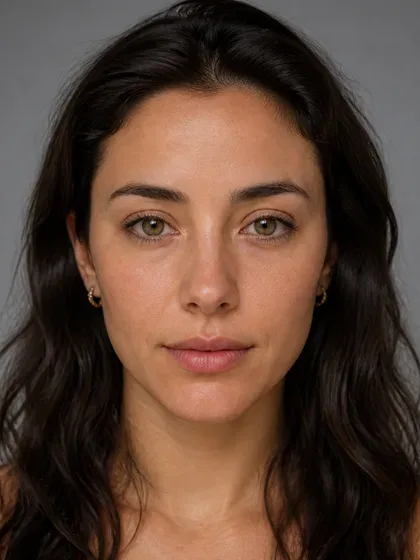
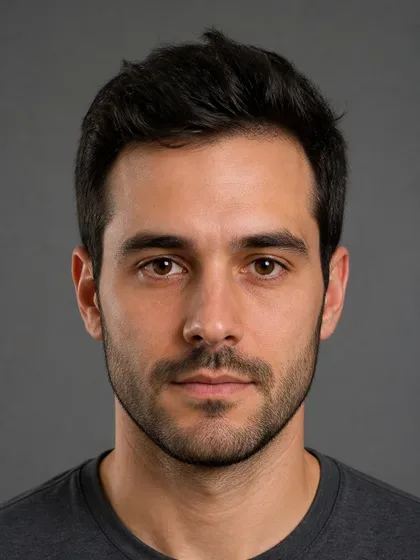
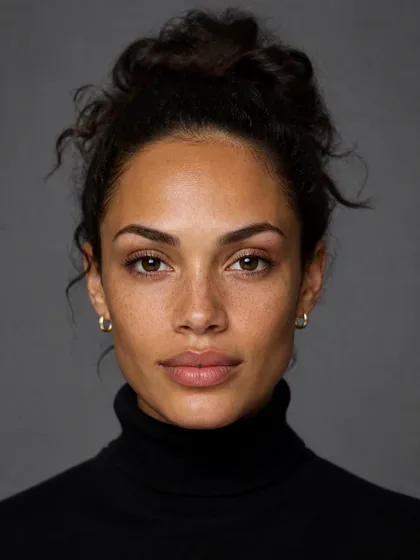
Face Report: What AI Results Mean and How to Read Them
Learn what an AI face report can estimate, why results vary by photo, how to interpret scores responsibly, and which uses to avoid.
A face report is an AI-generated visual analysis of a submitted photo. Depending on the tool, it may estimate visible traits such as face shape, proportions, or symmetry and offer subjective appearance assessments. These results reflect patterns detected in an image, not permanent measurements, medical findings, or objective judgments of attractiveness.
The useful question is not “What does this report say about my worth?” but “Which observations help me understand this photo or explore a styling choice?” Lighting, angle, expression, hair, and camera distance can all influence the answer.
What an AI face report can and cannot tell you

AI facial analysis uses software to interpret visible features in an image. It is different from facial recognition, which attempts to identify someone or match their face to another image.
A report’s contents vary by service, but its outputs generally fit three categories:
| Output type | Possible examples | How to interpret |
|---|---|---|
| Visible-feature estimates | Face shape; eye shape | Descriptions of apparent features |
| Image-dependent measurements | Symmetry estimates; facial ratios | Relationships within the photograph |
| Subjective appearance assessments | Attractiveness scores; visual harmony scores | Model-dependent impressions, not facts |
These distinctions matter. A face-shape label describes an apparent outline. A ratio compares estimated distances. An attractiveness score assigns a judgment to appearance. They do not carry the same meaning, even if they appear together in a polished report.
A face-shape estimate, for example, may describe a tapered lower face or a rounded outline. But hair covering the forehead, a turned head, or a tightly cropped chin can leave the software with incomplete information.
None of these categories establishes health, personality, background, or personal worth. Detailed wording and decimal places do not remove those limits.
How to read a face report in four steps
Step 1: Inspect the source photo
Look at the image before reading its scores. Is your head turned? Is one cheek in shadow? Does the crop include your forehead and entire chin? Are your eyes relaxed, or are you squinting?
An observation about a partly hidden feature deserves less weight than one based on a clearly visible outline. The photo checklist below helps you decide whether another image would be more useful.
Step 2: Identify the output type
Place each result into one of the three categories above.
“Your face appears longer than it is wide” is a visible-feature observation. A numerical width-to-length ratio is an image-dependent measurement. “High facial harmony” is a subjective assessment, even if it comes with a number.
Read subjective scores last and with the greatest restraint. They cannot establish whether you are attractive to other people, and they should not outweigh your preferences or comfort with your appearance.
Step 3: Look for consistency across suitable photos
Compare two clear, neutral photos rather than trusting one result in isolation. Give more attention to repeated broad observations, such as a gently tapering jaw, than to small numerical differences.
If face shape is your main question, a separate face shape estimate can focus that exploration. Mixed labels are still possible because a face may share characteristics with more than one category.
Repeated results are not proof of accuracy. They simply offer a more useful starting point than an observation that disappears with a slight change in pose.
Step 4: Translate stable observations into low-stakes experiments
Use the report to generate options, not instructions. If both images suggest a relatively long outline, you might compare hairstyles with side volume against styles with more height at the crown. Neither is automatically better. They create different visual effects.
Optional hairstyle previews can help you explore those silhouettes before changing your hair. A preview remains a visual approximation, not a prediction of how your texture, density, or growth pattern will behave.
The same approach works for eyewear, grooming, or makeup: choose a reversible change because you like its effect, not because a score implies that you need it.
Why results can change from one photo to another
Conflicting reports often describe differences between photographs rather than changes to your face.
- Head rotation: Turning away from the camera can make the farther side look narrower, shift the apparent center line, and alter symmetry estimates.
- Camera distance and lens: A close camera exaggerates the relative size of features nearer the lens, especially the nose, compared with the ears and outer face. Wide-angle selfies commonly involve this close viewpoint, so distance is a major source of the effect.
- Uneven lighting: Side lighting can deepen shadows beneath a cheekbone or along the jaw, making one side appear more defined. It does not mean the underlying structure differs to the same degree.
- Expression: Smiling lifts the cheeks and changes the mouth outline. Squinting narrows the visible eye opening, while jaw tension can alter the lower-face contour.
- Partial obstruction: Hair, glasses, and facial hair can conceal boundaries or create edges that are difficult to distinguish from facial features.
Camera height also changes perspective. A high viewpoint can emphasize the upper face relative to the lower face; a low viewpoint can do the reverse. Tight crops remove context, while blur and low resolution make feature boundaries less distinct. Makeup can change visible contrast without changing the underlying proportions.
Small score changes should not be read as evidence that your appearance has objectively improved or worsened.
Choose a photo that represents your face clearly
For a neutral reference photo, use this six-point checklist:
- Near-frontal head position: Face the camera without a noticeable sideways turn or tilt.
- Relaxed expression: Let your brow and jaw rest naturally. Avoid a broad smile, squint, or deliberately tightened jaw.
- Even lighting: Face a window with soft daylight or use diffuse light that reaches both sides of your face.
- Unobstructed facial outline: Keep the forehead edges, cheeks, and complete chin reasonably visible. Move loose hair aside when comfortable.
- Adequate sharpness: Choose an in-focus image where eye corners, lip edges, and the jaw outline are distinguishable. Avoid beauty filters.
- Sufficient camera distance: Use an eye-level camera positioned farther away than a close arm’s-length selfie. A timer and a camera roughly 1–2 metres away can be a practical starting point, with framing adjusted afterward.
The distance suggestion is not an accuracy threshold. Its purpose is to reduce close-range perspective exaggeration.
A dramatic portrait can be an excellent photograph without being a useful neutral reference. You do not need to replace your preferred photos. Use a separate reference image for analysis.
Photos that can confuse face-shape, proportion, and symmetry estimates
Some images leave specific questions unresolved, even when they are sharp and well lit.
Bangs conceal the hairline and parts of the forehead. A report may still offer an outline category, but comparisons involving forehead width have less visible evidence.
Strong contouring changes apparent definition. Depending on the lighting, shaded areas can make the cheek, nose, or jaw look narrower or more sharply outlined.
Heavy facial hair changes the visible lower-face silhouette. The outer edge of a beard is not necessarily the boundary of the chin or jaw underneath it.
Tilted poses create apparent imbalance. One eye may sit higher in the image because the head is tilted, not because the eyes have that relationship in a level pose.
Close wide-angle selfies alter perspective. Enlarged central features can make proportions difficult to compare with those in a more distant portrait.
Partially cropped jawlines remove essential information. A report cannot reliably describe a complete lower-face outline when part of it is outside the frame.
Use an additional neutral photo if you want clarification. There is no reason to remove a preferred hairstyle, beard, or makeup look solely to pursue a different score.
Use two photos to find the more dependable observations
Choose two clear photos taken under similar neutral conditions. They do not need identical framing, but both should show the full face with a relaxed expression and reasonably even light.
Start with broad descriptions rather than numbers. Does the report describe similar length relative to width? Does it place the widest visible area in approximately the same region? Does it describe a similar chin taper?
For example, “oval” in one report and “oblong” in another may still share the observation that the face looks longer than it is wide. That shared description can be more useful than choosing a single label.
If the results differ substantially, treat them as photo-sensitive. Do not average conflicting labels into a supposedly definitive answer or assume that one image reveals your “real” face.
Two photos are a practical comparison, not a scientific validation method. There is little value in repeatedly generating reports to chase a preferred score.
What symmetry, proportions, and appearance scores really mean
Symmetry describes apparent correspondence
Facial symmetry refers to how similarly features appear positioned across the two sides of the image. Natural asymmetry is common, and expression, rotation, or lighting can exaggerate it.
A facial symmetry analysis should therefore be read as an estimate based on the submitted photograph. It cannot establish that every visible difference reflects an underlying structural difference.
Perfect symmetry is not a requirement for attractiveness, and a small change in a symmetry score is not a meaningful improvement target.
Proportions describe relationships between distances
Facial ratios compare estimated distances, such as apparent face width relative to length or spacing between visible features. Perspective, expression, crop, and the software’s placement of feature boundaries all affect these relationships.
Facial proportion analysis can help illustrate those relationships, but it does not supply a universal template that faces should match.
No single proportion, including the golden ratio, is a definitive scientific standard for facial beauty. A numerical result can be descriptive without becoming a rule for how someone should look.
Appearance scores express model-dependent judgments
Attractiveness and harmony scores are subjective appearance assessments. Different tools may weigh visible characteristics differently, and human preferences also vary across individuals and contexts.
Treat such scores as informational or entertainment-oriented outputs, not rankings. They are unsuitable for comparing people’s worth or deciding how someone will be perceived in real life.
Use face reports for exploration, not high-stakes judgments
Appropriate uses for a face report
A report can provide vocabulary for discussing a hairstyle, help you compare eyewear silhouettes, or suggest a detail to explore in a portrait.
An eye-shape estimate might offer a starting point for experimenting with eyeliner placement. A description of the visible jaw outline might help you explain a preferred beard shape. Neither creates a rule about what you should wear.
The useful outcome is a clearer preference, such as “I like this frame width” or “I prefer less height in this hairstyle,” rather than “I need a higher score.”
Decisions a report should not make
Do not use appearance analysis for medical or psychological diagnosis, confirming identity, ancestry or genetic claims, personality judgments, or predictions about health and future outcomes. It should not guide employment, insurance, relationship decisions, or judgments of personal worth.
Before uploading a face photo, read the service’s current privacy information. Look for how images are stored, how deletion works, whether images are shared, and whether they may be used for model training. Policies differ, so do not assume one service handles photos like another.
If you want to explore an image-based appearance analysis within these limits, Facefy’s AI Face Report is an optional next step. Use it to consider observations and questions, not to obtain a verdict about yourself.
Common questions about face reports
How accurate is an AI face report?
There is no single accuracy claim that applies to every tool or output. A broad outline description and a subjective attractiveness score answer different kinds of questions. Photo quality and model limitations affect how useful either result is.
Can a face report determine face shape?
It can estimate the outline visible in a photo. Styling, pose, crop, and naturally mixed traits can make a single label uncertain. Descriptions such as “longer than wide with a softly tapered chin” may be more useful than a category alone.
Why did my result change with another photo?
Perspective, lighting, expression, and covered features can change what the software sees. A substantially different result is a reason to question its stability, not evidence that your face changed.
Can it reveal a health condition?
No. Cosmetic appearance analysis is not a medical assessment. If you have a health concern, seek advice from a qualified healthcare professional rather than interpreting an appearance score.
Is it safe to upload a face photo?
That depends on the service’s handling practices and your comfort with them. Read its privacy and deletion information, upload only photos you have permission to use, and avoid submitting an image if the terms are unclear to you. You can explore styling preferences without uploading a face photo at all.