What Is Balayage? Technique, Results, Maintenance, and Suitability
Learn how balayage works, what affects the finished color, how much upkeep it needs, and what to discuss with your colorist before committing.
Balayage is a highlighting technique in which a colorist paints selected sections of hair to control where brightness and dimension appear. It is not one specific shade: the result can range from subtle caramel ribbons to bright beige-blonde sections or a high-contrast mix of light and dark.
What is achievable depends on your starting color, previous treatments, hair condition, texture, and desired lightness. Balayage can create a softer-looking grow-out, but that does not necessarily mean fewer appointments for tone or conditioning care.
Balayage is a technique, not a single hair color
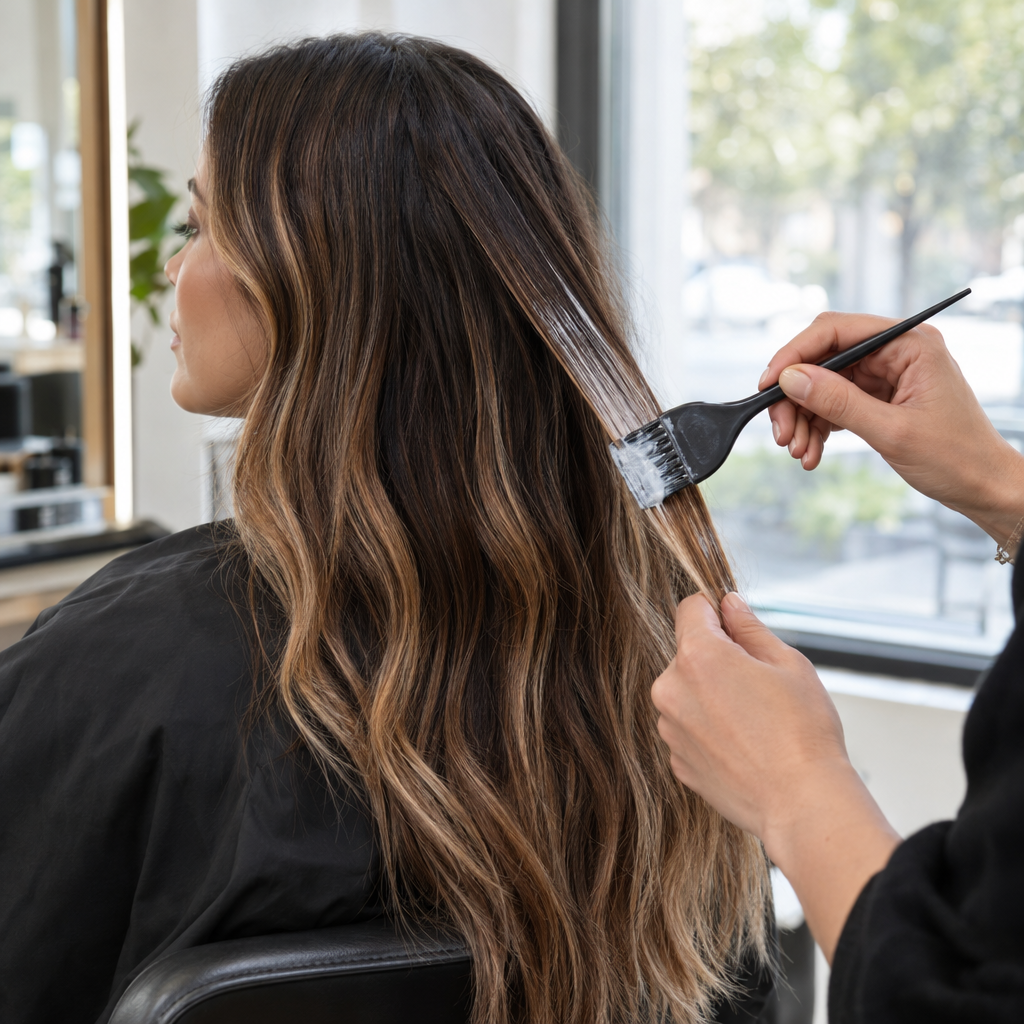
Requesting “balayage” tells a colorist something about the application method, but not enough about the finished result. Four terms help separate the main decisions:
Technique: How the color or lightener is applied, such as hand painting.
Placement: Where brightness appears—around the face, through selected lengths, or mainly toward the ends.
Lift: How much pigment must be removed to lighten the hair.
Tone: The warm, neutral, or cool character of the finished color.
Two people with brown hair can receive similar painted placement and leave with very different results. One might choose fine caramel ribbons close to their natural depth, while the other wants wider beige-blonde sections with stronger contrast. The technique may be similar, but the required lift and final tone differ.
Personal color analysis can provide a starting point for exploring shade preferences, but it is not a rulebook. Comparing actual colors near your face in consistent lighting is more useful than assuming your undertone permits only one color family.
How balayage is applied and developed
A colorist selects sections, applies lightener or color with deliberate placement and saturation, monitors the processing, and then rinses and adjusts the finish as needed.
Open-air painting is one approach, not a requirement for every service described as balayage. Foils or film may help support greater lift, while cotton or other separators can keep painted sections apart. Some colorists combine methods to create brighter ends without leaving an obvious line near the roots.
Different parts of the service perform different jobs:
- Lightener removes pigment. Permanent color may provide some lift on suitable natural hair, but it does not reliably lighten hair containing permanent dye.
- Toner or gloss adjusts the finished shade. It cannot compensate for substantial missing lift.
- Root shadow adds or adjusts depth near the roots to soften the transition.
- Customized placement determines where brightness appears and how much darker hair remains between highlighted sections.
Traditional foil highlights often use more systematic sectioning, sometimes beginning close to the scalp. Balayage emphasizes painted placement, although the methods can overlap. Ombré, by contrast, describes a graduated darker-to-lighter effect rather than one mandatory application method.
What balayage usually looks like—and why results vary
Balayage commonly leaves some natural or darker hair between the highlighted sections. This contrast creates dimension, while staggered starting points can make regrowth less sharply defined than uniform root-to-end lightening.
The result does not have to be blonde or especially subtle. Broad, bright ribbons can look bold, while fine highlights only slightly lighter than the base can create understated movement.
The same reference photo also translates differently across hair types. Waves expose alternating light and dark sections, while straight hair can make placement and transitions more visible. Density affects how much darker hair sits behind the highlights. Lighting, filters, extensions, and styling can further change the apparent brightness and fullness.
A blended root does not prevent toner from fading or bright face-framing sections from needing attention.
Who balayage may suit
Balayage may suit you if you want selective brightness while retaining some natural or darker depth, rather than an evenly lighter color from scalp to ends.
Dark hair can receive balayage. A caramel result close to the starting shade generally requires less lift than a pale blonde result. Major lightening exposes warm underlying pigment and may require staged appointments, particularly on previously dyed hair. If blonde is your goal, consider both the achievable lift and whether the shade and contrast suit your preferences.
Length and density affect placement. Longer hair provides more room for gradual transitions. On very short hair, a painted section may occupy most of the visible length, making contrast more obvious. Dense hair may need additional sections for the brightness to remain visible throughout the shape.
Curly and coily hair needs placement designed around its usual styling state. Shrinkage and curl grouping change where highlighted sections appear. A ribbon painted through stretched hair may separate into several bright areas when the curls return. Tell your colorist whether you normally wear your hair natural, stretched, or both.
Gray blending is different from gray coverage. Selected highlights can soften the contrast between gray strands and pigmented hair, but they do not provide complete, opaque root coverage. New gray growth will still appear, so discuss whether you want blending, coverage, or a combination of the two.
Your starting color and color history can change the plan
Your colorist needs an accurate account of previous dye and chemical services, including treatments that have grown away from the roots but remain in the lengths.
| Starting condition | What to discuss |
|---|---|
| Virgin hair | Agree on realistic lift and tone based on the natural depth and condition. Untreated hair still contains underlying warmth and cannot necessarily reach every blonde shade in one appointment. |
| Previously lightened hair | Check porosity, elasticity, breakage, and the risk of overlapping existing highlights. If the hair is already light enough, a tone-only adjustment may be more appropriate than additional lightener. |
| Permanent dark dye | Discuss strand testing and possible staged lightening. Artificial pigment may lift unevenly or reveal persistent warmth. |
| Henna, progressive dye, metallic-salt products, or uncertain history | Bring product names or packaging when possible and arrange an in-person assessment. Avoid relying on guaranteed color outcomes without testing how the hair responds. |
| Fragile or repeatedly processed hair | Prioritize condition. Less lightening, different placement, or postponing the service may be appropriate. Conditioning products do not automatically make compromised hair ready for another chemical process. |
Understanding basic hair color levels and tones can make the consultation clearer, especially when separating the desired lightness from the preferred warm, neutral, or cool finish.
A strand test shows how a small section responds to the proposed color process, including lift and condition. A patch test addresses sensitivity to a particular product and should follow the product’s instructions. One does not replace the other, and neither guarantees an identical response across the whole head.
How to choose a useful balayage inspiration photo
Bring several references and identify what you like in each one: the face-framing brightness, amount of dark root, ribbon width, contrast, tone, or lighter ends.
Compare the reference with your own hair:
- Is the starting base as dark or light as yours?
- Does your hair contain dye or previous highlights that may affect lift?
- Is the reference hair straight, wavy, curly, or coily?
- Could extensions or dense styling be contributing to the fullness?
- Is the hair shown in the way you usually wear yours?
Ask to see similar color on hair worn in your usual texture. A curled salon finish can make transitions appear softer than they look when the hair is straight.
Once you have narrowed down the placement, Facefy’s Hair Color Try-On can help you compare broad shade directions. Treat the preview as a planning aid: lighting and image processing affect how color appears, and a digital preview cannot predict lift, processing behavior, or an exact salon result.
What to say during a balayage consultation
Instead of asking only for balayage, try:
“I want this level of brightness and contrast, with the lightest areas mainly here. I prefer a warmer, neutral, or cooler finish, and this is how often I can manage maintenance appointments.”
Be specific about whether you want a visible root, fine ribbons or broader sections, and brightness around the face versus through the ends.
Disclose permanent color, box dye, henna, progressive dyes, metallic-salt products, relaxers, previous lightening, and anything you cannot identify. Older color can remain in the lengths long after the roots have grown out.
Discuss your budget separately from the desired result. Ask what the quoted service includes, such as toner, a root shadow, or styling, and what later maintenance may involve. Length, density, correction needs, salon pricing, and the target shade all affect appointment time and cost. A major transformation may require more than one visit.
Balayage maintenance, fading, and unwanted warmth
Root grow-out, fading tone, and hair condition follow different schedules. You may still like the highlight placement when the gloss needs refreshing, or want only a face-framing touch-up instead of another full lightening service.
Why the color may look warmer
Warmth is not automatically an error; honey, caramel, gold, and copper can be intentional. If the result looks warmer than you wanted, the appropriate response depends on the cause:
- Underlying pigment was revealed during lightening. Brown hair can expose red, orange, or yellow tones as it lightens. Ask whether a warmer target better suits the achievable lift or whether further lightening is appropriate.
- The hair did not lift enough for the intended shade. A pale, cool target requires a sufficiently light base. Reassess the target and hair condition with your colorist; applying a stronger toner is not a substitute for missing lift.
- The toner has faded. If the color initially looked right and gradually became warmer, a toner or gloss refresh may restore the intended finish without more lightening.
- Mineral or product buildup has changed the appearance. Hard-water mineral deposits are one possible cause. Ask your colorist to assess suspected buildup before using stronger toning products, which may not address the underlying issue.
Purple shampoo can help counter some yellow tones, but it is not a universal answer to orange warmth or uneven color. Follow the product directions and your colorist’s advice to reduce the risk of dullness or patchy pigment deposits.
Caring for lightened hair
Wash as needed for your scalp and routine, condition the lengths, and limit unnecessary high-heat styling. Use heat protection with hot tools. Frequent washing and heat exposure can contribute to faster changes in tone.
Lightening can cause dryness, breakage, or uneven porosity, especially after repeated processing or application over previously lightened sections. Appropriate care for lightened hair can support manageability and help limit further stress. Masks, oils, and bond-focused products may improve how the hair feels, but they cannot fully reverse structural damage.
Do not apply color or lightener over an irritated, injured, or symptomatic scalp. Seek appropriate professional guidance before proceeding.
Is balayage right for you? A final self-check
Consider your desired contrast, acceptable warmth, toner upkeep, budget flexibility, and willingness to accept a result that may differ from your reference photo.
Balayage may be achievable as requested when the target is reasonably close to your starting point and the hair is in suitable condition. Subtler placement may be more appropriate if you want less contrast or need to limit additional processing. Staged appointments are more likely when the target is much lighter than a dark or permanently colored base.
Fragile, unevenly colored hair or an uncertain dye history requires an in-person assessment before setting expectations.
Frequently asked questions about balayage
Does balayage always use bleach?
Many lighter results use bleach-based lightener. Some applications use permanent color on suitable natural hair, depending on the starting point and desired lift.
Can balayage cover gray hair?
It can blend selected gray areas by reducing contrast. Complete root coverage generally requires a separate color approach.
Does balayage work on short hair?
Yes, but limited length leaves less room for a gradual transition. Placement may need to be finer or more selective.
Is balayage suitable for curly or coily hair?
It can be. The colorist should account for curl pattern, shrinkage, density, condition, and your usual styling state.
How does balayage grow out?
Staggered placement often creates a softer root transition. Toner and brighter sections may need refreshing before the overall placement does.
How long does a balayage appointment take?
A substantial lightening service can take several hours, but timing varies with length, density, starting color, technique, and the intended result. Ask your colorist for an estimate based on your hair.
Does balayage damage hair?
Any lightening can affect hair condition. The risk depends on the starting condition, processing, overlap, and aftercare—not simply whether the service is called balayage. A suitable plan balances the desired brightness with what the hair can reasonably tolerate.