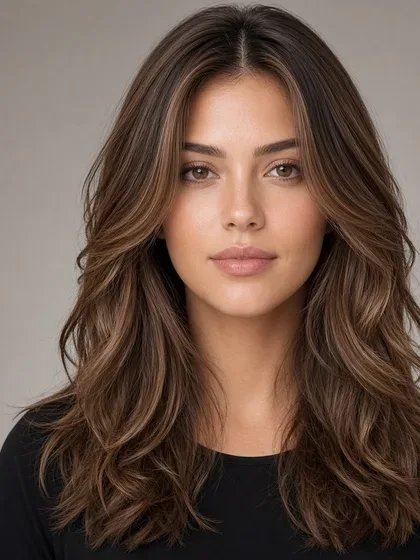
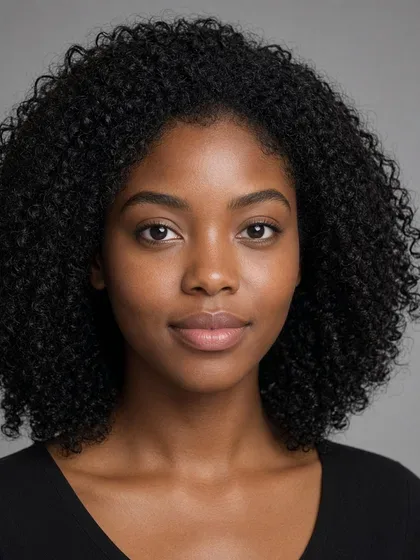
Undercut Haircut Guide: Variations, Barber Requests, and Upkeep
Learn what defines an undercut, compare key variations, choose placement for your hair, and know what to request, style, and maintain.
An undercut keeps part of the sides or back significantly shorter than the hair above it. Most versions create a noticeable boundary between the short section and longer top, although light blending can soften that contrast.
The structure has appeared in many periods and style movements, from practical short-sided cuts to modern disconnected shapes. Today, “undercut” covers a broad family of cuts rather than one fixed look.
The right version depends on where the short section begins, how much hair remains above it, your natural texture and density, and how often you want to style or trim it. A small, concealed nape section and a high, exposed undercut share the same basic structure but behave very differently.
What makes an undercut an undercut?
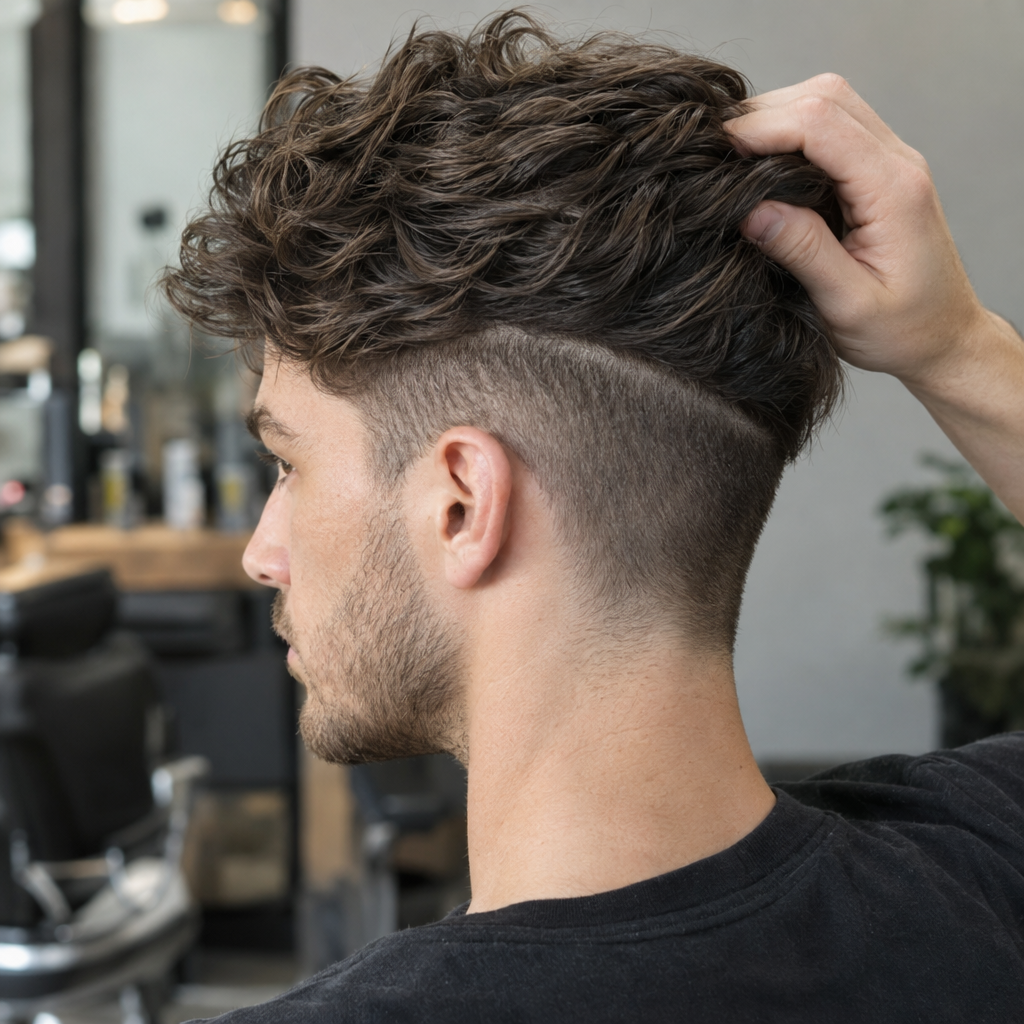
An undercut is a haircut structure, not one particular finished hairstyle. The longer hair can fall forward, sweep back, retain its natural texture, or cover the cropped section.
Four details define the result:
- Placement: The short section can occupy one side, both sides, the temples, the nape, or most of the lower head.
- Boundary height: This is where the short section ends and the longer hair begins.
- Short-section length: Skin-close clipping creates a different effect from a longer, softly cropped section.
- Connection: A disconnected cut leaves a deliberate length difference. A softened edge reduces its sharpness without necessarily connecting all the lengths.
“Disconnected” does not mean a visible line must run around the head. Longer hair may hang over the boundary and conceal it. The defining feature is the difference in length underneath.
Undercuts can work across genders and styling preferences. What matters is the shape you want, not who usually wears a reference haircut.
Undercut vs. fade, taper, sidecut, and two-block haircut
These terms describe different aspects of a haircut, so they can overlap. Start by looking at how the lengths connect.
| Cut | Transition | Top-to-side connection |
|---|---|---|
| Undercut | Deliberate length contrast | Usually disconnected; sometimes softened |
| Fade | Gradual short-to-long progression | Can connect or remain disconnected |
| Taper | Gradual shortening near edges | Usually connected above the edges |
| Sidecut | Localized short section | Often disconnected beneath longer hair |
| Two-block | Longer upper, shorter lower sections | Often disconnected or lightly blended |
Placement also changes the overall effect.
| Cut | Usual placement | Typical visual effect |
|---|---|---|
| Undercut | Sides, back, or concealed lower sections | Longer hair above a cropped area |
| Fade | Sides and back | Graduated contrast and exposed contour |
| Taper | Sideburns and neckline | Subtle edge refinement |
| Sidecut | One side or temple | Localized asymmetry |
| Two-block | Short lower section beneath longer upper | Weightier, often rounded upper silhouette |
A fade gradually changes length within the short section. An undercut describes that section’s relationship to the longer hair above. You can therefore have an undercut with a faded lower section. A detailed fade haircut guide can help you compare the transition itself before deciding how disconnected the top should remain.
In everyday barber language, a taper often means limited shortening around the sideburns and neckline. Terminology varies, so point to the areas you want shortened instead of relying entirely on a label.
A sidecut is often a localized undercut rather than a completely separate category. A two-block haircut also separates upper and lower sections, but it commonly preserves a fuller upper shape. Ask about the actual boundary and retained weight rather than relying on the name alone.
Undercut variations and how placement changes the result
These variations are not mutually exclusive. A long-haired undercut can also be a hidden nape undercut, for example.
| Variation | Short-section placement | Usual contrast | Styling commitment | Grow-out effect |
|---|---|---|---|---|
| Disconnected | Sides, back, or both | Sharp | Moderate if the boundary is exposed | Contrast softens as the sides fill in |
| Blended | Sides or back with a softened boundary | Moderate | Low to moderate | Fullness develops near the connection |
| Hidden | Beneath an intact covering section | Low when covered | Depends on how often it is revealed | Short hairs may push against the covering hair |
| Nape | Lower back of the head | Subtle or exposed | Usually low | Regrowth shows when the upper hair is lifted |
| Side | One side or temple | Localized and asymmetric | Part placement matters | Temple regrowth may project outward |
| Long-hair | Beneath retained long hair | Changes with styling | Flexible but part-dependent | Full grow-out can take considerable time |
| Bob undercut | Beneath the outer perimeter | Concealed or deliberately visible | Low if the outline falls naturally | Internal fullness returns before lengths match |
| Curly undercut | Beneath retained curls | Depends on the dry curl shape | Curl definition and placement matter | Regrowth can create fullness below the longer curls |
Disconnected and blended undercuts
A disconnected undercut keeps a clear difference between the longer top and short sides. The boundary may be exposed, or the longer hair may fall over it.
A blended undercut softens that boundary without necessarily creating a fully connected transition. This is useful when you want recognizable top-to-side contrast but do not want a hard weight line.
A fully gradual connection changes the structure more substantially. Depending on the placement, it may move the haircut toward a taper, fade, or another connected shape rather than remaining a clearly disconnected undercut.
Hidden, nape, and side undercuts
A hidden undercut retains enough hair above the cropped section to cover it. It can offer styling flexibility, but concealment depends on density, length, parting, movement, and how the hair behaves when tucked or tied.
A nape undercut removes hair at the lower back without necessarily shortening the sides. It may remain covered when the hair is down and become visible when the hair is lifted.
A side undercut concentrates the short section around one temple or side. The usual part is especially important because moving the part can either expose the section or leave too little hair to cover it.
Long-hair and bob undercuts
An undercut can remove internal bulk while preserving an outer perimeter. With long hair, the difference may be most noticeable in a ponytail or updo because the gathered hair can feel less full.
A bob undercut sits beneath the outer shape. It can be useful when the goal is to reduce concentrated weight at the nape, but excessive removal may leave the perimeter thinner than intended. If you are considering a short bob, ask the stylist to show how much hair must remain to preserve the outline.
How boundary height changes the result
A higher boundary removes more supporting hair and exposes more of the short section. It can also make the remaining top appear narrower or more isolated.
A lower boundary generally preserves more coverage and styling flexibility. For a concealed result, the remaining hair must reach beyond the boundary with enough density to cover it in your usual part.
Check the placement before any hair is removed
Temporary sectioning cannot reproduce a finished haircut exactly, but it can reveal whether the proposed area is larger or more visible than expected.
- Mark out the proposed short section. Use clips to separate it from the hair you intend to keep.
- Pin or tie that section out of the silhouette. Avoid pulling surrounding hair unnaturally tight, which can create misleading coverage.
- Inspect front, profile, and back views. Use a second mirror or photographs rather than judging only the front.
- Check your usual part. Then try any alternative parting you regularly wear.
- Release the covering hair. Wear it down, tuck it behind your ears, and tie it back if the length allows.
- Check concealment. Does the remaining hair extend comfortably beyond the boundary? Does the short area become exposed when you turn your head or move the part?
If hiding the undercut matters, ask the stylist to repeat this sectioning exercise before cutting. A small, low section offers more room to adjust later than a large, high section.
Photos and generated previews are approximate guides. Angle, lighting, hair position, image quality, and generated details can change the apparent boundary or density. They cannot establish exactly how your hair will fall after weight is removed. A visual hair style try-on may help you compare broad directions, but the final placement should still be assessed on your actual hair.
How texture, density, and growth patterns affect an undercut
Assess the longer section dry and in the state you normally wear it. Wet, stretched, or heavily smoothed hair can conceal shrinkage, root lift, and differences between sides.
| Texture | Cutting consideration | Styling and grow-out |
|---|---|---|
| Straight | Boundaries and weight lines show clearly | Direct roots carefully; regrowth may project outward |
| Wavy | Follow changing wave directions | Preserve movement; sides may settle differently |
| Curly | Allow for dry shrinkage and concentrated volume | Define curls and watch fullness near the boundary |
| Coily | Assess shrinkage and supporting volume | Follow the usual pattern; regrowth adds lower fullness |
Straight and wavy hair
On straight hair, a smooth finish can make a heavy overhang or uneven boundary especially visible. Retaining slightly more length in the short section can soften the contrast.
With waves, the same cut may sit closer on one side and lift on the other. Ask the stylist to follow the natural bends rather than assuming both sides will fall identically.
Part placement also affects exposure. If you regularly wear a middle part haircut, have the stylist evaluate both sides independently because the wave direction or density may not be symmetrical.
Curly and coily hair
For curls and coils, length alone does not predict coverage. Shrinkage may expose more of the boundary than a stretched reference suggests.
Removing supporting hair can sometimes alter how retained curls settle, particularly near the perimeter. There is also a separate visual effect: closely cropped sides can make the retained curl volume look more pronounced even when the curls themselves have not become physically wider. Assess the top’s dry outline before setting the boundary.
Discuss where you want fullness to remain, such as above the temples, around the crown, or lower around the outline. The stylist should also consider whether you usually wear the hair fully defined, picked out, stretched, or allowed to shrink naturally.
After narrowing placement, contrast, and upkeep, Facefy’s Hairstyle Finder can help you explore haircut directions. For curly and coily hair, use visual ideas to discuss dry shape and volume with your stylist, not to predict exact curl behavior.
Growth patterns and other placement considerations
- A cowlick or strong root direction: The top may split, lift, or fall across the boundary. Preserve enough length to work with that direction rather than expecting clipping to eliminate it.
- Fine strands or lower density: These are different characteristics. Fine describes strand thickness; density describes how closely hair grows. Either can affect coverage, but neither automatically rules out an undercut.
- Greater scalp visibility: A very short or high section may expose more scalp. A lower, smaller, or less severe undercut retains more hair if coverage is important.
- Hairline recession: Point out which front and temple areas you want preserved. A boundary placed behind those areas may offer more styling options than removing them.
- Previously shaved sections: Show the stylist their current length and boundaries. An old section may need to grow before a new shape can connect or cover it.
A hidden undercut is not automatically discreet on lower-density hair. It still needs sufficient overlying coverage.
Sudden or persistent changes in hair or scalp condition are separate from haircut selection and are worth discussing with an appropriate healthcare professional.
Three worked ways to choose an undercut
The following examples show how texture, coverage, styling habits, and appointment tolerance can lead to different decisions.
1. Concealed coverage with long or bob-length hair
Suppose you wear your hair down most days, occasionally tie it up, and want the cropped section to remain hidden at work.
A low nape undercut is more suitable than a high section extending around both sides. The stylist can first clip away a conservative area below the occipital region, then release the outer hair to confirm that it covers the boundary without being pulled tight.
Preserving density along the outer perimeter matters more than maximizing the amount removed. A softly cropped short section may also produce less obvious contrast if it becomes exposed unexpectedly.
This choice works best when you accept that tying the hair high may reveal the undercut. It is less suitable if the remaining hair is too sparse or short to cover the proposed section naturally.
2. An exposed undercut that preserves dry curl volume
Consider someone who wears curls or coils in their natural dry shape and wants the sides visibly shorter while maintaining fullness through the crown and upper sides.
The boundary should be set while the top is dry or close to its normal dry shape. A lower starting point allows the stylist to preserve support around the temples before deciding whether more height should be removed.
The short section can be clearly disconnected, but the edge may be softened to prevent a rigid shelf. The goal is not to make both sides visually identical at all costs. Natural curl direction and shrinkage may produce slight differences.
If the top is sometimes stretched or braided, explain that too. A boundary that looks balanced with fully shrunken curls may become more exposed when the hair is elongated.
3. Lower-maintenance contrast with fewer appointments
Suppose you like the undercut structure but do not want to maintain a skin-close section every few weeks.
Ask for a lower boundary, a longer clipped finish, and a softened edge. Keeping approximately 9 to 12 mm instead of cutting close to the scalp can make early regrowth feel less abrupt, although the right length depends on your hair and desired finish.
A moderate top-to-side contrast will generally tolerate more growth than a very high, sharply disconnected cut. You can also ask the stylist to avoid an aggressively squared neckline, which may lose its precise outline quickly.
This option will not stay freshly clipped indefinitely. It simply allows the shape to soften more gradually between appointments.
What to tell your barber or stylist
Bring front, side, and back references where possible. Similar texture, density, top length, and finish make a reference more useful than a matching haircut name. Alongside hairstyle reference photos, you can explore your facial characteristics using Facefy’s Face Report. Understanding your facial features may help you communicate which areas you want your haircut to emphasize, while your barber or stylist can assess the actual hair length, texture, and undercut placement.
Specify these six details:
- Boundary height: Point to a landmark, such as just above the ear or below the head’s widest curve. Have the stylist show you the proposed section.
- Short-section placement: Specify one side, both sides, the nape, or a continuous section around the sides and back.
- Finished short length or guard: Describe whether you want visible coverage or a near-skin finish. Confirm millimeters because guard systems and clipper settings vary. Around 6 mm is one possible longer-clipped starting point, not a universal recommendation.
- Connection: Request a clear disconnection, a softened undercut boundary, or a fully connected transition. A softened boundary retains recognizable top-to-side contrast. A fully gradual connection moves the result toward a taper, fade, or another connected shape.
- Top length: State what must stay and where the shortest top pieces may finish when dry. Include your normal styling direction.
- Neckline treatment: Choose a natural, tapered, rounded, or squared finish where appropriate. Ask how it will look as it grows.
One complete example request would be:
“I want both sides and the back shortened, with the boundary just above the ears and below the widest curve of my head. Leave the short section about 6 mm long rather than taking it to skin, and let me see the coverage before going shorter. Keep the top disconnected, preserving enough front length to reach my eyebrows when dry. I normally sweep it back. Please taper the neckline softly rather than leaving a squared edge.”
The 6 mm length in this example is illustrative. Someone wanting softer contrast, more scalp coverage, or less frequent clipping may prefer a longer finish.
Explain which reference details matter: “the low boundary in this photo, the top length in that one, and the natural neckline in the third.”
Before cutting, ask: “Will this still cover the short section in my usual part, and what changes when I air-dry it?”
Styling the longer section
Styling direction changes how much of the undercut you see.
- Air-dried texture: Arrange the part and front while damp, then let the natural pattern settle.
- Directional blow-drying: Guide roots into the intended direction before concentrating on the ends. Use moderate heat and heat protection.
- Natural curls or coils: Apply your usual suitable styling product and arrange the upper section without stretching it beyond the shape you normally wear.
- Smooth or swept-back styling: Lift or direct longer hair away from the cropped area to expose the boundary.
- Covered styling: Let longer hair fall over the short section to soften or conceal it.
- Long hair worn up: Keep the fastening comfortable. Extra tension is not necessary to show the undercut.
Product choice should follow the desired finish. A lightweight mousse can support movement, a cream can provide softer control, and a gel or pomade can offer stronger hold, depending on the formula and hair type.
If the roots have dried in the wrong direction, adding heavier product may only weigh down the ends. Lightly dampen the roots and redirect them instead.
Undercut upkeep and realistic trim timing
Plan around the finish you want, not a fixed haircut calendar:
- Crisp, high-contrast result: Approximately every 2 to 4 weeks.
- Softer outline: Roughly every 4 to 6 weeks.
These are planning ranges. Growth rate, starting length, boundary height, and your tolerance for softness change the schedule. A near-skin section may lose its freshly clipped appearance sooner, while a concealed section may remain comfortable longer.
The whole haircut does not necessarily need attention at once. Neckline cleanup, short-section clipping, boundary refinement, and top reshaping can follow different schedules.
Ask what is included in a maintenance appointment. Repeatedly raising the boundary to tidy stray hairs can gradually enlarge the undercut.
Avoid attempting high boundaries or back sections at home without clear visibility and control. An uneven line may require removing more hair to correct.
Three ways to grow out an undercut
1. Keep the top while growing the sides
This preserves the length you already enjoy. The tradeoff is a continuing length difference until the short area can blend into, tuck beneath, or reach the longer section.
Use controlled parting and comfortable clips to manage intermediate lengths. Short regrowth may stick outward before it becomes long enough to lie down.
2. Shorten the top to reduce contrast
Bringing the longer section closer to the growing sides can create a more even silhouette sooner.
You give up some top length and possibly some tying or coverage options. This route makes the most sense if your intended final haircut is shorter anyway.
3. Move through a connected taper or layered shape
A stylist can gradually connect selected areas as they gain enough length. Periodic reshaping helps intermediate stages look deliberate.
A layered transition may distribute the difference more gradually, but the position of the shortest layers should support the final haircut rather than recreate the undercut boundary.
The tradeoff is ongoing appointments and selective length removal. Keep the eventual goal clear so each tidy-up supports the grow-out instead of recreating the original cut.
Across all three routes, texture, curls, and styling over the growing section can soften temporary bulk. Avoid automatically trimming every uneven patch because some of that length is necessary for the next stage.
Undercut questions answered
Can an undercut be subtle or hidden?
Yes. A low nape or small concealed section can remain covered when the upper hair is down. Concealment depends on its length, density, parting, and movement, not just the size of the cropped area.
Does an undercut work with curly or coily hair?
Yes, with placement adapted to dry shrinkage and volume. The stylist should assess the upper section in its usual state and preserve enough supporting hair for the intended silhouette.
Can long hair or a bob have an undercut?
Yes. The cropped section can sit underneath a retained outer perimeter. Start conservatively if keeping fullness at the ends is important.
Will it affect the appearance of fine or lower-density hair?
It can because some hair contributing to coverage is removed. A smaller or lower section may retain more flexibility, while a hidden version still requires adequate covering hair.
Is a two-block haircut the same as an undercut?
They overlap, but the labels are not interchangeable in every salon. A two-block cut usually emphasizes a longer, fuller upper section over shorter lower hair. Confirm the shape and connection directly.
How long should the hair on top be?
Long enough for your intended dry shape, whether that means sitting upright, sweeping back, or covering the boundary. Ask for a length based on visible landmarks and normal texture rather than a universal number.
How can reference photos prevent misunderstandings?
Use multiple angles and identify specific features: boundary height, exposed area, top length, short-section length, and neckline. A clear statement such as “keep this amount of side coverage, but leave my natural texture” is more useful than asking for an exact copy.