Would Short Hair Suit Me? A Practical Guide Before You Cut It
See whether short hair may suit you by comparing cut families, hair behavior, upkeep, reversible previews, and salon talking points.
Short hair can suit almost anyone, but no single face measurement can tell you which cut you will enjoy wearing. The better guide is how your hair behaves, where you want volume, which features you enjoy emphasizing, and how much styling and upkeep feel realistic.
If you are asking, “Would short hair suit me?”, compare a few silhouettes rather than treating short hair as one look. A close pixie, soft bixie, chin-length bob, and collarbone-length lob can create very different results.
What Counts as Short Hair?

| Cut family | Feature exposure and tie-back | Upkeep and grow-out |
|---|---|---|
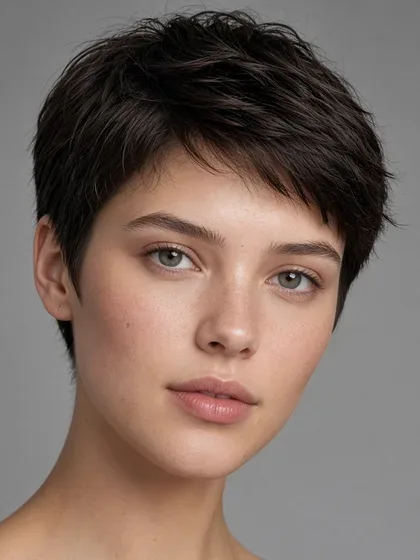
| Close crop or pixie | High exposure around the ears and neckline; generally no tie-back ability | Frequent shaping; short sections may need resetting after sleep; grow-out often benefits from staged reshaping |
| Bixie | Moderate exposure; longer sections can usually be secured with clips rather than tied back | Moderate shaping; longer sections create a softer transition as the cut grows |
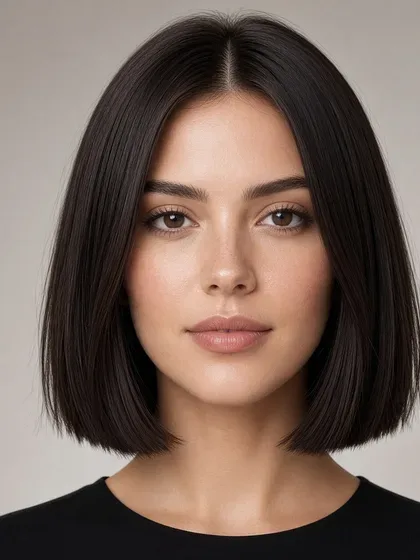
| Chin-length bob | The jaw is framed by the perimeter, meaning the haircut’s outer or bottom outline; tie-back is limited | Moderate shaping; the outline gradually moves lower as it grows |
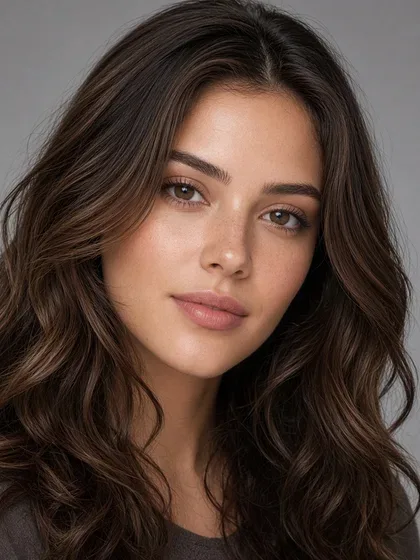
| Lob | More framing around the neck and shoulders; tie-back is often possible | Less frequent shaping; flexible transition into longer hair |
Graduation can change how these cuts sit. It uses progressively stacked lengths to build weight and shape, often at the back of a bob. Layers, fringe, weight along the bottom edge, and volume placement can also make two cuts at the same length look and behave very differently.
A precise bob may need more styling than a textured pixie, while a heavily layered lob may not gather fully into a ponytail. Use the table as a starting point, then consider your hair’s natural behavior.
Check These Five Factors Before Face Shape
Start with your hair on an ordinary day, worn in its natural texture. These five checks are usually more useful than assigning your face to a category.
- Natural texture: Does your hair fall straight, bend at the ends, form waves, curl, or coil? Note where it expands or changes direction. A reference photo styled smooth may require daily work if your hair naturally forms a rounded shape.
- Density: Look at how much hair you have overall, rather than the thickness of one strand. Would removing weight help the shape, or would it remove fullness you want to keep?
- Growth patterns and cowlicks: Check your fringe area, crown, and nape. Hair that lies flat when long may lift once its weight is removed. A cowlick can also separate a fringe or change how a cropped neckline sits.
- Dry-length shrinkage: Compare where your hair sits naturally dry with where it reaches wet or gently stretched. Waves, curls, and coils may sit higher after cutting, particularly when longer hair no longer weighs them down.
- Realistic styling time: Choose an honest daily budget, such as 5, 10, or 20 minutes. Include drying, reshaping after sleep, and product application, not just brushing.
Before choosing a cut, finish this sentence:
“I want a shape that works with my natural ____, keeps volume around ____, and needs no more than ____ minutes of styling.”
That gives a stylist something more useful than “I want short hair that suits my face.”
How Short Hair Changes Visual Emphasis
Removing length can reveal more of your hairline, ears, jaw area, neck, and shoulders. Exposure is a styling effect, not a judgment about which features deserve to be shown or covered.
The shape of the cut determines where attention goes:
- Crown volume creates height. A lifted top produces a taller silhouette than a flat or close-fitting crown.
- Side volume creates width. Fullness around the temples or cheeks changes the outline even when the overall length stays the same.
- A fringe changes forehead and eye framing. A straight fringe creates a stronger horizontal line, while a swept fringe introduces a diagonal.
- Ends near the cheek, jaw, or lower neck create different framing lines. Compare those stopping points rather than assuming every short haircut has the same effect.
Face shape can help describe an optional adjustment. Someone who wants more width might keep fullness at the sides, while someone who wants height might prefer a lifted crown. Neither choice is mandatory for any face category. If you’re unsure about your facial outline, Facefy’s Face Shape Detector can provide a photo-based estimate to help you explore how different short hairstyles might frame your features.
You also do not have to aim for a supposedly ideal shape. A cut that feels expressive, comfortable, or recognizably yours can matter more than conventional styling rules.
Try a Reversible Three-Length Test
You do not need to recreate a finished haircut perfectly. The aim is to compare how different outlines feel before committing to a cut.
Use a mirror, gentle clips or pins, and consistent lighting. Avoid pulling tightly, which can change both your hairline and the apparent shape.
1. Approximate an above-ear silhouette
Fold longer hair inward and secure it toward the back, keeping the sides close enough to suggest a crop. Leave some top volume rather than slicking everything flat.
Notice how you feel about visible ears, temples, and neck. This will not reproduce a pixie’s actual layers, but it can help you assess exposure.
2. Create a jaw-length outline
Make a loose, low ponytail, tuck the length underneath, and secure it near the nape. Gently loosen the sides until the outline sits near your jaw.
Compare a center part with your usual side part. Notice whether you prefer fullness near the cheeks or a closer outline through the sides.
3. Approximate a collarbone-adjacent outline
Fold and pin the ends lower, preserving more length around the neck and shoulders. Check whether this feels like enough change and whether it retains the framing you enjoy.
For each version:
- Use a neutral expression and inspect front, three-quarter, and side views.
- Keep lighting and camera distance similar.
- Note where you prefer volume: crown, temples, cheeks, jaw, or lower neck.
- Check your comfort with ear and neckline exposure.
- Consider how you would manage exercise, work, or warm weather without tying your hair back.
Pinned hair can look bulkier than an actual cut because the extra length is still tucked inside. A wig can offer another reversible comparison, although its density, fit, and texture may differ from your hair.
Treat these photos as planning references, not objective ratings. Choose the silhouette you enjoy, not the photograph with the most flattering lighting.
Use Virtual Previews as Planning Aids, Not Verdicts
If pinning your hair makes it difficult to picture the finished outline, Facefy’s Hair Style Try-On can help you preview hairstyle ideas from a photo.
Use a preview to compare broad choices, such as a shorter outline, more forehead coverage, or volume nearer the jaw. Do not judge the whole decision by a small rendering detail.
Lighting, camera angle, focal length, expression, crop, image quality, and how much your current hair covers your face can affect the result. Generated texture, edges, volume, and profile details may be imperfect. A still image also cannot show how your hair moves, dries, or responds to humidity.
Compare the preferred idea with your pinned silhouettes, then discuss it with a stylist. A preview is a visual reference, not an objective assessment of attractiveness or a guaranteed salon result.
Why the 2.25-Inch Rule Cannot Give a Reliable Answer
The 2.25-inch rule usually involves holding a pencil horizontally beneath the chin and measuring vertically from the bottom of the earlobe to the pencil. A distance below 2.25 inches, approximately 5.7 cm, is said to favor short hair, while a larger distance is said to favor longer hair.
This is a styling shortcut, not a scientific or universal assessment of whether short hair will suit you.
It reduces a multidimensional choice to one facial measurement. It cannot account for:
- Texture, density, shrinkage, or cowlicks.
- Fringe, layers, and volume placement.
- Differences between a close crop and a jaw-length bob.
- Your profile, styling habits, or personal preferences.
Small changes in head position or ruler placement can also affect the reading. More importantly, even a perfectly repeated measurement would not resolve those missing factors.
A reversible comparison of several lengths gives you more useful information than treating that number as a verdict.
Match the Cut to Your Priorities
Choose your non-negotiable first. It might be retaining enough length for exercise, keeping your ears partly covered, reducing drying time, avoiding daily heat styling, or maintaining a particular neckline.
If ponytail flexibility matters, a lob is usually a more practical starting point than a pixie, bixie, or chin-length bob. Ask the stylist to check whether the front and side sections will reach the exact position where you normally secure your ponytail. A cut may tie back at the nape but not reach a higher ponytail.
For wash-and-go styling, prioritize a shape adapted to your natural texture rather than relying on the haircut’s name. Also decide whether you are comfortable resetting flattened sections in the morning, restyling a fringe, exposing your nape, and letting the outline soften between appointments.
How Texture and Density Affect the Result
Straight and wavy hair
Straight hair tends to show perimeter lines and graduation clearly. This can make a crisp outline effective, but it may also make uneven ends or an awkward bend more noticeable.
Wavy hair adds movement that may become more pronounced after removing length. Discuss whether you like outward bends and irregular texture or expect a smooth, tucked-under finish. Those results involve different cutting and styling choices.
Curly and coily hair
Choose the intended dry silhouette, not simply a wet cutting length. Decide where you want the curls to sit around the forehead, ears, jaw, and nape when worn in your usual routine.
Discuss shrinkage with the stylist and avoid approving the final length solely while the hair is wet or stretched. There is no universal amount of extra length that works for every curl pattern. Different areas of the same head may also shrink differently.
Bring references showing a similar texture and desired shape. A rounded crop, a longer top with close sides, and a jaw-framing curly cut distribute volume differently even when each is described as “short.” Facefy’s Hairstyle Finder can help you explore short haircut options based on your preferred length and hair texture, giving you additional ideas to discuss with your stylist before making a major change.
Fine strands, thick strands, and overall density
Strand thickness and density are different. Fine hair describes the diameter of individual strands. Low density describes fewer hairs across an area. You can have fine strands with high density or thick strands with lower density.
A shorter, more solid perimeter can make some hair appear fuller because the ends look less sparse. Cutting does not increase the number of hairs.
For dense hair, strategic layering can redistribute weight and reduce concentrated bulk. Excessive layering or thinning can remove too much support, create flyaways, or expose more scalp in lower-density areas. Ask where weight will be removed and what will remain to support the outline.
If you notice sudden or concerning changes in shedding or density, seek advice from a healthcare professional rather than relying on a haircut to explain them.
Plan for Trims and Grow-Out
Short hair can reduce drying time while increasing how often you want the shape refreshed.
Useful planning ranges are:
- Roughly 3 to 6 weeks for close crops, pixies, and other cuts that depend on a precise short outline.
- Roughly 6 to 10 weeks for many bobs, depending on how sharply you want to maintain the perimeter.
These are not deadlines. Texture, individual growth rate, fringe length, neckline precision, budget, and tolerance for a changing shape can move appointments earlier or later. A very close outline may need attention sooner, while a softer shape may remain enjoyable for longer.
A bixie or softly layered bob can offer a gentler transition than a highly tapered crop. With a pixie, the nape may begin to look longer before the top and sides reach your next preferred shape.
Ask what the haircut will look like beyond the first few weeks. If you intend to grow it out, discuss which sections should keep gaining length and which may need occasional reshaping.
What to Tell Your Stylist Before a Major Cut
Bring a small selection of reference photos, ideally including front and side views. Explain what you like and what you would change in each one. “I like the neckline, but want more coverage around my ears” is clearer than relying on a style name alone.
Use visible landmarks such as above the ear, at the jaw, or near the collarbone. If you need a ponytail, explain where you normally secure it.
Before substantial length is removed, ask:
- How will my cowlicks and natural parting affect this shape?
- Where will my hair sit when dry in its usual texture?
- Will the sides work comfortably with my glasses?
- How much of my ears and nape will be visible?
- What will I need to do on an ordinary morning?
- How will this grow toward my next preferred length?
For curls and coils, confirm the intended dry outline and discuss shrinkage before agreeing to the amount removed.
Use this script to summarize your priorities:
“My shortest acceptable dry length is ____. I want the main volume around ____. I prefer fringe or no fringe because ____. For the neckline, I prefer ____. I usually spend ____ minutes styling my hair. I do or do not need enough length to tie it back.”