Should I Get Bangs? A Practical Guide Before You Commit
Decide whether bangs fit your hair texture, routine, glasses and upkeep preferences, with preview ideas and salon questions before cutting.
Get bangs if you like the framing effect and are comfortable with the styling, trims and eventual grow-out of your chosen fringe. Face shape alone should not decide it. Your natural texture, growth direction, glasses and usual routine have more influence on how bangs behave day to day.
If you are curious about facial framing, a face shape estimate can offer another visual reference. Treat it as one input rather than a rule about which hairstyles you can wear.
Before cutting, explore the look and notice how your front hair behaves fully dry, after your normal styling routine, and during your usual weather or activities. You do not need perfectly cooperative hair to wear bangs. You need a shape that works with it, or a styling routine you are happy to maintain.
The six-factor bangs readiness scorecard
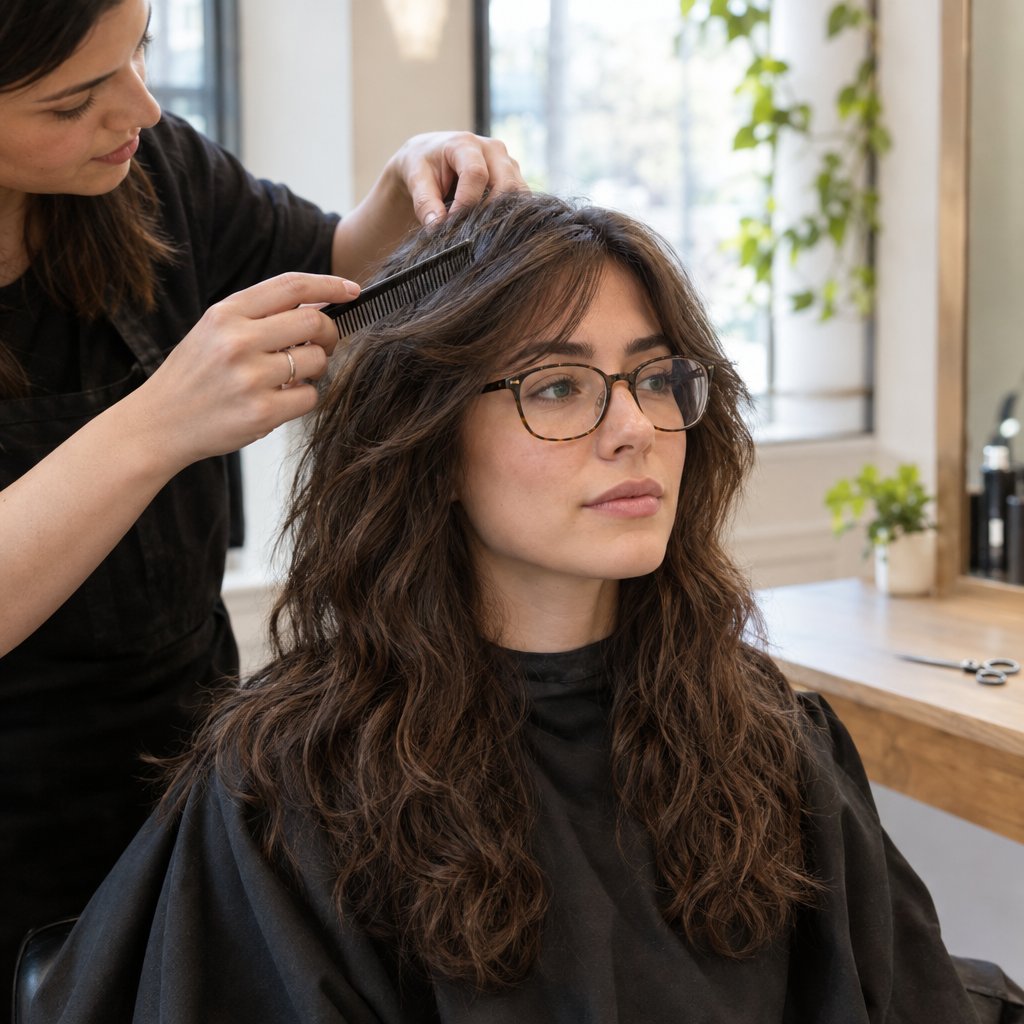
Use these six factors to separate “I like this haircut” from “I would enjoy wearing it.”
1. Natural texture
Straight, wavy, curly and coily hair can all support a fringe. The important question is whether you like its natural movement or expect to change that movement every morning.
Green flag: You like your front hair’s natural texture and will choose the finished length around it.
Caution flag: You only like the fringe when its natural texture is completely restyled.
2. Cowlick or growth direction
Hair that falls toward the forehead may settle easily. A front section that lifts, spirals or splits can need extra length, a different part or root styling.
Green flag: The proposed fringe follows your growth direction.
Caution flag: It must lie flat across a strong cowlick, and you do not want to redirect it.
3. Daily styling tolerance
Some bangs need little more than finger-shaping. Others need dampening and reshaping after sleep, even when the rest of the haircut looks ready.
Green flag: You are comfortable with the actual routine your chosen fringe needs.
Caution flag: The fringe you want needs daily heat styling or root redirection that you will not do.
4. Trim tolerance
A precise brow-length line can become uncomfortable sooner than long, open fringe. Ask about upkeep for the specific shape rather than assuming it can wait until your next full haircut.
Green flag: You are willing to attend fringe-only appointments at the interval your stylist recommends.
Caution flag: You want a consistently sharp shape but cannot accommodate those appointments.
5. Climate and activity
Humidity, rain, hats and exercise can alter curl, volume and separation. That matters most if you want an unchanging, polished finish.
Green flag: You like some natural movement or are happy to pin your fringe back during activity.
Caution flag: Your daily conditions disrupt the finish you want, and you would dislike reshaping it.
6. Grow-out willingness
Bangs cannot immediately return to the length of the surrounding hair. Growing them out may involve clips, a shifted part or several transitional shapes.
Green flag: You would happily wear a side-swept or pinned fringe between lengths.
Caution flag: Hair around your eyes bothers you, and you dislike every way of securing it.
Mostly green flags support moving forward. Several caution flags suggest starting longer or using a temporary fringe first, not ruling bangs out altogether.
What changes when you get bangs
Bangs can emphasize the eyes, change forehead framing and introduce a softer or more graphic outline. These are visual preferences, not objective improvements.
The practical difference is that a small section of hair becomes more noticeable. Sleep can flatten it, a hat can bend it, and sweat or oil can make it separate while the rest of your hair still looks unchanged. Maintenance depends on the shape, starting length, growth rate and finish you prefer.
Forehead contact is another consideration. Products, sweat and friction may irritate some people’s skin, but bangs are not automatically a cause of acne. If contact bothers you, a more open fringe and lighter product application may feel more comfortable.
Which type of bangs fits your look and commitment?
These labels overlap: curly describes texture, micro describes length, and blunt describes the outline. Curly bangs can also be curtain or blunt. A style name alone does not determine upkeep.
Compare the options by their effect and everyday demands:
-
Blunt bangs
- Visual effect: A continuous, defined line across the forehead.
- Relative commitment: Often higher for a precise finish.
- Styling demand: Keeping the roots settled and the outline even.
- Grow-out path: Shift sideways, then blend into framing.
-
Wispy bangs
- Visual effect: Light, separated pieces with forehead visible.
- Relative commitment: Moderate. Lightness does not guarantee low upkeep.
- Styling demand: Managing separation without weighing pieces down.
- Grow-out path: Sweep aside or blend into longer pieces.
-
Curtain bangs
- Visual effect: A parted fringe, shorter centrally and longer outward.
- Relative commitment: Often lower when the shortest pieces stay long.
- Styling demand: Encouraging the sides to open away from the face.
- Grow-out path: Blend into cheekbone- or jaw-length framing.
-
Bottleneck bangs
- Visual effect: A narrow, shorter center opening into longer sides.
- Relative commitment: Moderate because the center still needs attention.
- Styling demand: Settling the central fringe while shaping the sides.
- Grow-out path: Open the center into a curtain shape.
-
Side-swept bangs
- Visual effect: Diagonal framing with an open section of forehead.
- Relative commitment: Often lower when following natural growth.
- Styling demand: Maintaining the sweep and controlling any root lift.
- Grow-out path: Tuck, pin or blend into side layers.
-
Curly bangs
- Visual effect: Curl-defined framing with natural volume.
- Relative commitment: Variable with length, curl pattern and routine.
- Styling demand: Refreshing curl groups and allowing for spring.
- Grow-out path: Blend gradually into surrounding curly layers.
-
Micro bangs
- Visual effect: A short fringe sitting clearly above the brows.
- Relative commitment: High short-length commitment.
- Styling demand: Managing visible growth patterns and outline changes.
- Grow-out path: Grow toward brow length, then sweep or split.
Blunt and micro shapes leave less room for length errors. Long curtain or side-swept fringes are often more adaptable first choices because they offer more ways to part or secure the hair.
Section width, density and the shortest point matter as much as the label. Two curtain fringes can behave very differently if one starts at the brows and the other at the cheekbones. If you need ideas beyond one fringe category, Facefy’s Hairstyle Finder can suggest styles to consider before you narrow down your references.
How your natural hair changes the result
Look at your front hair dry and unstyled before deciding which finish you want to maintain.
Straight hair often shows the cut line clearly. Depending on density and the hairline, oil or separated strands may also be noticeable. Wavy hair brings movement but can bend differently after sleeping or in humid weather.
Curly and coily hair need a fringe designed around curl grouping, spring and shrinkage, rather than a straight fringe shape imposed on the texture.
Fine hair and low-density hair are not the same. Fine describes individual strand thickness, while low density means fewer hairs within an area. Taking a large section for bangs can reduce surrounding fullness, particularly when density is low. Dense hair may create more fringe weight and volume than a reference suggests, even if its individual strands are fine.
Importantly, longer hair’s weight can conceal lift or curl that becomes more apparent after cutting. Its current position against your forehead does not guarantee the same behavior at brow length.
Four details worth discussing separately
- Front cowlick: Ask whether the planned part and length can follow it. Extra length may help retain weight, whereas a very short fringe can expose more lift.
- Curl or coil shrinkage: Ask where each curl group will sit fully dry. Avoid choosing a fixed wet cutting length from someone else’s example.
- Glasses contact: Check whether the top rim lifts or splits the fringe. Adjusting the shortest point or section width may provide clearance.
- Oily or product-sensitive hairline: Consider lighter products and a shape with less forehead contact. Seek qualified care for persistent irritation rather than assuming a haircut will resolve it.
Choosing bangs that work with glasses
Wear your everyday frames to the consultation, and bring sunglasses if you wear them often.
Notice where the top rim sits relative to your brows and the intended shortest pieces. A dense fringe may rest on the rim and turn outward, while a lighter or split fringe may leave more room. Neither is automatically the better look.
Check the sides too. Longer pieces can catch on the temples and be pushed away from your face whenever you put your glasses on. Move your head, look down and remove the frames to see whether the shape remains comfortable.
Choose the combination you enjoy wearing, not a supposed rule matching one fringe to one frame shape.
Preview bangs from lowest to highest commitment
Move through this ladder only as far as you need:
- Digital visualization: Use Facefy’s Hair Style Try-On to explore how a fringe might frame your face. Choose a clear, evenly lit, straight-on photo without a filter.
- Clip-in fringe: Explore forehead coverage and how it looks with your glasses.
- Pinned faux fringe: Bring your own ends forward and secure them loosely to explore separation and approximate length without cutting.
- Long curtain or side-swept fringe: Make a more adaptable first cut, ideally keeping enough length to tuck or pin.
- Shorter or blunt bangs: Commit once the coverage and practical demands feel right.
Digital previews and clip-ins estimate appearance. They do not reproduce your exact density, movement, texture, shrinkage or salon result. Lighting, camera angle and image quality can also change the impression. Pinned ends do not behave like newly cut hair at the roots, either.
Use references with similar texture and density, including naturally styled examples rather than only polished celebrity photos.
Check your hair under three real-life conditions
Before cutting, observe the front section intended for the fringe. If you start with a longer fringe, repeat these observations with that actual shape.
- Fully dry and natural: Notice root lift, splitting, curl grouping and shrinkage. This reveals what the design needs to accommodate without styling.
- After your normal routine: Use only the time, tools and products you would ordinarily use. This shows whether the desired finish fits your mornings.
- During usual weather or activity: Observe it after a normal commute, humid outing or workout. Notice separation, curl changes and how much reshaping you would tolerate.
You are looking for a workable preference, not one objectively correct result. A small set of meaningful comparisons is more useful than repeatedly scrutinizing near-identical pictures.
What to ask your hairstylist before the cut
Bring a few references with comparable texture and density, including one showing the finish you expect without extensive styling. If you need help finding alternatives to discuss, browse hairstyle suggestions before your appointment and save only the examples that match your texture and preferred upkeep.
Use these questions:
- “How will this fringe fall if I do not heat-style it?”
- “How will you account for my shrinkage, cowlick or front growth direction?”
- “Where will the shortest point land when my hair is fully dry?”
- “What daily styling will this shape realistically need?”
- “How many weeks does this shape usually remain comfortable, and will I need appointments between full haircuts?”
- “How can it transition into curtain bangs or face-framing layers if I grow it out?”
Also discuss section width, fringe density, your usual part, glasses, exercise and climate. Ask whether the shape should be assessed or refined dry.
For small at-home trims, use hair-cutting scissors, work slowly on dry hair and leave extra length. Avoid an ambitious first cut or hurried cutting near your eyes. A stylist is the safer choice for a substantial shape change.
Plan the grow-out before getting bangs
Think in usable styling phases rather than an exact timeline:
- Over the brows: Add a small bend or use careful pinning to keep the ends comfortable around your eyes.
- Side-swept stage: Shift the part and direct the fringe diagonally, securing it discreetly if needed.
- Curtain stage: Divide the fringe and shape the growing pieces away from the center.
- Face-framing stage: Ask for gradual blending into surrounding layers rather than repeatedly shortening the middle.
Not every fringe passes through every phase. Growth rate, starting length, curl pattern and your target style affect the route.
If that transition sounds unappealing, consider cheekbone-length framing, long side-swept layers, a clip-in fringe or a different part. These can change the framing around your forehead and eyes without committing to short bangs. You can also use the Hair Style Try-On to compare short fringe with longer face-framing options before cutting.
Common questions about getting bangs
Would bangs suit me?
Suitability is subjective. Decide whether you like the coverage and framing, then check that the shape works with your texture, growth direction and maintenance preferences.
Are bangs high maintenance?
Some are, while others settle naturally. Short, precise shapes often need more frequent attention than longer, blended options. Ask about the specific fringe rather than treating all bangs as one category.
Can I get bangs with curly or coily hair?
Yes. The design should respect natural curl formation and variable shrinkage, with the finished length judged against how you actually wear your hair.
Can I get bangs with a cowlick?
Often, yes. A compatible part, extra length or a more open shape may work better than asking a strong growth pattern to lie completely flat.
Will humidity make bangs difficult?
It can change volume, curl and separation. Difficulty depends on whether you like those changes or expect to restore a particular finish each time.
How often will they need trimming?
Ask your stylist for an interval based on the proposed shape. A fringe sitting just above your eyes may need attention sooner than one designed to sweep toward the cheekbones.
What should I choose if I am still unsure?
Start with longer framing or a temporary fringe. You can choose shorter bangs later, after learning which coverage, movement and routine you genuinely enjoy.