How to Know If Blonde Hair Will Suit You
Learn which blonde shades may suit you by comparing undertone, contrast, hair condition, upkeep, and low-commitment previews.
Blonde can suit a wide range of people when its shade, depth, contrast, and placement are adapted to their features. Rather than asking whether blonde suits you at all, compare warm, neutral, and cool blondes at a similar lightness. Then consider what your hair can realistically achieve and how much upkeep you want.
A flattering preview answers, “Do I like this color near my face?” It cannot establish whether your hair can reach that shade safely or whether you will enjoy maintaining it. Those are separate decisions.
Use four factors to decide whether blonde is right for you
Keep these factors separate. You might prefer cool blonde visually, need a deeper target because of previous dye, and choose rooted highlights because they fit your schedule.
| Factor | Observable check | Independent next step |
|---|---|---|
| Shade harmony | Which warmth, depth, and amount of contrast you prefer near your face | Choose a provisional blonde shade family |
| Achievable lift | The difference between your current color and target lightness | Set a realistic provisional target with a colorist |
| Condition and history | Breakage, dryness, previous dye, bleach, henna, or other treatments | Disclose your history and assess the hair before lightening |
| Maintenance fit | How much visible regrowth, salon time, and recurring expense you will accept | Choose a placement and service schedule that fit your routine |
“Lift” means how much lighter the hair becomes. A small change from natural dark blonde differs substantially from taking previously dyed dark brown hair to pale blonde. Neither a photo nor a combined readiness score can settle all four decisions.
Start with undertone, but do not let it make the whole decision
Skin undertone can suggest a useful starting direction:
- Warm: Compare honey, golden, strawberry, and warm beige blonde.
- Cool: Compare ash, pearl, and cool beige blonde. Platinum is another possibility, but its extreme lightness needs separate consideration.
- Neutral: Explore both warmer and cooler options at the same depth.
These are starting points, not permitted-color lists. Pale, medium, olive, and deep skin tones can all work with blonde. The particular shade and its placement matter more than skin depth alone.
Vein color and jewelry preference are imperfect undertone clues. Lighting, surface redness, tanning, and personal taste can produce conflicting answers. Personal color analysis can offer another estimate of color relationships, but it should not override a direct comparison or the look you genuinely enjoy.
Check the contrast between your skin, brows, eyes, and roots
Look at the relative lightness and darkness of these features in indirect daylight, with your natural roots visible. Focus on depth rather than whether your eyes are blue, green, or brown.
Low contrast: Your skin, brows, eyes, and roots are relatively close in depth. Soft transitions, blended roots, beige blonde, dark blonde, or bronde can preserve that gentler effect. Bronde is a dimensional blend of brown and blonde.
Medium contrast: Your skin, brows, eyes, and natural roots differ moderately in depth without a pronounced light-dark split. This gives you broader flexibility to preserve your existing contrast or deliberately change it. Dimensional highlights, balayage, and medium-depth blondes offer several ways to explore either direction.
High contrast: Some features are noticeably lighter or darker than others, such as light skin with dark brows and roots. Blonde can retain that definition through darker brows, shadow roots, or lowlights rather than making everything equally pale.
Dark eyebrows do not rule out blonde, and they do not need to match it. A deeper root can visually connect dark brows with lighter lengths. Eye color may influence which shade you prefer, but it does not dictate the answer.
These are styling options, not rules about which features should be emphasized.
Compare warm, neutral, and cool blonde shades side by side
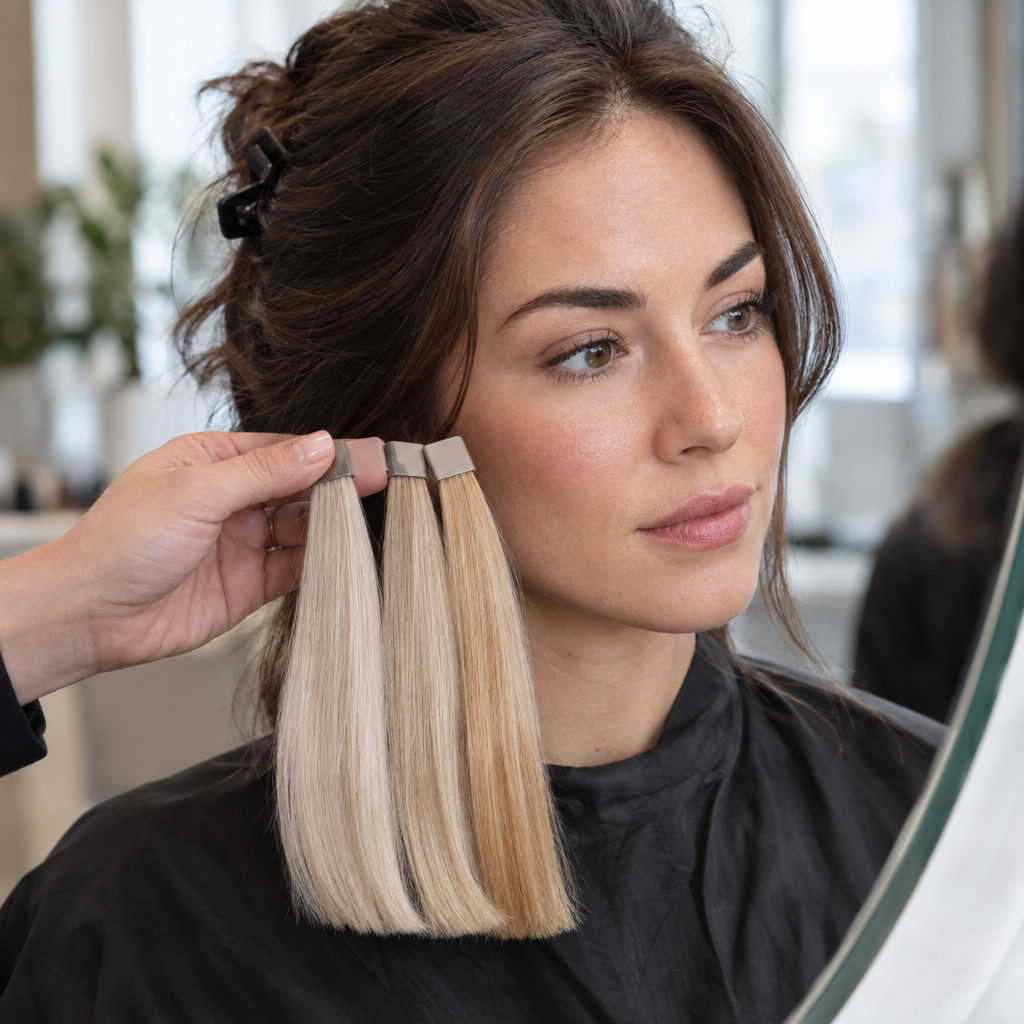
Start with three versions at roughly the same lightness:
- Warm: Honey or golden blonde.
- Neutral: Beige blonde without a strong gold or gray cast.
- Cool: Ash blonde at a comparable depth.
Use the same clear photo, expression, crop, hairstyle, and makeup for each digital comparison. Photograph yourself facing indirect window daylight, without filters or strong direct sun. Keep your natural skin texture and color visible.
Look for specific preferences. Do you like the warmth near your cheeks? Do your brows feel intentionally defined? Would you prefer more depth around the hairline? The aim is to identify an effect you enjoy, not to assign yourself a beauty score. If you are curious about broader facial analysis, a face rating can be explored separately rather than used to decide whether a particular blonde shade suits you.
Lighting can change the answer. Beige blonde may look golden under warm bathroom bulbs and more neutral in window daylight. Camera white balance, exposure, surrounding colors, and screen settings can also shift its appearance. If you use physical swatches or wigs, compare them near your face in the same indirect daylight.
Do not compare a honey-blonde photo with bronzed makeup against an ash-blonde photo with different makeup and cooler lighting. Changing several variables at once makes it difficult to know whether you prefer the hair color or the rest of the image.
Once you choose a temperature, compare a lighter and deeper version of it.
Adjust the blonde before deciding it does not suit you
An unsatisfying preview often means the version needs adjusting:
- Too ashy or gray-looking: Move toward neutral beige or honey, or choose slightly more depth.
- Too golden or orange-looking: Compare a more neutral beige direction. Going lighter is not automatically the solution, and toner alone cannot create every desired result.
- Too pale for your preferred definition: Try dark blonde or bronde, or retain a deeper root.
- Too flat or disconnected from your features: Add dimension with lowlights, a shadow root, balayage, or partial highlights.
Shade names describe broad families rather than standardized results. Strawberry blonde has reddish warmth, while honey and golden blondes emphasize gold. Beige sits closer to neutral, and ash has a cooler cast. Platinum describes a very pale blonde rather than one fixed temperature.
Placement matters just as much. A few lighter pieces around the face can create a blonde impression while leaving most of your natural depth intact.
Explore blonde in stages before committing
You do not need to complete every stage. Move only as far as the information you need and the commitment you want.
-
Digital preview. Use Facefy’s Hair Color Try-On to compare blonde directions on a photo before changing your hair. This can clarify your visual preference, but it cannot reproduce exact translucency, shine, texture, root growth, or the lightening process required.
-
Wig or hairpiece. See blonde near your face as you move between daylight and indoor lighting. This reveals more about wearing the color beyond a still image, although synthetic shine, density, and the hairline may differ from your own hair.
-
Temporary or non-lightening experiment. On an already light base, a suitable temporary product may help you explore warmer or cooler tones. It generally cannot make dark hair genuinely blonde, and porous hair can retain staining longer than expected.
-
Partial highlights or balayage. Lighter sections show how blonde interacts with your natural base and how processed pieces behave in your routine. This is a lasting change, however, and it does not reproduce the appearance or maintenance demands of all-over blonde.
-
All-over lightening. This produces the actual full-head color result and exposes its ongoing upkeep. It is a lasting color change, not a reversible preview. It also cannot establish how well your hair will tolerate repeated lightening in the future. Consider feasibility, current condition, and professional guidance before choosing this step.
Separate a flattering idea from a feasible color process
A colorist can assess your starting base, treatment history, and the response of a small test section before substantial lightening. Provide accurate information about previous products, including treatments used months or years earlier if those lengths remain.
Color-history and condition considerations
Previously dyed dark hair: Artificial pigment may lift unevenly or require corrective work. Removing it can be more complex than lightening untreated hair.
Henna or unknown history: Disclose henna, compound dyes, possible metallic salts, and unidentified treatments. Their composition matters, and a photo cannot reveal compatibility with lightener.
Fragile hair: Existing breakage, heavy processing, or compromised lengths may make substantial lightening unsuitable for now. A deeper target or postponing the change may be more appropriate.
Major platinum transformations: Going from dark hair to platinum may require multiple sessions, an interim shade, or a different target. Multiple sessions do not guarantee that platinum will be achievable or suitable for the hair’s condition.
A visual preview cannot establish chemical feasibility. This remains true even when the generated color looks convincing. Similarly, results from Facefy’s Rate My Face are best treated as an exploration of facial appearance rather than evidence that a particular hair color is achievable or suitable for your hair.
For curly and coily hair, placement should also account for how curls cluster and where lighter sections will appear. Discuss preserving the hair’s current condition and pattern rather than judging the plan from a straightened reference alone.
Choose a blonde placement and upkeep level you can maintain
Balayage preserves more natural root depth through a graduated transition. Partial highlights lighten selected sections, while face-framing pieces concentrate brightness near the face. These approaches can reduce the amount of hair processed, although bold face-framing sections may still show noticeable regrowth.
An evenly pale blonde creates a different commitment, especially over dark natural roots. As illustrative salon intervals, pale on-scalp blonde may need root lightening approximately every 4 to 6 weeks, while softly rooted highlights or balayage may allow 8 to 12 weeks or longer between lightening appointments. Growth rate, placement, contrast, hair condition, and the colorist’s technique can change that schedule.
Root lightening and tone maintenance are different services:
- Root lightening addresses new growth.
- Toner or gloss refreshes adjust the tone of already-lightened hair.
Some people refresh their tone around every 4 to 8 weeks, while others wait longer or combine it with another appointment. A rooted blonde can therefore have forgiving regrowth but still need tone refreshes if you want a consistently cool finish. Dark blonde and bronde often make the transition from natural roots less conspicuous.
Ask for two separate cost estimates. The first should cover the initial transformation, including corrective work or multiple sessions if needed. The second should cover recurring maintenance, such as root services, toner, trims, and home care. An affordable first appointment does not necessarily mean the annual routine will suit your budget.
Protect your hair and skin during the coloring process
Follow the product instructions, including any required allergy alert test, exactly as directed. An allergy alert test addresses potential skin reactions. A strand test shows how a small section responds in color and condition. Neither guarantees a reaction-free process or predicts the hair’s long-term tolerance.
Do not improvise bleach formulas, developer strengths, or processing times. Major lightening, corrective color, uncertain treatment history, and fragile hair warrant assessment by a qualified colorist.
If a product causes a concerning reaction, stop using it and follow its removal instructions. Seek appropriate medical guidance. Breathing difficulty or swelling of the face or throat requires urgent care.
Use this five-question blonde decision check
Before choosing a shade and booking an appointment, answer these five questions:
- Which blonde temperature do I prefer? Choose warm, neutral, or cool after comparing them under consistent conditions.
- How much root and brow contrast do I want? Decide whether you prefer a soft blend, visible natural depth, or pronounced contrast.
- How light do I want to go? Compare that target with your current base, not just the reference photo.
- What maintenance will I realistically accept? Consider root appointments, toner refreshes, conditioning, time, and recurring cost.
- Does my hair’s condition or color history limit lightening now? Let that answer influence the target and timing independently of visual preference.
Turn your answers into a specific direction, such as warm dimensional blonde with partial highlights, neutral beige balayage with natural roots, or cool rooted blonde subject to a colorist’s assessment.
If you like a shade but cannot support the upkeep or lightening involved, choose a deeper blonde, reduce the amount of hair lightened, or continue experimenting with a wig or digital preview.
The useful answer is not simply that blonde does or does not suit you. It is knowing which blonde you prefer, how much change you want, and what your hair and routine can reasonably support.