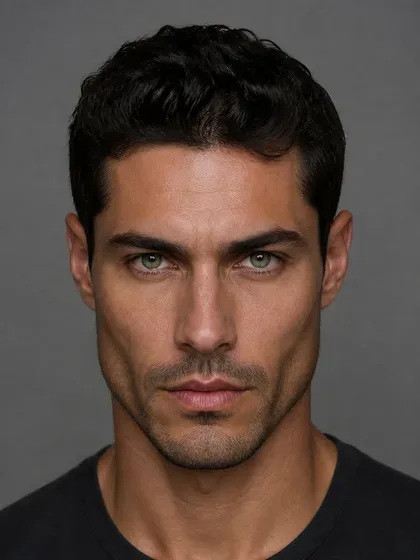
PSL Scale Explained: Meaning, Ratings, and Limitations
Learn what the PSL scale means, how informal ratings are assigned, why scores vary, and why they are not objective measures of attractiveness.
The PSL scale is an informal rating concept used in looks-focused online communities to describe perceived facial attractiveness. It has no universal rubric, official scoring system, or scientifically validated formula, so a PSL score is a subjective opinion or estimate, not a fact about someone’s appearance or worth.
A number can make a judgment look more precise than it is. To understand a PSL rating, you need to know who assigned it, which criteria they used, and what photograph or presentation they assessed.
What does the PSL scale mean?

PSL is commonly used as shorthand for a numerical facial-attractiveness rating in looksmaxxing and other online appearance discussions. It is community terminology, not a scientific or clinical measurement.
Expansions of the initials and accounts of their origin vary across communities. There is no governing body, universally recognized scoring authority, or agreed rubric that makes one community’s interpretation official.
The important distinction is between describing features and judging attractiveness. Someone can describe the spacing between features in a photograph. Deciding that this spacing deserves a particular attractiveness score adds a subjective preference.
A PSL score cannot diagnose health, establish genetic characteristics, predict relationship or social outcomes, or determine personal worth.
How are PSL ratings assigned?
Raters may consider several visible characteristics:
- Facial symmetry: How similar corresponding areas appear.
- Proportions: Relationships between selected facial dimensions.
- Feature relationships: How the eyes, nose, mouth, and other features appear together.
- Skin appearance: Visible texture, contrast, and tone in the image, not a diagnosis of skin health.
- Overall presentation: Expression, hairstyle, facial hair, makeup, and photographic conditions.
There is no authoritative formula for combining these observations. One rater might prioritize symmetry, while another might respond more strongly to expression or the overall arrangement of features. Even when people agree on what they see, they may disagree about its aesthetic significance.
What does a 5, 6, or 7 mean?
Those numbers have no universal meaning without a particular rubric. The PSL scale is not always presented out of 10. Different communities and platforms may use different ranges, labels, thresholds, and expectations about how frequently a score should occur.
Consider a clearly hypothetical example: one forum uses an eight-point scale and gives an image a 6, while an app uses a ten-point scale. Converting 6 out of 8 into 7.5 out of 10 through arithmetic would not make the results comparable. The forum and app may assess different characteristics, weight them differently, or place their thresholds at different points.
Neither range is an official PSL convention. A score only makes sense within the particular system that produced it.
Numbered tiers and celebrity charts may illustrate a community’s preferences, but they do not establish official boundaries. Decimal scores do not solve that problem. Greater numerical detail is not evidence of greater accuracy.
Community PSL ratings, personal opinions, and AI assessments
These approaches can all produce numbers, but they do not produce the same kind of result.
| Community PSL rating | Personal 1-to-10 opinion | AI-generated appearance assessment |
|---|---|---|
| Assigned by: Community participants Criteria: Community-specific conventions and preferences Affected by: Group norms, evaluator preferences, and photo conditions Cannot establish: Worth, health, genetics, or future outcomes | Assigned by: An individual Criteria: Personal taste, often without a stated rubric Affected by: Context, preferences, and presentation Cannot establish: Worth, health, genetics, or future outcomes | Assigned by: An automated system Criteria: System-specific analysis rather than a universal standard Affected by: The system’s method, image quality, crop, and framing Cannot establish: Worth, health, genetics, or future outcomes |
A community PSL rating usually reflects the conventions or preferences of an online group. An ordinary 1-to-10 opinion may simply express one person’s immediate impression, without any stated criteria.
An AI-generated assessment applies a system’s own criteria to an uploaded image. Automation does not turn those criteria into a universal standard. A precise-looking result remains an estimate based on a particular method and image, not an objectively correct judgment of attractiveness.
Why the same person can receive different ratings
A rating reflects both the evaluator and the presentation being evaluated. These factors can change the impression without changing the underlying person:
-
Evaluator preference. Different people notice different features and assign them different importance. Agreement about a visible characteristic does not guarantee agreement about attractiveness.
-
Community rubric. Groups may use different score ranges, tier labels, or thresholds. The same number can communicate different judgments in different spaces.
-
Cultural context. Aesthetic preferences are influenced by social surroundings, media, and cultural conventions. Those influences do not create a universal standard.
-
Camera distance and lens choice. Close camera positions can make features nearer the lens appear larger relative to those farther away. Wide-angle selfie framing often encourages that close distance, although perspective depends primarily on camera position.
-
Camera angle. A view from above, below, or slightly to one side changes how much of the forehead, nose, cheek area, and jaw is visible.
-
Lighting. Directional light can deepen shadows and emphasize texture. Softer, more even light may make the same contours less pronounced.
-
Expression. Smiling, squinting, tightening the lips, or raising the eyebrows changes visible feature relationships and the overall impression.
-
Grooming and styling. Hair, facial hair, makeup, glasses, and accessories influence framing and presentation.
-
Image quality and crop. Blur, compression, filters, and tight cropping can obscure detail or remove context. A crop may also draw disproportionate attention to one area.
A hypothetical selfie-versus-portrait example
Imagine the same adult in two photographs taken on the same day.
The first is a close selfie with a tight crop, a slightly raised camera, and a tense expression. The second is an eye-level portrait taken from farther away, with a relaxed expression, softer light, and more of the hairstyle visible.
An evaluator or automated system could assign different assessments because:
- The camera distance changes apparent proportions.
- The expression changes the eyes and mouth.
- The crop changes which features dominate the frame.
- Lighting and visible styling change the presentation.
Neither photograph reveals a hidden “true score.” Both show the same person under different conditions. This is a reason to interpret image-based ratings cautiously, not to keep searching for the photograph that earns the highest number.
Why symmetry and facial ratios do not determine attractiveness
Symmetry describes similarity, not beauty. Comparing corresponding facial areas can reveal differences in position or contour, but it does not tell you how those differences should be valued. Natural asymmetry is common, and its visibility changes with expression and camera angle.
Ratios describe measurement relationships. Suppose, in a hypothetical image, a selected distance measures 60 units and another measures 40. Their ratio is 1.5. That calculation is straightforward. Deciding that 1.5 is aesthetically preferable requires a separate judgment.
The measurement also depends on where its endpoints are placed. Measuring to a soft contour rather than a clearly defined landmark can change the result, as can head rotation or perspective.
Overall perception includes expression, presentation, personal preference, cultural context, and interactions among features. No single measurement captures all of that.
Related concepts
- Facial symmetry: A comparison of corresponding areas, not a beauty verdict.
- Facial proportions: Descriptive relationships between selected measurements, not a universal attractiveness formula.
A five-question credibility check for appearance scores
-
Is the rubric disclosed? Look for an explanation of what is assessed, how the scale works, and how observations contribute to the result. A list of features alone does not explain their weighting.
-
Are subjective judgments separated from measurements? “These distances differ” is a descriptive statement. “That difference is unattractive” is an interpretation. A credible explanation keeps them separate.
-
Are image limitations acknowledged? The source should recognize the effects of camera distance, lens choice, angle, lighting, expression, crop, and image quality.
-
Is uncertainty stated? A precise-looking number should not be presented as an exact truth. Extra decimal places do not establish accuracy, and results may depend on the photograph and method.
-
Does the source avoid claims about worth, health, or future success? An appearance score cannot establish genetics, diagnose health, or predict relationships and life outcomes.
If a system fails these checks, do not treat it as authoritative. Even meeting all five would make its limitations clearer, not turn subjective attractiveness into an objective measurement.
How seriously should you take a PSL score?
Take it as a limited impression, not a diagnosis, fixed identity, or instruction to change your natural features.
Some rating communities use rigid or demeaning labels that make preferences sound like factual classifications. Repeating a label does not make it scientifically meaningful. Agreement within one community also does not prove that people outside it share the same preferences.
Grooming and styling may change presentation and therefore influence a rating. But if your real goal is choosing a haircut, refining a makeup technique, or finding a portrait you enjoy, a specific question is more useful than an overall score. “Do I prefer this fringe longer?” gives you a practical decision. “What number am I?” does not.
Use a clear stopping rule: treat a score as one limited opinion or estimate, and avoid repeated checking for reassurance. If rating content increases distress or persistent self-criticism, disengage from it. Speaking with someone supportive may be more helpful than seeking another score.
Explore an AI-generated PSL estimate
For readers curious about the distinction between community ratings and automated analysis, Facefy’s PSL Score Test offers an optional AI-generated appearance estimate. Its result should be interpreted as an assessment of the submitted image, not a definitive PSL calculation or judgment of the person.