PSL Score Explained: Meaning, Scale, and How to Read Your Result
Learn what a PSL score means, why scales and results vary, how photos affect estimates, and how to interpret the number responsibly.
A PSL score is an informal numerical estimate of facial appearance used in some online communities and by certain AI tools. It may consider facial proportions, visible symmetry, feature balance, grooming, and overall presentation.
There is no single authoritative PSL scale, universal formula, or scientifically validated scoring standard. Different sources use different criteria and ranges. Treat the result as an informational or entertainment-oriented estimate, not an objective measure of attractiveness, health, or personal worth.
What Does a PSL Score Mean?
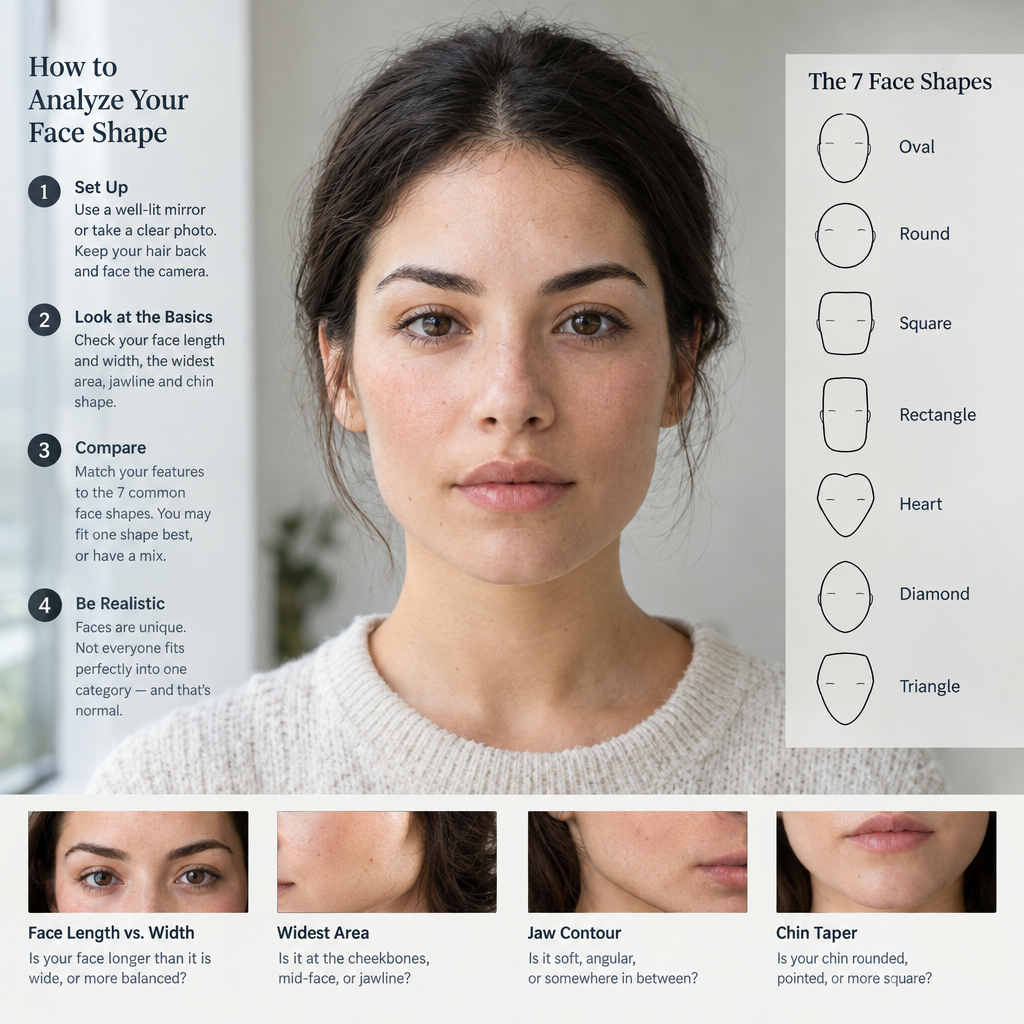
A PSL score compresses several judgments into one number. Measuring the distance between two visible features is different from deciding whether that distance is attractive. The first describes a relationship in an image; the second introduces preferences and assumptions.
The term comes from appearance-focused online communities and is commonly traced to the initials of three forums: PUAHate, Sluthate, and Lookism. In current usage, it usually refers to a community-style facial rating or an AI-generated version of one, rather than a formal scientific assessment.
A decimal result can make the rating look precise, but precision in how a number is displayed does not establish how meaningful it is. A score of 6.3 is not necessarily more informative than a broad description of the features being assessed.
Is the PSL Scale Out of 8 or 10?
Both conventions appear. Some communities and tools use a scale ending at 8; others use 10 or their own ranges and labels.
Sources can differ in:
- Upper limits: The highest available score may be 8, 10, or another value.
- Labels: Terms such as “average” or “high” may refer to different ranges.
- Weighting: One source may emphasize proportions, while another focuses more on overall presentation.
- Rounding: A whole-number result may conceal differences that another tool displays as decimals.
A 6 from one system cannot automatically be treated as equivalent to a 6 from another. Nor can you reliably convert 6 out of 8 into a comparable PSL result out of 10 by multiplying it. That arithmetic assumes the systems measure the same thing in the same way.
If you are wondering whether your PSL score is high, the only workable reference is the source’s own explanation. There is no universal threshold or reliable population percentile attached to the number.
What Can Influence a PSL Estimate?
The possible inputs fall into three groups. These are general categories, not a confirmed description of every calculator’s method.
Structural relationships
These include relative facial length and width, feature spacing, visible symmetry, and the relationship between the jaw and chin. Facial proportions describe how selected distances compare with one another.
Even these relationships are estimated from the image. A frontal photograph, for example, cannot fully show how far the chin projects in profile. Deciding which proportions deserve a higher rating also introduces subjectivity.
Surface or presentation factors
Hairstyle, facial hair, makeup, grooming, expression, and temporary skin appearance can influence the impression a photograph creates.
A beard may make the lower-face outline look fuller or more defined while obscuring the jaw underneath. That changes the visible presentation, not necessarily the underlying structure. A smile can also change cheek fullness and eye opening.
Image-capture variables
Lighting direction, camera distance, lens choice, head position, crop, sharpness, filters, and obstructions all affect what a person or tool can see.
Strong side lighting may emphasize contours but conceal one side of the face. Hair across the cheek can hide an important edge. These are properties of the photograph, not evidence of different facial anatomy.
PSL Score vs. Other Facial Ratings
These methods answer different questions. None can establish health, personality, compatibility, social value, or objective beauty.
PSL score
- What it evaluates: Selected facial relationships and overall appearance impressions.
- Where subjectivity enters: Feature selection, preferred proportions, and scoring weights.
- What it cannot prove: A universal attractiveness rank or dating potential.
Facial-symmetry analysis
- What it evaluates: Visible alignment or correspondence between the two sides of a face.
- Where subjectivity enters: Choosing reference points and interpreting their importance to appearance.
- What it cannot prove: Beauty, health, or an absence of normal asymmetry.
A focused facial-symmetry analysis is narrower than a PSL score. Its estimates still depend on pose, expression, and lighting.
Ordinary 1–10 attractiveness rating
- What it evaluates: A person’s overall impression of someone’s appearance.
- Where subjectivity enters: Individual taste, cultural preferences, and context.
- What it cannot prove: How everyone else would rate that person.
An ordinary rating does not become equivalent to PSL simply because both use numbers.
Golden-ratio comparison
- What it evaluates: Selected proportions against a mathematical ratio, approximately 1.618.
- Where subjectivity enters: Choosing distances and treating closeness to the ratio as desirable.
- What it cannot prove: A universal ideal or objectively attractive face.
A golden-ratio comparison describes a particular mathematical relationship. That relationship is not a complete account of human appearance.
Why the Same Person Can Receive Different Scores
Imagine two photographs taken minutes apart. The first is a close wide-angle selfie, with the phone slightly above the face and light coming from one side. The second is taken farther away, straight-on, at face level, with even lighting.
The first image may make the center of the face appear larger relative to its edges. The second may show different apparent proportions, even though the person’s actual face has not changed. Close camera distance is a key cause of this perspective effect.
Head rotation can make one side look narrower. Shadows can create apparent asymmetry. Squinting or smiling changes the visible relationship between the eyes, cheeks, and mouth.
Different tools may also select, weight, or round inputs differently. Human raters add their own preferences.
A practical photo-consistency checklist
For one representative image:
- Keep a neutral expression: Relax your mouth and avoid squinting or clenching.
- Place the camera near face level: Avoid looking sharply up or down.
- Face straight ahead: Keep your head upright without turning or tilting.
- Use even lighting: Soft frontal light is more suitable than harsh side light.
- Turn off beauty filters: Avoid reshaping, smoothing, and other editing effects.
- Increase camera distance: About 1 to 2 meters is a practical starting point if the face remains clear.
- Show the facial outline: Move hair away from key edges and avoid obscuring accessories.
- Keep the image sharp: Avoid blur, heavy compression, or an uneven crop.
These controls reduce avoidable photographic variation. They do not turn an appearance rating into an objective measurement of beauty.
How to Interpret Your Result Responsibly
Start with the source’s scale explanation, not labels borrowed from another community. If its scoring criteria are unclear, the number has limited interpretive value.
Compare scores only within the same tool and under similar photo conditions. Even then, small numerical differences are not reliable evidence that your appearance has meaningfully changed. A shift from 5.8 to 6.0 could reflect the photograph or the system rather than a visible change.
Age, grooming, hairstyle, and other presentation changes can genuinely alter appearance over time. A score alone cannot separate those changes from ordinary image variation.
If you are interested in the description behind the number, individual feature estimates are easier to interpret when considered separately. An outline estimate describes something different from an attractiveness judgment. Keep any practical use low-stakes, such as choosing a hairstyle or adjusting portrait lighting.
Use a clear stopping rule: submit one representative image, treat the result as a rough informational snapshot, and step away. Uploading more photos to chase a preferred number does not establish which result is “true.” If the rating leaves you distressed or preoccupied, there is no benefit in continuing.
What a PSL Score Cannot Tell You
A PSL score cannot determine your health, personality, intelligence, compatibility, dating success, social value, or personal worth. It is not a diagnosis and should not guide medication, cosmetic procedures, or extreme appearance changes.
Common Questions About PSL Scores
Can AI accurately calculate a PSL score?
AI can generate a score, but there is no universally accepted PSL reference against which objective accuracy can be established. A system might return similar results for similar inputs. That is repeatability, not proof that it measures attractiveness correctly.
Does facial symmetry determine PSL?
Symmetry may contribute to some systems, but it does not determine the whole result. Selecting symmetrical features as desirable and deciding their weight are separate judgments from estimating alignment.
Can hairstyle, makeup, facial hair, or lighting change the result?
Yes. They can alter visible contours, contrast, and feature visibility without changing underlying facial structure. For a more consistent input, use a neutral, straight-on, evenly lit photo at face level, without filters or close-range distortion.
Is PSL scientifically validated?
PSL is not a standardized scientific or clinical assessment. Particular facial distances can be measured, but combining them into an appearance score requires choices about what should count and how much. A measurable input does not make the resulting judgment an objective fact.
If you still want a numerical estimate with those boundaries in mind, Facefy’s PSL Score Test offers an AI-generated visual assessment. Use one representative photo and read the output within that tool’s own scale, rather than as a ranking against other people.