PSL Rating Meaning: How the Scale Works and Why Scores Vary
Learn what a PSL rating means, why no official scale exists, how photos affect scores, and how to interpret results without overvaluing them.
A PSL rating is an informal score used in looks-focused online communities to describe facial appearance. There is no official PSL scale, validated formula, or universal scoring range. Results can change with the evaluator, criteria, styling, and photograph, so they are subjective estimates, not scientific judgments of attractiveness or personal worth.
To interpret a score, you need to know what the source is rating and how its scale works. A number assigned to one selfie is not necessarily an assessment of facial structure, and neither tells you how someone will perceive you in person.
What Does a PSL Rating Mean?
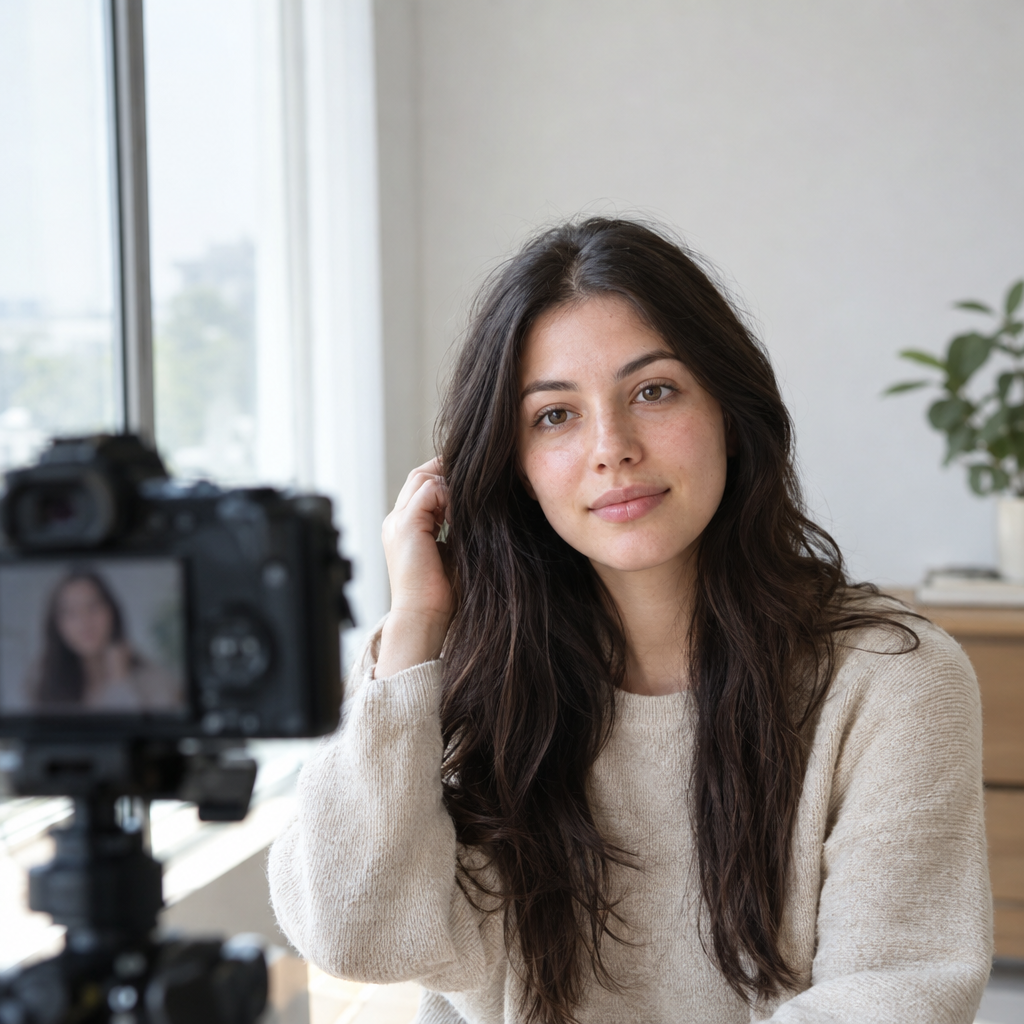
PSL ratings appear in appearance-focused and looksmaxxing communities, where users discuss facial features and ways to change their presentation. Some communities attach rigid rankings or predictions about life outcomes to these scores. Those claims go well beyond what an appearance rating can establish.
The term’s origins and scoring conventions are described differently across communities. Rather than assuming everyone means the same thing, check three things:
- Scale: What are the minimum and maximum values? Are categories defined?
- Criteria: Which traits count, and how are they weighted?
- Scope: Is the evaluator judging one photograph, facial structure, styling, or overall presentation?
No single official PSL range exists. You may encounter eight-point or ten-point systems, but there is no universal conversion between them. Multiplying a score by a fraction changes the number, not the underlying standards.
How PSL Ratings Differ From Other Facial Assessments
These approaches answer different questions. Some describe visible relationships; others add aesthetic judgments or address a clinical concern.
| Approach | Evaluates / appropriate use | Standardization / main limitation |
|---|---|---|
| Informal PSL rating | Appearance impressions / community discussion | Unstandardized / subjective criteria |
| General attractiveness rating | Perceived appeal / preference feedback | No universal standard / context-dependent |
| Symmetry analysis | Bilateral relationships / visual description | Method-dependent / sensitive to pose |
| Proportion or golden-ratio analysis | Relative measurements / proportion comparison | Formula-specific / no universal beauty inference |
| Clinical facial assessment | Health, function / treatment decisions | Question-specific clinical methods / requires professional interpretation |
The distinction is between describing something and judging its appeal. A distance or ratio may be measurable under defined conditions. The conclusion that this measurement is attractive remains an interpretation.
For example, facial symmetry analysis concerns how corresponding features align. It does not establish how appealing, expressive, or distinctive a person looks.
Clinical assessment serves another purpose: answering specific questions about health, function, or treatment. Depending on the concern, it may require history-taking, examination, and appropriate imaging. An online score or standalone photograph cannot replace that assessment.
What Traits Are Commonly Discussed in a PSL Assessment?
Separating the criteria into three groups helps show where observation ends and opinion begins.
Observable geometry
These are relationships that can be described or approximately measured:
- Feature spacing, such as the distance between the eyes
- Relative forehead, cheekbone, and jaw widths
- Face length compared with width
- Jaw contour and chin outline
- Approximate left-right feature alignment
Looking at facial proportions can help explain these relationships without assigning them a beauty ranking. Photo-based measurements still depend on perspective, pose, and the visibility of feature boundaries.
Presentation-dependent traits
These affect what a photograph emphasizes:
- Hairstyle and hair volume
- Facial hair and grooming
- Makeup and visible skin presentation
- Glasses and frame shape
- Expression and posture
For example, a beard can obscure the underlying jaw outline while creating a different visible outline of its own. Makeup can change contrast around the eyes without changing their anatomical position.
Subjective interpretation
These are judgments rather than direct measurements:
- Attractiveness
- “Facial harmony,” meaning a perceived balance between features
- Perceived masculinity or femininity
- Distinctiveness
- Overall appeal
Personal taste, cultural preferences, social context, and evaluator bias all influence these impressions. Even if someone begins with accurate measurements, their choice of which measurements matter and what counts as desirable introduces judgment.
Why the Same Face Can Receive Different PSL Scores
A photograph records a face from one viewpoint, under one set of conditions. It does not provide an unchanging representation of appearance.
| Variable | Possible visual effect | Practical control |
|---|---|---|
| Close wide-angle selfie | Central features appear more prominent | Increase distance; crop afterward |
| Head tilt or rotation | Changes apparent alignment and width | Face camera with head level |
| Strong side lighting | Deepens shadows and emphasizes contours | Use soft frontal light |
| Smile versus neutral expression | Changes cheeks, eyes, and mouth | Keep expression consistent |
| Facial hair or makeup | Alters outlines and visual contrast | Keep presentation consistent |
| Hair or glasses obstruction | Conceals boundaries or eye details | Clear hair; manage frame glare |
| Camera height | Changes forehead-to-chin emphasis | Position camera at eye level |
| Crop and image quality | Removes context or obscures detail | Match framing; use clear originals |
| Filters and retouching | Alters shape or skin appearance | Disable appearance-altering edits |
Camera distance matters more than the lens label alone. Wide-angle selfies are often taken close to the face. At that distance, features nearer the camera can look disproportionately prominent. A longer focal length often leads the photographer to stand farther back, producing a different perspective. Changing focal length without changing position does not itself create that perspective change.
Obstruction introduces another problem. If hair covers the forehead or glasses conceal the eye corners, an evaluator may be guessing at features that are not clearly visible.
Scores can also differ even when the photograph stays identical. Two raters may use incompatible scales, weight features differently, or disagree because of personal and cultural preferences. A disagreement does not reveal which person has discovered the “true” score.
A Six-Condition Photo Method for More Consistent Results
This setup reduces avoidable image variation. It does not make subjective scoring objective.
- Keep the camera at eye level. Position it directly in front of you, with your head upright rather than tilted or turned.
- Use a neutral, relaxed expression. Relax your brow and jaw. Avoid squinting, pursing your lips, or deliberately tightening your facial muscles.
- Choose even frontal lighting. Face a window with indirect light or a soft light source. Avoid strong overhead or one-sided shadows.
- Turn off beauty filters. Avoid face reshaping, skin smoothing, and appearance-altering edits.
- Keep the full face unobstructed. Move hair away from the outline. For structural comparisons, remove glasses if comfortable; for a glasses comparison, keep them on intentionally.
- Keep distance and crop consistent. Use the same camera and lens setting. A supported camera roughly 1 to 1.5 metres away can be a practical starting point, provided the image retains enough detail.
Clean the lens and use a clear original image rather than a screenshot or heavily compressed copy. Leave enough space around the face to include the forehead, jaw, and chin.
For comparison images, change only one variable at a time. If you want to compare hairstyles, keep the lighting, expression, distance, and framing stable. Changing all of them at once makes it impossible to tell what caused the different impression.
No single photo perfectly represents how you look in motion or across everyday settings.
Use Two Separate Photo Sessions to Check Score Stability
If you already use appearance ratings and want to understand their sensitivity, limit the exercise to two sessions.
- Capture one photo using the six conditions above. Note the setup, including distance, lighting direction, and camera position.
- Capture another in a separate session. Re-create the conditions as closely as practical, without deliberate styling changes.
- Use the same source and scale. Otherwise, you are comparing systems as well as photographs.
- Compare the score, category, and descriptions. Do not select only the result you prefer.
Suppose a source moves you between its own appearance categories despite similar photo conditions. That suggests sensitivity to the image, evaluator, or tool, not evidence that your face rapidly changed.
There is no universal numerical threshold for a “substantial” change because PSL scales are not standardized. A category switch or a change large enough to reverse the source’s interpretation is more informative than a small decimal difference.
Similar results suggest repeatability under those conditions. They do not validate the scale or prove the judgment correct. Once the comparison answers your question, further uploads are unlikely to make the number more meaningful.
Replace the Number With a Practical Feature Map
A feature map records neutral observations and connects them to choices you can actually make. It is useful when your real question is about a haircut, glasses, grooming, or photography rather than a ranking.
Use these six fields:
- Face shape estimate: Describe the overall outline flexibly. For example, “longer than wide, with a rounded jaw; between oval and oblong.” Categories can overlap.
- Feature balance: Note relative width, spacing, or visual emphasis. For example, “cheekbones appear wider than the jaw.”
- Dominant visual traits: Identify what catches attention without ranking it. Examples include full eyebrows, a curved chin outline, or a clearly defined lip contour.
- Styling variables: Record hair, grooming, makeup, glasses, expression, and lighting.
- Photo limitations: Note close-camera perspective, shadows, obstruction, tight cropping, or low resolution.
- Practical next step: Choose one change linked to a presentation goal.
A completed map might read:
Outline: Longer than wide, with a softly rounded jaw. Balance: Cheekbones appear slightly wider than the lower face. Visual emphasis: Full brows and dark frames draw attention upward. Styling: Hair has most of its volume at the crown. Photo limits: A close selfie and overhead shadows obscure detail. Next step: Take a more distant portrait, then compare lower crown volume if the goal is less vertical emphasis.
That produces a usable decision, not an attractiveness verdict. Other next steps might include comparing lighter frames, changing a beard outline, adjusting makeup placement, or choosing softer lighting.
Can AI Determine Your PSL Rating?
AI can generate a PSL-style score, but it cannot determine an objectively correct rating. Its result reflects the system’s learned patterns and scoring rules applied to the submitted image.
Different uploads can produce different estimates because lighting, perspective, expression, crop, image quality, and styling change the visual input. Numerical precision does not remove that uncertainty. A decimal score is still an estimated interpretation, not proof of measurement accuracy.
For readers who understand these limits, Facefy’s PSL Score Test offers an optional AI-generated appearance assessment. Treat it as an image-dependent estimate for informational or entertainment purposes, not an official PSL verdict.
Where an assessment provides descriptive observations, give those more attention than small numerical differences. Ask whether an observation is visible in a clear photo and relevant to your styling question. Before uploading, review the service’s privacy information and use only photos you have permission to share.
What a PSL Score Cannot Tell You
A static image cannot capture natural movement, changing expressions, voice, personality, presence, rapport, or the social context in which attraction develops.
A PSL score therefore cannot establish:
- Your dating prospects or relationship compatibility
- Your social value or personal worth
- Your genetics, health, or psychological wellbeing
- A permanent category for your appearance
- How every person will respond to you
Real-world attraction is contextual and interpersonal. It is not a fixed result derived from a front-facing photograph.
Geometric calculations do not solve that limitation. Ratios and alignment measurements describe selected relationships, but they do not establish a universal beauty standard. Appearance analysis is also distinct from medical, psychological, and clinical evaluation.
How to Use Appearance Ratings Without Letting Them Take Over
Curiosity about appearance does not need to become a project of continual scoring. A useful boundary is to decide what question you want answered before opening a rating tool.
- If the question is about styling: Compare a specific choice, such as frame shape, hair volume, or grooming.
- If the question is about photography: Adjust lighting or camera position, not your opinion of your face.
- If the question is whether you are “good enough”: A rating system cannot provide a reliable answer.
- If you feel driven to keep uploading: Pause rather than searching for a more reassuring number.
Treat scores as entertainment or rough visual estimates, not targets. Avoid communities that attach human value to appearance rankings or make confident predictions about someone’s future from a photo.
Step away if rating content begins affecting your mood, confidence, concentration, relationships, or daily routines. If appearance concerns remain persistent or distressing, speaking with a trusted person or qualified mental health professional can help you regain perspective without needing another score.
PSL Rating FAQs
Is the PSL scale out of 8, 10, or another number?
There is no official range. Different communities and tools use different conventions. The source needs to define its range, categories, and criteria before its score can be interpreted. There is no universal conversion between scales.
Are symmetry and attractiveness the same?
No. Symmetry describes correspondence between features. Attractiveness is a broader, subjective impression influenced by expression, presentation, preferences, and context. One cannot be substituted for the other.
Does the golden ratio determine attractiveness?
No. Golden-ratio face analysis compares selected proportions with a mathematical ratio, approximately 1.618. That comparison does not establish universal appeal or prove that a face is more attractive.
Can hair, makeup, facial hair, or glasses change a rating?
Yes. They can change visible outlines, contrast, and where attention goes. Glasses and hair may also conceal features. A changed rating can reflect presentation rather than a change in underlying facial structure.
Why might two raters disagree?
They may have different preferences, cultural reference points, criteria, or scoring conventions. They can also interpret the same lighting, expression, or styling differently. Agreement would show shared judgment, not necessarily objective truth.
Is a PSL rating scientifically accurate?
A PSL rating is not a validated scientific or clinical measurement. A system can produce repeatable numbers without establishing that those numbers measure universal attractiveness. Its most useful role is limited: prompting a specific, neutral observation that helps with a practical choice.