Mewing Before and After: What Photos Really Show
Mewing before-and-after photos can mislead. Learn what may change, what evidence shows, how to compare photos safely, and when to seek care.
Mewing before-and-after photos do not prove that tongue posture caused a facial transformation. In adults, dramatic and permanent jawbone reshaping from DIY mewing has not been established by strong clinical evidence. There is also no evidence-based timeline for the adult transformations promoted online.
Changes in posture, camera distance, lighting, weight, grooming, facial tension or natural growth can make a jawline look substantially different without showing that mewing changed bone.
Relaxed oral posture is also different from forcefully pressing the tongue upward, clenching or straining to keep the mouth closed. The useful question is not just, “Does the after photo look different?” It is “What changed, and what can this photograph actually establish?”
What mewing means, and what it does not mean
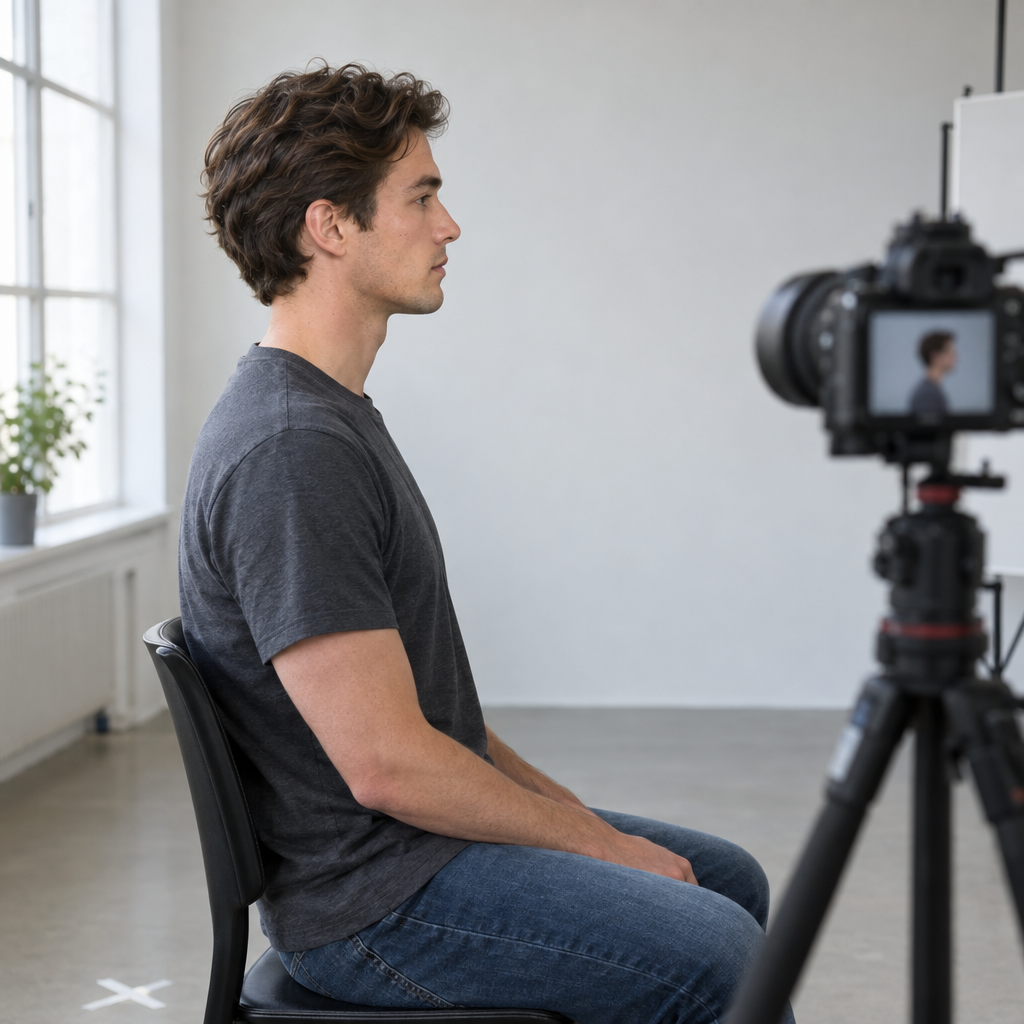
Mewing commonly refers to resting the tongue against the palate, or roof of the mouth, while keeping the lips together and breathing through the nose. Online advice often adds claims that this practice will sharpen the jawline or reshape the face.
Those appearance claims should be separated from comfortable oral resting posture. Resting does not mean pressing hard, clenching the jaw, keeping the teeth firmly together or straining to close the lips. If you cannot breathe comfortably through your nose, do not force your mouth closed.
Three different approaches are often confused:
- Internet mewing: Self-directed tongue-positioning techniques commonly promoted for cosmetic facial changes.
- Orthodontic care: Professional assessment and treatment of tooth alignment and bite relationships.
- Professionally guided oral-function therapy: Individualized exercises used for assessed functional concerns, such as an atypical swallowing pattern. The American Speech-Language-Hearing Association provides an overview of orofacial myofunctional disorders and the role of professional assessment.
Oral-function therapy is not simply a supervised form of internet mewing. Its purpose depends on the concern being treated, and it should not be presented as a guaranteed method for cosmetic jawbone reshaping.
A naturally softer jawline or less projecting chin does not, by itself, indicate a health problem. No single profile establishes attractiveness, normal breathing or a need for treatment.
Can mewing actually change your jawline?
Tongue position, chin elevation, neck extension and facial tension can change how the area beneath the jaw looks immediately. This is a change in presentation, not evidence of newly shaped bone.
If you’re curious about how your jawline appears in a photograph, Facefy’s Jawline Rating tool offers an AI-based way to explore visible jawline definition. It can provide an additional appearance-focused reference, but its results should not be treated as evidence of bone remodeling or proof that mewing has changed your facial structure.
The American Association of Orthodontists’ guidance on mewing cautions against claims that DIY tongue positioning can reliably reshape the jawline. Although photos may document visible differences, they cannot establish what caused those differences.
It helps to separate four kinds of apparent change:
| Type of change | What photos may show | What they cannot establish |
|---|---|---|
| Immediate posture or expression | Different contours within seconds | Permanent structural change |
| Soft-tissue changes, including weight variation | Different facial or neck fullness | That mewing caused the difference |
| Tooth or bite changes | Visible tooth-position differences | Bite function or the underlying cause |
| Claimed skeletal changes | A different-looking facial outline | Bone remodeling or what caused it |
Soft tissue includes structures such as skin, fat and muscle. Weight and body-composition changes can alter facial fullness and the jaw-to-neck transition independently of tongue posture.
Tooth soreness or a different-feeling bite is not proof that a technique is working. Sustained pressure can affect teeth, but unwanted movement and bite concerns require dental assessment rather than more pressure.
The mandible is the lower jawbone, while the maxilla is the upper jawbone. Casual photographs show the surface over these structures. They cannot establish whether either bone changed shape or position.
Clinical assessment is different from visual comparison. A qualified professional can examine tooth contact, jaw movement, symptoms and function, then decide whether any further assessment is appropriate. Medical or dental imaging should not be pursued simply to validate a social-media transformation.
Why age changes how before-and-after claims should be read
A comparison spanning adolescence is different from one taken during adulthood. Teenagers can experience changes in jaw growth, tooth position, facial proportions and body composition as part of ordinary development.
Even a genuine transformation between ages 14 and 18 cannot isolate tongue posture from natural growth, orthodontic treatment, weight change or other influences.
Use this age-and-goal framework:
- Adult seeking cosmetic definition: Begin with consistent photographs and reversible choices such as grooming, hairstyle and comfortable posture. Do not assume tongue pressure will dramatically reshape adult facial bones.
- Growing teenager concerned about development: Discuss tooth position, bite or facial development with a dentist or orthodontist. DIY growth-modification claims can distract from appropriate care.
- Person of any age with symptoms: Pain, bite changes, persistent mouth breathing, nasal obstruction or sleep concerns call for dental or medical assessment, regardless of how the jawline looks.
Appearance preferences and functional concerns require different next steps. A sharper-looking photograph does not establish better oral health, improved bite function or easier breathing.
Why two mewing photos can look dramatically different
A before-and-after comparison often changes several variables at once. Each one can alter how the lower face appears.
Camera setup changes perspective
- Camera distance: A close selfie can exaggerate whichever features are nearest to the camera. Moving farther away reduces these depth differences, even if the final image is cropped to a similar size.
- Lens choice: Wide-angle lenses are often used at close range, so they are commonly associated with exaggerated perspective. Camera-to-face distance is the main cause of that effect, not the lens label by itself.
- Camera height: Shooting from above or below changes how much of the chin, underside of the jaw, neck and midface is visible.
- Camera rotation: A small upward or downward tilt can change the apparent jaw-to-neck angle.
- Crop and scaling: A tighter crop can make the face seem more dominant. Stretching or compressing an image can alter its visible width-to-length relationship.
Pose and light change visible definition
- Chin elevation: Raising the chin can stretch the area beneath it and make the jaw-to-neck boundary look clearer. Lowering the chin can compress the same area.
- Neck extension: Lengthening the neck or moving the head backward changes the profile and the arrangement of soft tissue beneath the jaw.
- Side lighting: Directional light creates stronger shadows under the jaw. Soft frontal light may show less contrast around the same anatomy.
- Jaw clenching: Muscle tension can temporarily change lower-face contours. It also makes a relaxed before photo and tense after photo an uneven comparison.
- Expression and lip position: Smiling, pursing the lips or deliberately projecting the chin can change the profile without skeletal remodeling.
Grooming and body changes create other explanations
- Weight variation: Changes in facial and neck fullness can affect definition independently of tongue posture.
- Facial hair: Beard length, density and edging can create a darker border or suggest a different jawline position.
- Hairstyle: Hair changes the surrounding silhouette and can influence how wide or narrow the lower face appears.
- Makeup: Contour products can change the light-and-shadow pattern around the jaw.
- Filters and retouching: Face reshaping, sharpening and local contrast adjustments can alter contours or make edges look more defined.
Hairstyling can also change how the jawline and overall facial proportions are perceived without altering the underlying anatomy. Facefy’s Hairstyle Finder can help you explore hairstyle options that complement your facial features, making it a practical alternative to relying on unproven facial reshaping techniques for cosmetic changes.
These are possible explanations, not grounds for accusing someone of manipulation. Appearance alone cannot establish whether a comparison is edited, carefully posed or medically meaningful.
How to make facial progress photos more comparable
If you want a record of your appearance, aim for repeatable conditions rather than the most defined-looking image. Consistency reduces some uncertainty, but it does not turn photographs into proof of bone change.
A repeatable photo checklist
- Use the same device and lens. Place the camera on a stable support and use a timer so you can maintain the chosen camera-to-face distance. A rear camera may provide better image quality on some phones, but using it alone does not reduce perspective distortion.
- Mark a fixed distance. Around 1.5 metres, or 5 feet, is a practical starting point if space allows. Mark both the camera and standing positions, then crop the image afterward if necessary.
- Keep the camera at the same height. Position it approximately at eye level and keep it level rather than tilting it upward or downward.
- Repeat the lighting. Use the same light source, direction and approximate intensity. Avoid comparing soft window light with strong overhead or side lighting.
- Relax your expression. Do not clench, push the chin forward or deliberately tighten the neck. Let your lips rest comfortably without forcing them closed.
- Match head position. Look toward the same eye-level reference. Avoid raising or lowering the chin to change definition.
- Match presentation and framing. Keep hairstyle, facial-hair length, makeup, neckline and crop consistent. Move hair away from facial boundaries.
- Take three views in one brief session. Capture front, three-quarter and profile views rather than repeatedly adjusting until one image looks preferable.
If you repeat the session, use spaced intervals, such as several weeks apart, instead of checking every day. This is a way to limit unnecessary comparison, not a mewing-results timeline. Stop if documenting your appearance becomes distressing or compulsive.
Use a landmark alignment check
A simple side-by-side comparison or transparent overlay can reveal whether two front-facing photographs were taken under different conditions:
- Make one image partially transparent, at approximately 50 percent opacity.
- Adjust its overall size and position so the pupil centres align as closely as possible.
- Check whether the base of the nose also lines up.
- Look for differences in head rotation, chin elevation or visible ear position.
- Do not stretch or warp either image to force a match.
Pupils and the base of the nose are useful visible reference points, but they are not perfectly fixed markers. Gaze, expression, perspective and pose still affect their appearance.
If several reference points do not align at the same time, camera angle, pose or scale probably differs. Good alignment still cannot diagnose bone remodeling, tooth movement, airway health or treatment need.For an additional appearance-focused perspective, Facefy’s Facial Ratios tool can help you explore visible facial proportions in a photograph. However, measurements and proportions derived from images can be affected by camera distance, head position and perspective. They should not be used to determine whether mewing caused structural changes or to assess dental health.
Can posture or weight loss make a jawline look more defined?
Posture can immediately change the visible relationship between the jaw, chin and neck. A neutral, comfortably upright posture may produce a different profile from a slouched position or an intentionally extended neck. This does not mean posture has remodeled the jawbone.
Weight loss may change facial and neck fullness for some people, but the effect varies and cannot be targeted specifically to the jawline. A photograph alone is not a reason to pursue weight loss, especially when lighting, pose or camera distance may explain much of the visible difference.
Muscle exercises also require realistic expectations. Increasing the size of the chewing muscles may make parts of the lower face look wider rather than creating a universally sharper contour. Forceful chewing devices can strain the jaw joints, muscles or teeth.
When mewing can cause problems
Discomfort is not evidence of progress. Stop forceful tongue pressing or clenching if you notice:
- New or worsening jaw pain
- Clicking accompanied by pain, or jaw locking
- Headaches associated with clenching or facial tension
- Tooth soreness, pressure or mobility
- A perceived change in how your teeth meet
- Difficulty breathing comfortably through your nose
Do not press harder, maintain forceful tooth contact or continue through pain in pursuit of faster results.
A dentist or orthodontist can assess tooth position and bite concerns. Jaw pain or locking may need evaluation by an appropriately qualified dental or medical professional. The National Institute of Dental and Craniofacial Research provides information about temporomandibular disorders, including symptoms involving the jaw joints and chewing muscles. Painless clicking alone is common and does not necessarily require treatment.
Persistent nasal obstruction, mouth breathing, snoring or other sleep and breathing concerns need medical attention rather than attempts to force the mouth closed. Severe or sudden breathing difficulty requires urgent medical care.
Choose help based on the goal, not the photograph
The same visible jawline can accompany very different dental, muscular and breathing situations. Start with the concern you actually want addressed.
| Goal or concern | Suitable next step | What a photo cannot establish |
|---|---|---|
| Jawline appearance | Consistent photos and reversible styling choices | Whether anatomy or presentation caused the visible contour |
| Tooth alignment | Dentist or orthodontist | Dental health or the cause of tooth movement |
| Bite function | Dentist or orthodontist | How the teeth contact during chewing and movement |
| Jaw pain or locking | Qualified dental or medical professional | The source of pain or joint symptoms |
| Persistent mouth breathing | Medical assessment, with referral if appropriate | Whether nasal obstruction is present |
| Sleep or breathing concerns | Clinical assessment and sleep evaluation if indicated | Airway function or sleep quality |
For appearance alone, consider the variables you can control without strain: camera distance, neutral posture, hairstyle, facial-hair outline and lighting. Comfortable presentation is more useful than maintaining a forced pose throughout the day.
For tooth alignment or bite function, professional assessment can distinguish a cosmetic preference from a functional concern. Professionally guided oral-function therapy may also be appropriate in selected cases, but only after the relevant concern has been assessed.
A mewing before-and-after image can document a visible difference. It cannot show, by itself, that tongue posture changed adult facial bones. If a comparison matters to you, standardize the photographs, consider other explanations and seek appropriate care for pain, bite changes or breathing concerns.