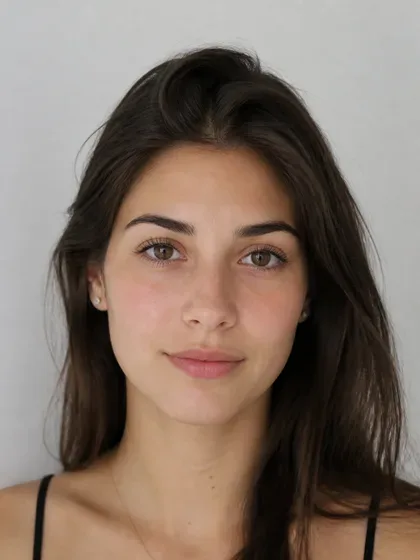
Face Rater Guide: What AI Face Ratings Really Mean
Learn what an AI face rater measures, why scores change between photos, how to take a consistent image, and what to check before uploading.
A face rater analyzes a facial photo and returns an estimated appearance score or visual assessment. The result is not an objective measure of attractiveness or personal worth. It reflects one image and one system’s criteria, not a definitive judgment about you.
Scores can change with lighting, camera perspective, expression, image quality, hair, makeup, and crop. A face rater is best treated as a limited informational or entertainment tool.
If you specifically want a limited AI-generated appearance assessment, Facefy’s Rate My Face fits that purpose. Interpret its result with the same photographic and subjective limitations, not as a measure of confidence, health, identity, or personal worth.
What does a face rater measure?
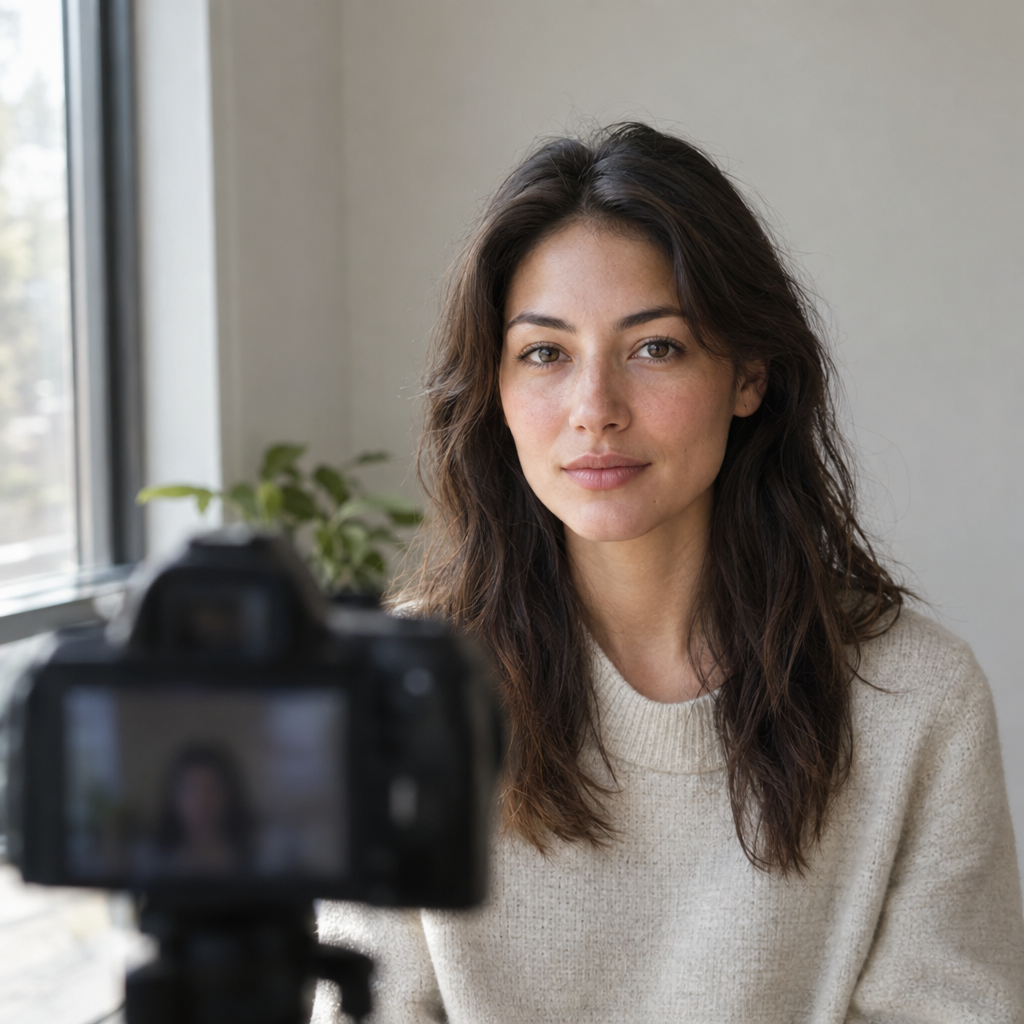
A face rater processes a submitted image and may return a number, label, category, or descriptive appearance analysis. Some tools describe visible feature relationships. Others provide a score without explaining how it was calculated. You cannot assume that every system measures the same features or weighs them similarly.
The important distinction is between describing an image and judging a person.
| Observable image property | What it describes | What it cannot establish |
|---|---|---|
| Apparent symmetry | Visible left-right alignment | Objective attractiveness |
| Visible proportions | Relative feature sizes and distances | An ideal face |
| Framing and crop | Face placement within the image | Social desirability |
| Contrast | Light-dark differences around features | Personality or character |
| Lighting and visible texture | Surface appearance under particular light | Health status |
Even measurable properties have limits. A slight head turn can change apparent feature widths. Shadows can make contours look more pronounced. Those observations describe the photograph, not necessarily the face’s three-dimensional structure.
Different scales are also not interchangeable. A score of seven on one service need not mean the same thing as seven on another. Neither can show exactly how other people see you or determine your compatibility or value.
Why the same face can receive different scores
A face rater receives pixels, not a person standing in front of it. Change the photograph, and you change its input.
Several variables can affect the result:
- Camera distance and perspective: A very close photograph can exaggerate features nearest the lens. Wide-angle phone cameras often encourage this close framing. Stepping back changes perspective. Simply zooming or cropping from the same position does not.
- Camera height and head position: Looking up, looking down, or turning slightly changes visible proportions and alignment.
- Lighting direction: Side lighting can emphasize contours and texture, while softer frontal lighting can reduce shadows. Neither image alone captures the whole picture.
- Expression: Smiling changes cheek position, eye opening, and the mouth’s shape.
- Presentation: Hair, makeup, and facial hair change contrast, framing, and visible feature boundaries.
- Image processing: Beauty filters, portrait effects, compression, resolution, and cropping can alter or obscure detail.
Two services may also rate the exact same photo differently because their scales, criteria, labels, and image processing are not standardized.
Change one variable to understand the difference
If you want to examine a surprising difference between photos, change only one variable per comparison:
| Variable | Change only this | Keep unchanged |
|---|---|---|
| Lighting direction | Front light to side-front light | Camera, pose, expression |
| Camera height | Eye level to slightly higher | Distance, light, head position |
| Head angle | Straight ahead to a slight turn | Camera, light, expression |
| Expression | Neutral to a natural smile | Camera, light, head position |
Use only one pair of photos overall. Choose either one comparison from this table or the Two-Photo Consistency Check below. Do not complete both as separate rounds of testing.
A difference may reflect sensitivity to the photo variable you changed, but one comparison cannot establish the cause. Some systems may also produce slightly different outputs between runs. The pair offers a clue about result stability, not proof of how an undisclosed scoring system works.
How to take a more representative face-rating photo
The aim is a clear, ordinary portrait with fewer avoidable distortions, not a photograph engineered to earn the highest score.
- Put the camera near eye level. Use a stable support or ask someone to take the photo rather than angling the phone sharply upward or downward.
- Turn off beauty filters and strong portrait effects. Smoothing and reshaping can change the features being assessed.
- Use even front or side-front lighting. Face a window or position yourself slightly to its side. Avoid strong overhead shadows and bright light directly behind you.
- Keep the full face visible. Include the forehead and chin. Move hair away from facial boundaries when practical, especially if you want descriptive shape feedback.
- Use a comfortable camera distance. Around 1 to 1.5 metres is a practical starting point if the image remains clear. A timer can help. Avoid an ultrawide lens held close to your face.
- Keep your head and camera relatively level. Look toward the lens without deliberately raising, lowering, or pushing your chin forward.
- Use a relaxed expression. Avoid squinting or tightening your jaw solely for the photograph.
- Keep enough image detail. Use the original photo rather than a small screenshot, and crop without cutting off facial boundaries.
Makeup, facial hair, and hairstyle are presentation variables, not evidence that a photograph is deceptive. Choose a presentation that matches your purpose, then keep it similar if comparing images.
A consistent setup reduces some photographic variation. It does not make an attractiveness score objective.
Use the Two-Photo Consistency Check
The Two-Photo Consistency Check is an alternative to the variable comparisons above, not an additional testing round. Choose this expression comparison or another one-variable comparison, and stay within one pair of images overall.
- Photo one: Face the camera directly with a relaxed, neutral expression.
- Photo two: Keep the same position and use a natural expression, such as a gentle smile.
- Match the conditions: Keep camera position, distance, lighting, crop, and image quality as similar as possible.
- Use the same service and settings: Submit both photos to the same rating service using the same available settings or analysis mode.
A notable score change may indicate sensitivity to expression or another small difference between the images. It does not prove that expression caused the change. Some systems may also vary between runs, so a single pair provides a clue rather than a firm explanation.
There is no universal threshold for “notable” because tools use different scales. A switch between the service’s own result categories is easier to recognize than a tiny decimal change, but it still does not prove a meaningful difference in attractiveness.
Small differences should not be treated as precise measurements. Similar scores are not proof of accuracy either. Consistency and validity are different things.
Stopping rule: Use one or two representative images in total, note the limitations, and stop. Avoid repeated submissions intended solely to chase a higher score or investigate every possible variable. If the experience leaves you more preoccupied or less comfortable with your appearance, step away from the rating.
How to interpret your result without overvaluing it
Read the result as: “This system produced this estimate from this photograph.” That is narrower and more accurate than “This is how attractive I am.”
A high or low number has no universal meaning across tools, cultures, contexts, or individual preferences. A numerical rating is not automatically a percentile, a probability that someone will find you attractive, or a prediction of social success.
Where descriptive feedback is available, ask whether it points to something observable and useful:
- “The face is partly in shadow” suggests a lighting adjustment.
- “The crop cuts off the chin” identifies a framing issue.
- “Below average” offers little practical guidance without a defined comparison group or method.
Descriptions still need scrutiny. A comment about visible balance may reflect a tilted head rather than a stable facial trait.
Check privacy and consent before uploading
Facial photographs can be sensitive personal information and may identify the person shown. Before sending an image to any service, read its privacy information and ask these six questions:
- Are uploaded images stored? Look for whether the original photo and any information derived from it are saved.
- How long are they retained? Check whether the service gives a retention period or explains when removal happens.
- Is deletion available? Find out whether you can delete the image and related data yourself or request removal.
- May images or derived data train models? Look for any training use and whether you have a choice.
- Is information shared with third parties? Check what service providers or other recipients may receive.
- Do you have the photographed person’s clear consent? Permission to take or share a photo is not automatically permission to submit it for appearance scoring.
Do not upload someone else’s face without consent, and do not submit images of children to appearance-rating tools. Choose a photo without bystanders or unnecessary identifying details in the background.
If the service’s storage, retention, deletion, training, or sharing practices are not clear enough for your comfort, not uploading is the safer choice.
Choose an analysis that matches your real goal
A general score often does not answer the question that prompted the upload. Start with the decision you want to make.
Which hairstyle or glasses should I choose?
Start by comparing several face-shape cues together, including face length, forehead width, cheekbone width, and jaw contour. Categories can overlap, so treat the result as a starting point rather than a rigid styling rule. Hair texture, frame fit, comfort, and personal taste also matter.
Related tool: Face Shape Detector
How can I improve a profile picture?
Focus on camera distance, soft lighting, a comfortable expression, an uncluttered background, and an appropriate crop. Check the image at its actual display size. A small profile thumbnail needs clear framing more than a numerical rating.
How can I understand visible feature relationships?
You can learn about facial proportions or explore apparent facial symmetry. These are descriptive ways to examine an image, not beauty standards. Pose, perspective, expression, and image quality still affect what you see.
What if I am simply curious about an AI appearance score?
A face rater can provide a limited informational or entertainment estimate. Use a representative image, consider privacy before uploading, and keep the result attached to the specific photo and system that produced it.
Face rater questions, answered
Are AI face ratings accurate?
They can generate an estimate for the submitted image, but that is not the same as scientifically or objectively measuring attractiveness. Even a repeatable result can reflect subjective criteria. Accuracy at identifying a visible feature would not, by itself, validate an overall beauty score.
Can hair, makeup, or facial hair change the score?
Yes. They can change visible contrast, framing, and feature boundaries. A fringe may cover the forehead, a beard may alter the visible jaw outline, and makeup may emphasize particular features. Any resulting score difference describes the system’s response to that presentation.
Can a face rater tell how other people see me?
No. Human perception varies with personal preference, context, movement, expression, and real-world interaction. A static image cannot capture your voice, mannerisms, warmth, or the experience of spending time with you.
Does a low or high score mean anything objective?
It has meaning only within that tool’s scoring scheme, which may be partly or entirely unexplained. It does not establish your attractiveness to other people or your personal worth. Keep any useful photo observations, but leave the number attached to the image and system that generated it.