Light Brown Hair: Shades, Coloring Options, and Salon Tips
Explore light brown hair shades, compare coloring methods and upkeep, and build a clear salon brief based on your starting color and goals.
Light brown hair sits between dark blonde and medium brown. Levels 5 to 6 are a common professional reference for this boundary, although numbering varies by brand. Some systems label level 5 light brown and level 6 dark blonde.
The clearest way to describe your goal is through depth, tonal finish, and dimension. Depth means how light or dark the overall color looks. Tonal finish describes its ash, beige, neutral, golden, caramel, or taupe character. Dimension is the variation between lighter and deeper sections. Those three choices explain why two colors called “light brown” can look noticeably different.
What counts as light brown hair?
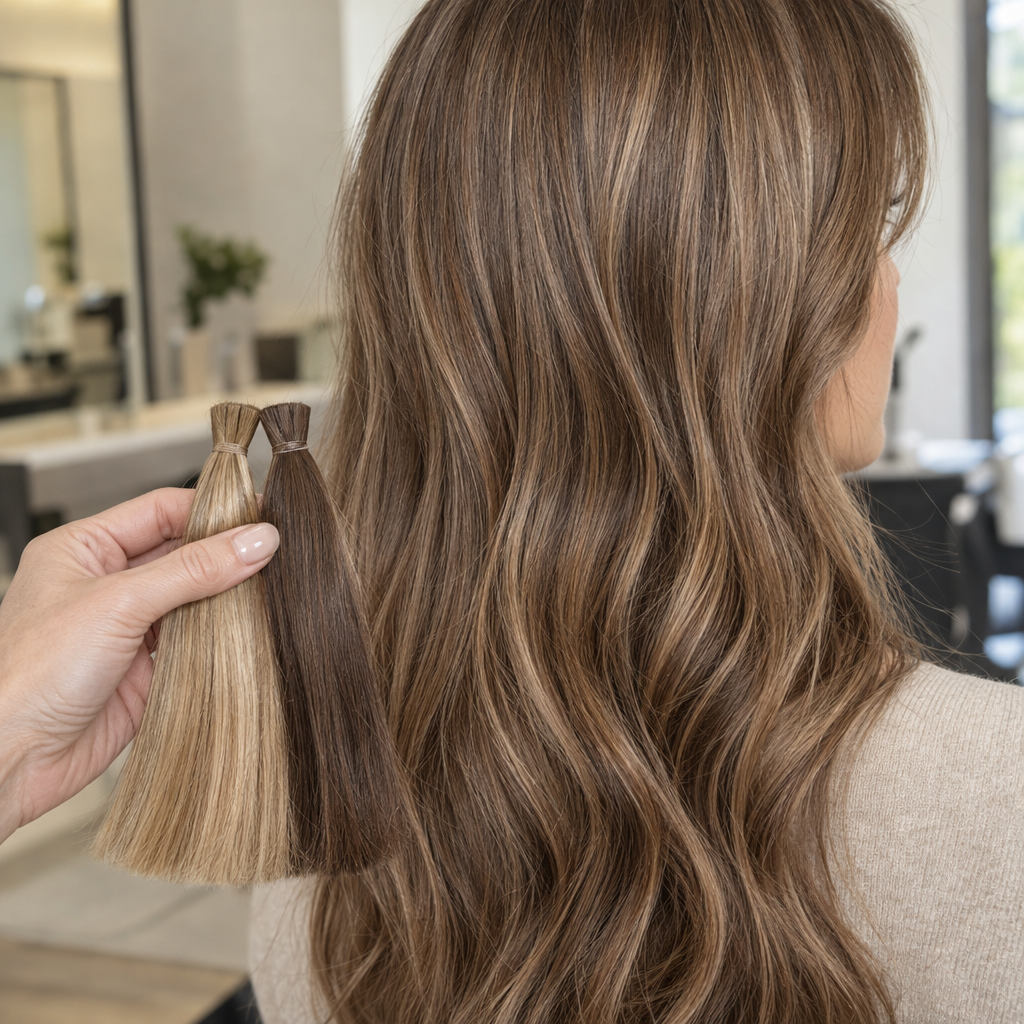
Light brown is a color range, not one exact shade or formula. Compared with medium brown, it generally has a lighter overall appearance. Compared with dark blonde, it usually reads as deeper and more distinctly brown. The boundary becomes less obvious when highlights or lowlights are involved.
When evaluating a reference photo, judge the main body of the hair rather than its brightest strands. Dark hair with a few pale highlights is different from an overall light brown result. Likewise, an even light brown color will look different from a dimensional result that combines deeper roots, lighter ribbons, and mid-depth sections.
Names such as “mushroom,” “caramel,” and “beige” are descriptive rather than standardized salon formulas. Two colorists or product brands may use the same name for visibly different results.
Lighting also matters. Direct sunlight can make warm tones more noticeable, while dim indoor light can make the same hair appear deeper. Camera processing, filters, clothing, and background colors can change the apparent finish. Use photographs to communicate a direction rather than expecting an exact color match. Beyond lighting, your natural coloring can influence how different brown shades complement your appearance, and Facefy’s color analysis can help you explore a personalized palette before choosing a light brown hair shade.
Seven light brown shades compared
Start by comparing visible differences rather than choosing the shade name that sounds most appealing. These light brown hair color ideas range from understated, even finishes to more noticeable ribbons of brightness.
An ash brown direction generally reduces the appearance of golden or copper warmth, but it can still have shine. Ash describes tonal character, not whether the hair looks glossy.
| Shade | Visible finish | Typical dimension | Common upkeep consideration |
|---|---|---|---|
| Ash light brown | Subdued warmth with a cool or neutral-brown appearance | Even or softly dimensional | Warmth may become more visible as cool toning fades |
| Beige brown | Balanced brown with restrained golden or sandy tones | Usually subtle variation | Lighter sections may shift toward yellow or orange over time |
| Neutral light brown | Brown without a strongly cool or golden direction | Even or softly dimensional | Deposited color can gradually lose depth or change tone |
| Golden light brown | Brown with an intentionally warm golden character | Low to moderate contrast | Warmth can shift or become less balanced as color fades |
| Caramel brown | Warm brown with amber or golden-brown sections | Often includes brighter ribbons | Lighter pieces may need tonal care before their placement needs refreshing |
| Mushroom brown | Taupe, muted brown, or gray-brown appearance | Often blends lighter and deeper sections | The muted finish may weaken as toner fades |
| Dimensional light brown | Multiple brown depths combined in one result | Subtle through high contrast | Upkeep depends on root contrast, placement, and the tone of lighter sections |
There is significant overlap among these categories. A beige formula can lean neutral, while a mushroom result may include both taupe and ash-brown elements. The mushroom brown guide offers more context for that muted gray-brown direction.
Any tonal finish can be solid or dimensional. Ash light brown, for example, could be an even all-over color or a brown base with softly cool highlights. Golden hair is not inherently shinier than ash hair. Surface shine depends on hair condition, styling, lighting, and product use, while golden and ash describe color tone.
How your starting color changes the route
The same target can require lightening on one person and mostly color deposit on another. Your existing color, chemical history, and hair condition matter more than the name attached to an inspiration photo.
Natural dark hair
Likely challenge: Reaching a lighter depth while managing the warmth revealed during lifting.
Professional lightening may be needed when the target is substantially brighter than the starting color. On some untreated hair, permanent color can provide enough lift for a modest change. A colorist must assess the starting depth, condition, and desired finish before deciding what is realistic.
If you want brightness without changing every strand, selected lighter sections may create the desired overall impression while retaining a deeper base. This can also reduce the contrast between the natural roots and the colored lengths.
Previously dyed dark hair
Likely challenge: Removing artificial pigment evenly.
A lighter box color generally will not reliably lift previously deposited dark dye. Professional pigment removal, lightening, or a staged color-correction plan may be necessary. Old color can be concentrated in the lengths, producing different results at the roots and ends.
Tell your colorist about permanent dye, color-depositing products, henna, and previous lightening, even if those applications happened months ago. A strand test may help show how the hair responds before a larger service begins.
Blonde or lightened hair
Likely challenge: Restoring believable brown depth without making porous areas too dark or dull.
Going darker is mainly a deposit process. However, very light or porous blonde hair may need missing underlying warm tones restored during professional formulation. Without that support, certain brown formulas can appear flat, muddy, or greenish.
This is not a reason to add an arbitrary warm dye yourself. The necessary tones depend on how light the hair is, its porosity, its condition, and the target depth. Lowlights may be enough if you want to retain some brightness rather than becoming uniformly brown.
Gray-blended hair
Likely challenge: Choosing between softer blending and more opaque coverage.
A colorist may combine deposited color, highlights, or lowlights according to the amount and distribution of gray. Existing highlights can sometimes become part of a new gray-blending plan.
Decide whether you want visible gray to remain untinted. A tinted gloss can change the appearance of gray strands as well as the surrounding pigmented hair. If preserving some untinted gray is the goal, the colorist may need to use selective placement instead of applying the same tinted product throughout.
A uniform finish may create a stronger line as new hair grows, while a dimensional approach can make the transition less distinct. The result depends on the percentage, texture, and distribution of gray, so one coverage method will not behave identically on every head of hair.
Existing light brown hair
Likely challenge: Identifying what actually needs to change.
If the depth already works, you may only need a gloss to adjust tone, lowlights to restore depth, or highlights to add brightness. A root adjustment can also change the overall effect without recoloring every length.
Ask yourself: “Is this too dark, too warm, too uniform, or too contrasted?” Each answer points toward a different service. Being specific can prevent an unnecessary all-over color application when only one part of the result needs adjustment.
Ways to create a light brown result
Color chemistry and placement are separate decisions. Permanent and demi-permanent describe types of color, while highlights and root shadows describe where changes happen. A salon appointment may combine several approaches.
| Approach | Main change | Main upkeep |
|---|---|---|
| Permanent all-over color | Creates a more uniform depth and tone | Visible roots and possible tonal fading |
| Demi-permanent color | Deposits or adjusts depth and tone | Gradual fading; root contrast varies |
| Gloss | Refines tone and can enhance surface shine | Tonal refreshes as the deposit fades |
| Highlights | Brightens selected strands | Root growth and the tone of lightened sections |
| Lowlights | Adds deeper strands | Depth fading and eventual placement refreshes |
| Balayage | Adds hand-painted brightness in selected areas | Tonal care and occasional placement refreshes |
| Root shadow | Deepens or softens the root transition | Transition and tone refreshes |
Here is what those differences mean in practice:
- Permanent all-over color suits a more uniform change. It can lift some natural pigment, but it does not reliably lighten previously dyed dark lengths. Root growth becomes more noticeable when the new color differs substantially from your natural depth.
- Demi-permanent color is primarily deposit-focused. It can deepen, blend, or adjust tone, but it is not the route to substantially lighter hair.
- Gloss describes a tonal or shine-refining service and may overlap with demi-permanent color. It cannot reliably turn dark hair into a much lighter brown.
- Highlights distribute brightness through selected strands. Fine, closely blended sections create a different visual effect from broad, contrasting ribbons.
- Lowlights add depth. They can bring an overly light result closer to brown without darkening every strand.
- Hand-painted lightening can preserve more depth near the roots, although the exact placement determines how softly it grows out.
- Root shadow creates a deeper transition near the scalp. It is a placement technique, not a separate shade of light brown.
Whether lightener is necessary depends on your natural base, artificial pigment, hair condition, and target brightness. No technique name alone answers that question.
Choose between solid, soft, and dimensional light brown
Choose the amount of contrast first, then refine the tone.
Choose solid light brown if you want an even overall depth. This suits someone who prefers little visible variation. The tradeoff is that a uniform color may show a clearer regrowth line when it differs from the natural roots.
Choose softly dimensional light brown if you want subtle movement. Fine highlights or lowlights can create variation without obvious stripes. Keeping the lightest sections relatively close to the base depth makes the effect quieter.
Choose higher-contrast dimension if you want visible ribbons of brightness. More pronounced lighter sections make placement particularly important. Decide whether brightness should frame the face, run through the lengths, or concentrate toward the ends.
Tone is a separate decision from shine:
- Cooler or muted tone: Ash and mushroom directions reduce the appearance of strong gold or copper. Maintaining that character may involve tonal refreshes as underlying warmth becomes visible.
- Warmer tone: Golden and caramel directions make warmth part of the intended color. This does not automatically make the hair glossier or more reflective.
- Surface shine: Glossiness depends on the hair surface, condition, styling products, lighting, and heat styling. Both cool and warm hair colors can look glossy or matte.
Before committing, answer these six questions:
- Current depth: Do I need to go lighter, darker, or remain close to my existing color?
- Color history: Is the hair untreated, dyed, highlighted, or uneven?
- Contrast: Do I want an even finish, subtle variation, or obvious ribbons?
- Lightening tolerance: Am I comfortable with lightening and a potentially staged change?
- Root preference: Do I want brightness near the scalp or a deeper root transition?
- Maintenance limit: How often can I realistically return, and what home care will I maintain?
Color placement also appears different across textures. A fine highlight may look like a distinct line on straight hair but break into smaller flashes of brightness through waves or curls. Bring references showing how you normally wear your hair so your colorist can evaluate the placement in a relevant context. You can also explore different cuts and textures with Facefy’s Hair Style Try-On to visualize how your preferred hairstyle might influence the overall appearance of light brown hair and its highlights.
Maintenance depends on the technique
Fading and root growth are different problems. Fading is the loss or shift of deposited color in treated hair. Root growth is untreated new hair becoming visible at the scalp. Refreshing one does not necessarily address the other.
For all-over color, discuss a root-focused plan rather than assuming the entire length needs permanent color at every visit. Repeatedly applying darker permanent color to previously colored ends can create unwanted buildup and make future lightening more difficult.
Glosses and demi-permanent services may need refreshing when tone or depth changes. Highlights can retain their placement while needing a tonal adjustment. Lowlights may gradually lose depth, especially on porous hair. A root shadow or softly blended lightening pattern may grow out less distinctly, but its deposited tone can still fade.
Your care routine influences how the result changes:
- Use cleansing and conditioning products intended for color-treated hair.
- Adjust washing frequency to your scalp and hair needs rather than following a rigid schedule.
- Limit unnecessary high heat and use heat protection when styling.
- Consider sun exposure, swimming, hard water, and mineral buildup if the color starts looking different.
- Use pigmented shampoos only when they suit the unwanted tone. They can over-deposit on porous sections and are not interchangeable.
A targeted hair-toner guide can help clarify why purple, blue, and other pigmented products are chosen for different tonal concerns. These products do not guarantee a specific result, and their effect depends on the existing color, porosity, formula, and frequency of use.
Muted finishes may reveal more warmth as toner fades. Golden and caramel finishes can also lose depth or shift with washing and environmental exposure. A gloss refresh may help in either case, but its suitability depends on the existing color and hair condition.
Follow product directions, including allergy precautions. Seek professional guidance for major lightening, corrective work, or an uncertain chemical history.
How to ask a stylist for light brown hair
Bring two or three reference images if possible. Explain what you like in each, such as the overall depth in one photo, the tone in another, and the root transition in a third.
Use this five-point reference-image check
- Similar starting depth: If a before photo is available, compare it with your own base. An after photo alone cannot reveal the amount of work required.
- Comparable lighting: Compare images taken in similar, neutral light. Do not treat a sunlit photo and a dim indoor photo as exact color equivalents.
- Visible roots: Look for a clear scalp-area view so you can distinguish an all-over change from a deeper-rooted result.
- Unfiltered detail: Favor images with visible strand detail and natural-looking color. Editing is not always obvious, so avoid depending on one highly processed image.
- Agreement on tone and dimension: Confirm with your colorist whether the target should be solid, softly dimensional, or higher-contrast. Identify which reference best represents the desired tone and which one best represents the highlight, lowlight, or root placement.
A salon request template
“My current color is ___, and my color history includes ___. I want an overall depth that looks ___, with a ___ tonal finish. I prefer ___ dimension and ___ at the roots. I can return about every ___ and want to keep home care to ___. What is realistic in one appointment, and what might need stages?”
For example:
“My natural hair is dark brown, and the ends have old permanent color. I want the overall result to read as light brown, with a softly beige finish and fine brighter pieces rather than strong ribbons. I prefer keeping some natural depth at the roots. I can return roughly every three months. Can we work toward that without making every strand lighter?”
That gives the colorist usable choices without assuming one shade name specifies the whole service.
Preview your shortlist without treating it as a guarantee
Once you have narrowed the choice to two or three color directions, Facefy’s Hair Color Try-On can help you preview their general appearance on a photo. You might use it to compare a neutral light brown direction with a warmer golden or caramel alternative before discussing the choice with a colorist.
An AI preview cannot predict an exact salon result. Lighting and camera processing influence the image, while starting pigment, porosity, previous color, placement, and professional formulation influence what happens on real hair.
Use the preview to describe broad preferences, such as “less golden,” “slightly deeper,” or “more neutral.” It is a conversation aid, not a color formula or a guarantee of how a specific salon technique will appear.
Light brown hair questions, answered
Is light brown hair the same as dark blonde?
Not exactly, although the categories overlap at the boundary. Light brown generally reads as deeper and more distinctly brown. Brand numbering and shade names vary, so compare the overall depth and tone rather than relying on the label alone.
Can naturally dark hair become light brown without lightener?
Sometimes a modest change on untreated hair is possible with permanent color. A larger lift, a cooler target, or previously dyed lengths may require professional lightening. A deposit-only gloss will not make dark hair substantially lighter.
Are highlights or all-over color better for a light brown result?
Highlights suit a result that keeps some existing depth and adds brightness. All-over color suits a more uniform change. If the hair is already too light, lowlights or deposited color may be more useful than additional highlights. The best route depends on the starting color, desired contrast, and acceptable maintenance.