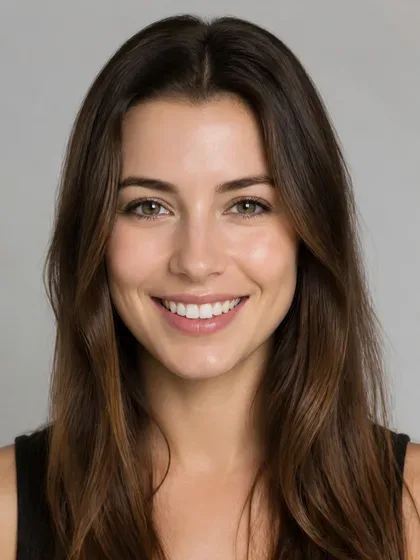
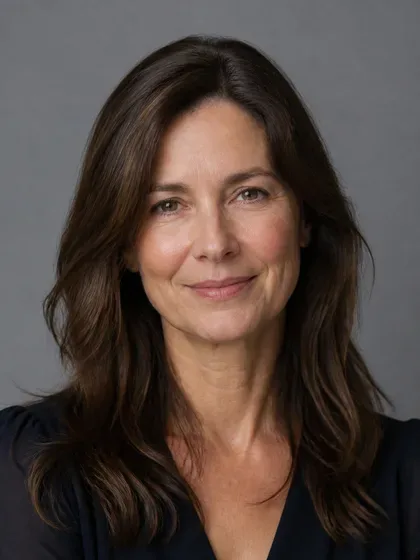
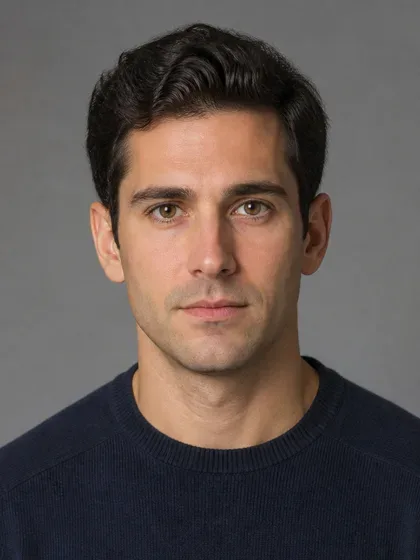
Guess My Age From a Photo: What an AI Age Estimate Means
Upload a photo for an AI age estimate, then learn why lighting, expression, angle, filters, and image quality can change the result.
AI can guess how old you appear in a photo, but it cannot confirm your actual age. The result is a photo-dependent estimate that may change with lighting, expression, camera angle, image quality, filters, makeup, hair, and facial hair.
Think of the number as an interpretation of one image, not a fact about you. A different photo can produce a different guess without anything about your actual age changing.
Get an estimated age from your photo
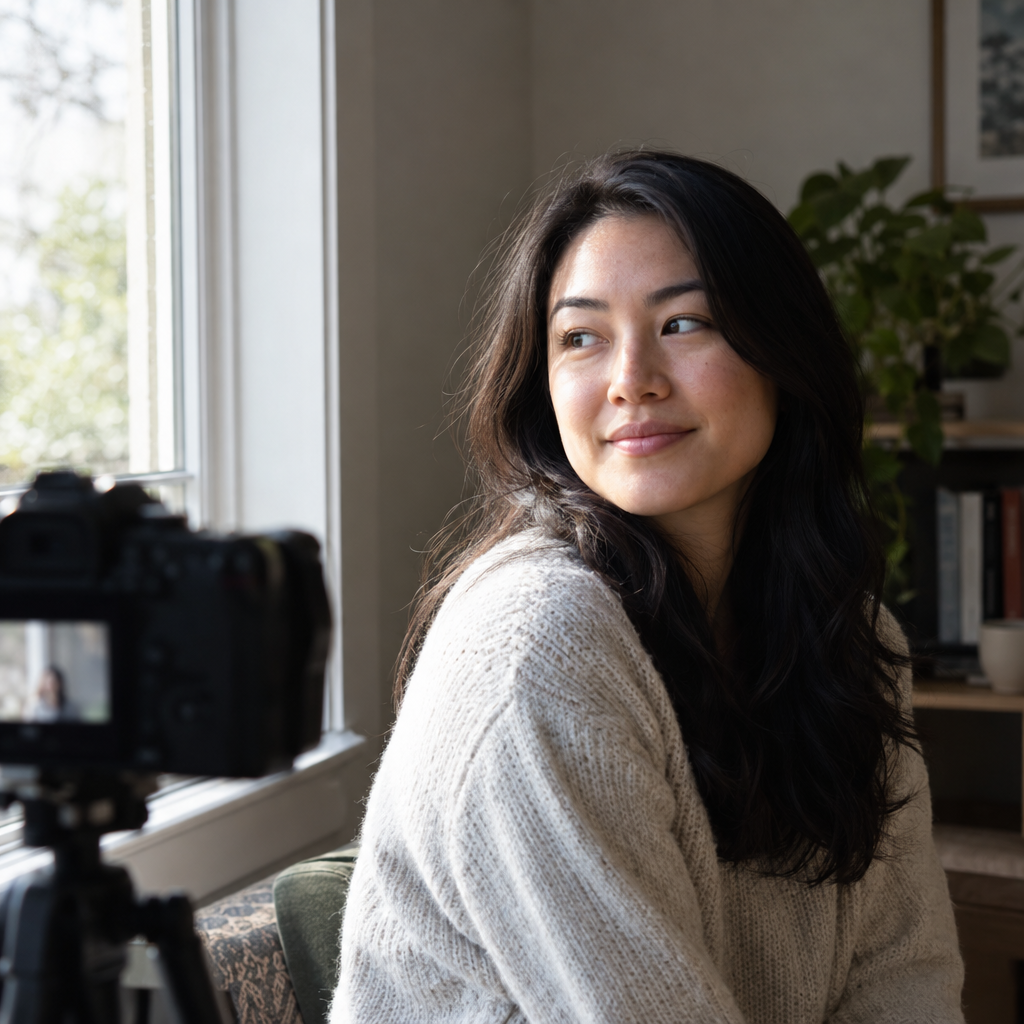
Start with a clear, recent photo rather than a heavily edited portrait. Use this quick suitability check:
- One visible face: A group photo can make it unclear which person should be assessed.
- Face mostly forward: Avoid a strong side profile or a pronounced upward or downward head tilt.
- Eyes unobstructed: Remove sunglasses and keep hair away from the eyes.
- Even lighting: Choose soft light across the face rather than deep shadows on one side.
- No heavy filter or distortion: Use an image without face reshaping or strong smoothing.
- Enough visible detail: The face should be in focus, not blurred or broken up by compression.
- A complete facial crop: Keep the forehead, cheeks, and chin visible rather than cutting off part of the face.
These choices reduce avoidable variation; they do not guarantee accuracy.
Once you have a suitable image, Facefy’s Face Age Detector lets you submit a photo for an AI-generated age estimate based on visible appearance in that image.
Actual age, perceived age, and an AI age estimate are different
These three concepts answer different questions:
| Concept | Meaning |
|---|---|
| Chronological age | Time elapsed since birth |
| Perceived age | How old someone appears |
| AI age estimate | A photo-dependent prediction |
Chronological age is the amount of time that has passed since a person’s birth. A photo cannot establish it.
Perceived age is how old someone appears to an observer in a particular context. People may disagree, and the same person can look different across photos or in person.
An AI age estimate is a prediction generated from the visible information in a submitted image. This tool addresses only this third concept. Its output is not a confirmed human judgment or a measurement of chronological, biological, or developmental age.
An age estimate is only one way to explore facial appearance through a photograph. For readers interested in a broader visual assessment, Facefy’s Face Report provides another option for exploring facial features. Like an AI age estimate, a photo-based report should be treated as an interpretation of visible appearance rather than a medical assessment or an objective judgment about a person.
An appearance-based guess should not be used to establish identity or decide whether someone is legally an adult. Looking older or younger in a particular image is not inherently positive or negative.
Why the age guess can change between photos
The estimator receives an image, not a complete view of the person. Ordinary photographic differences can change the information available to it.
- Expression: Smiling, squinting, or tightening the mouth changes facial contours, folds, and visible tension.
- Shadows and lighting: Directional light can emphasize some surface details while obscuring others. Bright highlights can also wash out detail.
- Camera angle and head position: Tilting or turning the head changes how facial proportions appear in a flat image.
- Camera distance and perspective: A close selfie can make features nearer the camera appear relatively larger. Moving farther away changes that perspective, even if the final crop looks similar.
- Resolution, blur, and compression: Small or heavily compressed images contain less detail. Enlarging a tiny face does not restore information that was missing.
- Crop: Cutting off the forehead or chin removes part of the visible face and changes the available context.
- Filters and editing: Smoothing, sharpening, reshaping, and changes to contrast or color can alter the image being assessed.
- Makeup, hair, and facial hair: Makeup can change visible contrast and texture. Hair coverage and facial hair can obscure contours or introduce different visual cues.
None of these variables has a guaranteed age effect. A smile does not always produce a younger guess, and facial hair does not always produce an older one. The direction and size of any change depend on the image and estimator.
Use the Three-Photo Consistency Check
If you are curious about how sensitive the estimate is to ordinary photo differences, use a small, bounded comparison rather than repeatedly uploading images.
The Three-Photo Consistency Check uses three recent photos taken around the same time:
- A clear front-facing image: Use a relaxed expression, even light, and an unobstructed face.
- A naturally smiling image: Keep the framing, camera distance, and lighting similar to the first.
- A second clear image in different ordinary lighting: Keep the face mostly forward and relaxed, but use another everyday setting, such as soft indoor light instead of indirect daylight.
Compare the results as a small range, not as competing answers with one correct winner.
For example, estimates of 27, 31, and 29 suggest a variable perceived-age band of roughly the late twenties to early thirties for those images. They do not prove that 29 is your “true-looking age,” even though it is the average.
A spread in results shows sensitivity to the photos, not a change in chronological age or proof that one image is more truthful. Closely grouped results show consistency across those images, but consistency is not the same as accuracy.
This comparison is for informal interpretation, not a clinical or scientific measurement. There is no need to keep uploading until you receive a preferred number.
When a photo may not produce a useful estimate
A group photo can make it unclear which face should be assessed. Heavily edited, partly covered, severely cropped, blurred, or very low-resolution faces may also lead to unstable results or no useful estimate. If possible, choose a clearer existing photo with one unobstructed face rather than repeatedly submitting the same unsuitable image.
An unexpected number is not evidence about your health, lifestyle, stress, genetics, attractiveness, or personal value.
Photo consent and privacy matter
Upload only photos you own or have permission to use. If another person is pictured, make sure you have their permission to submit the image.
Read the tool’s published privacy and image-handling information before uploading. Do not assume an image is immediately deleted, retained for a particular period, or handled in a particular way unless the policy says so.
Photos of children require heightened consent and privacy care. An age estimate must never be used to decide whether someone is legally an adult.
Common questions about AI age guesses
Can AI accurately guess my age?
It can generate an appearance-based estimate, and that estimate may happen to be close to your chronological age. It cannot confirm your actual age from a photo, and results may vary across images. A precise-looking number does not establish accuracy.
Does makeup or facial hair affect the result?
Either may change the visible cues available to the estimator. Makeup can alter contrast or texture, while facial hair can cover parts of the face. Neither has a predictable direction or size of effect.
Do filters change an age guess?
They can. Filters that modify texture, proportions, contrast, color, or detail change the image being assessed. For a less altered input, choose a photo without face reshaping or strong smoothing.
What photo gives a more consistent estimate?
A clear, mostly forward-facing photo with one unobstructed face, even lighting, and minimal editing reduces avoidable variation. Similar camera distance and framing also make comparisons easier, but no setup guarantees a correct estimate.
Is perceived age the same as chronological age?
No. Perceived age describes how old someone appears; chronological age is time since birth. An AI-generated number is a separate, photo-dependent prediction. Treat it as an informal reading of the image, not a definitive statement about the person.