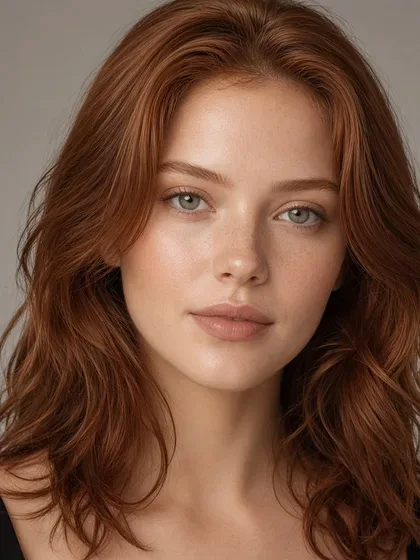
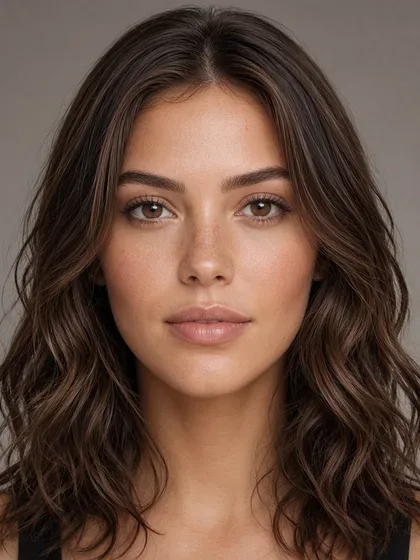
Ginger Hair Color: How to Choose the Right Shade for You
Compare ginger hair shades, see what your starting color can achieve, and plan salon requests, testing, and realistic upkeep.
Ginger hair color is a spectrum of warm reds, from pale strawberry ginger and golden copper to cinnamon, copper-auburn, and deep auburn. The right shade depends on your current hair color and color history, the balance of gold, orange, red, or brown you prefer, and how much upkeep you want.
Skin undertone can offer direction, but it is not a rule about what you can wear. Start by choosing the depth and intensity you like, then consider what your hair can realistically achieve.
What Color Is Ginger Hair?
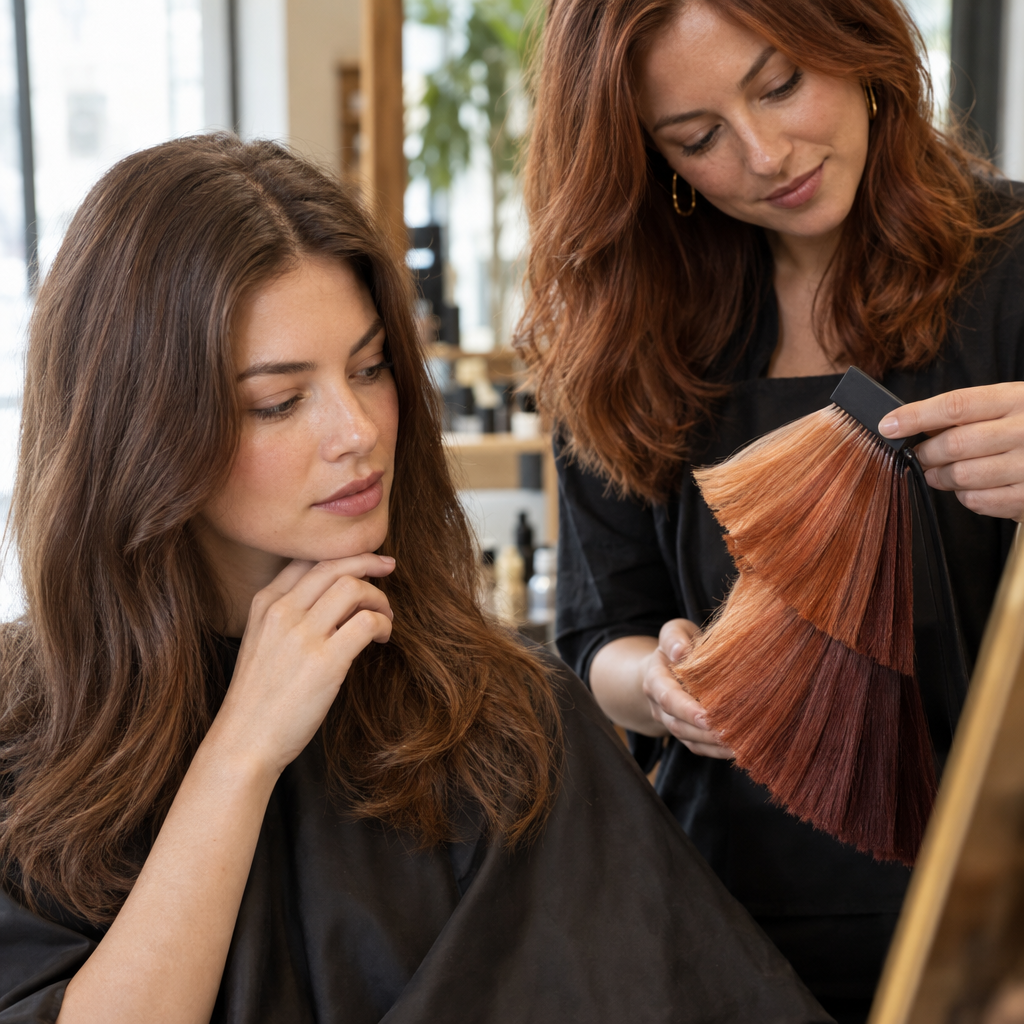
Ginger usually describes hair with noticeable orange, gold, or warm-red tones. Its boundaries overlap with strawberry blonde, copper, and auburn rather than forming one standardized salon shade.
Three characteristics make shade comparisons easier:
- Depth: How light or dark the overall color looks.
- Dominant tone: Whether you notice gold, orange, red, or brown first.
- Intensity: How vivid or muted that warmth appears. Here, “bright” means vivid, not necessarily lighter.
Six ginger shade families compared
| Shade family | Typical depth | Dominant tone | Difference from neighboring shades |
|---|---|---|---|
| Strawberry ginger | Very light | Blonde-gold with soft copper | More blonde-led and less orange than light natural ginger; warmer than a neutral or golden blonde |
| Light natural ginger | Light | Balanced gold-orange | More copper-forward than strawberry ginger but softer and less saturated than true copper |
| True copper | Light to medium | Clear orange or orange-gold | Brighter and more orange-led than light ginger; less brown-balanced than cinnamon |
| Cinnamon | Medium | Muted copper-brown | Browner and softer than true copper; less red and usually lighter than copper-auburn |
| Copper-auburn | Medium to dark | Copper-red with a brown base | Deeper and redder than cinnamon; more copper-visible and less brown-dominant than deep auburn |
| Deep auburn | Dark | Brown with warm red | Darker and less orange than copper-auburn; warmer and redder than a neutral dark brown |
Copper typically emphasizes orange or orange-gold. Auburn contains more brown and often a stronger red component, while strawberry blonde remains lighter and more blonde-led.
Vivid orange-red fashion colors sit at a different intensity from most natural-looking ginger shades. For a natural-redhead effect, describe the warmth as soft, blended, or muted rather than simply asking for “bright ginger.”
Shade names vary across salons and dye brands. A photo plus “medium-depth copper with a brown base” communicates more than “cinnamon” alone.
How to Choose a Ginger Shade for Your Coloring
Use complexion as a clue, then decide how much contrast and orange warmth you actually enjoy.
Use undertone to compare options, not eliminate them
- Warm or golden undertones: Gold-orange copper can echo that warmth. Cinnamon or copper-auburn offers a browner alternative if you prefer less brightness.
- Cool or rosy undertones: Muted copper, rosy strawberry, or balanced red-brown auburn may appeal if strong orange feels too dominant. Bright copper remains an option if you enjoy the contrast.
- Neutral undertones: Compare golden, orange, and red-brown directions rather than assuming one must be best.
Skin depth is a separate consideration. Light strawberry ginger can create a soft effect against light skin, while deep auburn creates more depth contrast. On medium skin, cinnamon looks more understated than clear copper. On deep skin, bright copper can create pronounced contrast, while dark copper-auburn keeps the hair closer to the complexion’s overall depth.
These are visual options, not complexion requirements. Olive, golden, rosy, and neutral coloring can occur across different skin depths.
Answer five questions before choosing
- Do I want lighter hair, warmer hair, or both? Adding copper to brown hair is different from becoming light ginger.
- Which tone do I want to notice first? Choose gold, orange, warm red, or brown.
- Do I prefer muted or vivid color? Compare cinnamon with true copper at a similar depth.
- How much contrast do I want? Consider your skin, eyebrows, wardrobe, and usual makeup together.
- How much visible regrowth will I accept? A shade close to your natural depth usually creates less depth contrast at the roots, though the tonal difference can still show.
Eye color can be another styling cue. Copper may create noticeable contrast with blue or green eyes, while gold and auburn can echo warm flecks in brown or hazel eyes. Neither effect makes one shade inherently better.
Eyebrows do not need to match dyed hair. A deeper or more neutral brow can provide definition without changing the brow color. If you want to explore a warmer look, use removable brow makeup rather than regular scalp hair dye, which should not be applied to eyebrows or eyelashes.
Straight, wavy, curly, and coily hair can all wear ginger. Smooth surfaces tend to show broad bands of reflected light, while curls and coils create alternating illuminated areas and shadows. Choose reference photos with a texture similar to yours when judging placement and dimension.
Related resource: Personal color analysis offers more context for comparing warm, cool, muted, and vivid color directions.
What Ginger Can Look Like on Your Starting Hair Color
Adding warmth is not the same as making hair lighter. A copper deposit on dark brown hair may appear as a warm reflection rather than the bright orange-copper shown on a blonde reference.
Pale strawberry and light ginger generally need a lighter foundation than cinnamon or deep copper-auburn.
| Starting base | Likely ginger visibility | Likely lightening needs | Principal limitation |
|---|---|---|---|
| Light blonde | Strawberry, light ginger, and copper can appear clearly | Usually no lightening for a same-depth result | Porous or pre-lightened sections may absorb too much pigment and look darker or brighter |
| Dark blonde or light brown | Medium copper and cinnamon are usually noticeable | Pale strawberry or very light ginger may require lift | Existing gold or red undertones can shift the target warmer than expected |
| Medium or dark brown | Cinnamon and auburn may appear clearly; copper can read as a reflection | Bright copper and pale strawberry generally require lightening | Deposited color alone cannot create a substantially lighter foundation |
| Black or near-black | Unlightened hair may show only a subtle warm-red reflection | Clearly visible copper or light ginger requires significant lightening | Major lift may need staged work, and the final brightness depends on the hair’s condition and response |
| Previously colored dark hair | Warmth may appear at the roots while lengths remain dark | Lighter targets may require artificial-pigment removal followed by lightening | A lighter dye cannot reliably remove old dark color or produce an even result |
Permanent color can lighten some untreated hair, depending on the formula and starting depth. It should not be assumed to lighten previously applied dark dye evenly or sufficiently. Lightening natural pigment and removing artificial pigment are different color processes.
You also do not need an all-over transformation. Fine copper highlights, balayage, or a few face-framing pieces can introduce ginger while keeping much of your natural base. Those pieces may still need lightening, but less of the hair is involved.
Two heads of hair that look equally brown can respond differently. One might be untreated, while the other contains old highlights beneath dark dye. Gray strands, previous chemical services, and differences in condition also change how color develops.
Three Hair-History Details That Can Change the Result
Previously dyed dark hair
The key issue: artificial pigment does not behave like an untreated base.
Applying a lighter ginger dye over dark-colored lengths may produce warm roots with much darker ends. Reaching a brighter shade can become a color-correction project involving pigment removal, lightening, or several appointments.
Tell your colorist about previous permanent dye, dark glosses, henna, and other color products, even if they were applied months ago. “It looks faded” does not necessarily mean the old pigment is gone.
Porous ends
The key issue: different sections may absorb and retain color differently.
Weathered, highlighted, or chemically treated ends may take up warmth strongly, turn darker than expected, or lose their tone faster afterward. Old highlights can become particularly vivid against a darker surrounding base.
Repeated color overlap, relaxers, perms, and lightening can contribute to uneven condition. A colorist may need different formulas or application timing for roots and lengths.
If hair feels unusually gummy when wet, breaks easily, or is visibly fragile, get a qualified assessment before further chemical processing.
Gray or white strands
The key issue: reduced natural pigment changes the background beneath the dye.
White strands may show copper more brightly or translucently than surrounding pigmented hair. Some gray strands can also be resistant to color uptake.
Decide whether you want blending, where variation remains visible, or coverage, where the result looks more uniform. Formula choice, gray distribution, and the proportion of gray all matter. A copper gloss that creates a soft blend is not equivalent to an opaque coverage formula.
Choose a Ginger Color by Commitment Level
Choose the method after deciding whether you need a tonal change, a lighter base, or gray coverage. Product categories are useful guides, but individual formulas vary.
1. Digital simulation or a wig
- Commitment: No chemical change to your hair.
- Ability to lighten: Visual only.
- Gray blending: Can illustrate a different overall appearance, not predict coverage.
- Main drawback: Screens and wig fibers do not reproduce your future dyed result exactly.
This is useful for deciding whether you prefer pale strawberry, clear orange-copper, or deeper auburn before changing your hair.
2. Wash-out color
- Commitment: Intended for short wear; follow the product’s removal instructions.
- Ability to lighten: None. Surface pigments may still look bright on dark hair.
- Gray blending: Some sprays or creams temporarily cover visible strands.
- Main drawback: Possible transfer, altered texture, or lingering staining.
A wash-out product can help you assess visual contrast, but “temporary” does not guarantee immediate removal from very light or porous hair.
3. Color-depositing conditioner
- Commitment: Gradual fading, with possible residual staining.
- Ability to lighten: None.
- Gray blending: May tint gray strands; opaque coverage is unreliable.
- Main drawback: Porous areas can become stronger or darker than others.
This route is best for adding warmth to a suitable base or refreshing existing copper, not turning black hair into light ginger.
4. Demi-permanent gloss
- Commitment: Usually softer than permanent color, but fading may be incomplete.
- Ability to lighten: Generally intended for deposit, not significant lift.
- Gray blending: Can soften the contrast of some gray, depending on the formula.
- Main drawback: Cannot create a substantially lighter ginger foundation.
A gloss suits readers who like their current depth but want a copper, cinnamon, or auburn shift.
5. Permanent color
- Commitment: Lasting chemical change, with regrowth and eventual fading.
- Ability to lighten: Can lift some untreated hair; not reliable on dark dye.
- Gray blending: Suitable formulas may provide fuller coverage.
- Main drawback: Greater commitment and potential mismatch between roots and lengths.
Permanent does not mean fade-proof. A permanent copper can still lose vibrancy while the underlying chemical change remains.
For a smaller change, discuss selective highlights or face-framing pieces rather than an all-over application.
If your main uncertainty is the color direction, Facefy’s Hair Color Try-On can help you compare ginger shades on a photo. Treat the result as a visualization, not a guaranteed dye outcome. It cannot fully account for old color, porosity, formula choice, or salon lighting.
How to Read Ginger Hair Reference Photos Accurately
A single image can make muted copper look intensely orange or deep auburn look almost brown. Use this five-point check when comparing your hair with a reference:
- Use indirect daylight. Look near a window without direct sun hitting the hair. Strong sunlight exaggerates reflective warmth.
- Disable filters. Turn off beauty filters and color effects when photographing your hair. Reference images may still have undisclosed editing.
- Avoid mixed indoor lighting. Daylight combined with warm bulbs can make different areas appear to have different tones.
- Compare roots and ends separately. Look at the darker body of the hair as well as the brightest highlights.
- Collect multiple photos. Choose two or three references showing similar color under different conditions, ideally including a view without strong glare.
Camera white balance can shift the same shade toward gold, orange, red, or brown. Exposure changes perceived depth. Nearby walls and clothing can reflect color onto the hair, while shine creates bright streaks that do not represent the underlying shade. Screen brightness and warm-display settings add another layer of variation.
Compare dry hair with dry hair. Wet hair often appears darker, so a wet salon photo is not a fair comparison with a finished, dry style.
How to Ask a Colorist for the Ginger Shade You Want
Build your request around four variables:
“I want a [depth], [brightness or intensity] ginger with [dominant tone], placed as [all-over color, highlights, balayage, or face-framing pieces].”
For a softer copper-brown:
“I want a medium-depth, muted copper-brown with restrained orange warmth, applied all over. I want the brown base to remain visible rather than a vivid orange result.”
For a brighter copper:
“I want a light, bright orange-gold copper, with soft face-framing pieces and a blended transition at the roots. I prefer golden-orange warmth rather than a strong red.”
Choose placement as deliberately as shade
- All-over color: Changes the overall impression most strongly. Regrowth may be more noticeable.
- Blended highlights: Introduce lighter copper strands through the existing base.
- Balayage: Uses painted placement, often with more brightness through the lengths and ends. It does not automatically mean maintenance-free.
- Face-framing pieces: Concentrate the change around the face without coloring every section.
- Root-preserving color: Keeps natural depth near the scalp with highlights starting lower or a softly blended transition.
Bring references that separately show your preferred depth, tone, and intensity. You might like the muted tone in one photo but the lighter placement in another. If you’re also considering a different haircut to complement your ginger shade, Facefy’s Hair Style Try-On can help you preview hairstyle options before making a change.
A photo of an unwanted result can also help. Explain “this is too red,” “this orange is brighter than I want,” or “I do not want the ends this dark” rather than rejecting the entire image.
An exact copy cannot be guaranteed because your starting pigment, condition, texture, and previous color differ from the reference.
Patch Tests, Strand Tests, and Professional Color Advice
These precautions answer different questions:
- An allergy alert or patch test checks for a possible reaction to a product. Follow the manufacturer’s instructions and timing for each use. A negative result does not guarantee that a reaction cannot occur.
- A strand test shows how a formula develops on a small section and how that strand responds. It helps assess tone, depth, and condition, but does not establish allergy safety.
Do not use a product after a suspected reaction. Seek medical advice, and get urgent help for severe symptoms such as breathing difficulty or swelling of the mouth or throat. The FDA’s hair dye guidance explains additional precautions.
A strand result cannot guarantee uniform color across a head with untreated roots, old highlights, and porous ends. Several representative areas may need assessment.
Major color correction, extensive lightening, and significant breakage warrant a qualified colorist’s advice. Scalp irritation or suspected allergies belong with a healthcare professional. Shade guidance cannot diagnose either.
How to Keep Ginger Hair Looking Vibrant
Ginger upkeep involves three separate concerns: pigment fading, root contrast, and the condition of lightened hair. Your starting base and target depth determine which concern is likely to matter most.
Comparison 1: Near-depth cinnamon on naturally brown hair
Consider naturally medium-brown hair shifted to a medium cinnamon shade without substantial lightening. Because the target remains close to the original depth, root contrast may be relatively soft. The more noticeable change is likely to be tonal fading as copper warmth gradually becomes less visible and the brown base shows through.
A conservative color-depositing product or gloss may help restore warmth when needed. Apply carefully around porous ends, which may absorb more pigment than the healthier roots and mid-lengths.
Comparison 2: Pale strawberry on a substantially lightened dark base
Now consider dark hair lightened significantly before being colored pale strawberry ginger. Here, root contrast and the condition of the lightened lengths may matter more than tonal fading alone. Dark regrowth creates a clear depth difference, while the processed lengths can be more vulnerable to dryness, breakage, uneven pigment uptake, or repeated color buildup.
Refreshing the strawberry tone does not address dark regrowth, and repeatedly overlapping lightener or permanent color onto the lengths can add unnecessary stress. Root work, tonal refreshes, and care for the lightened sections should be treated as separate needs.
Reduce unnecessary pigment loss
Use a gentle shampoo suitable for colored hair and wash as often as your scalp needs. Avoid very hot water, and condition according to your hair’s texture and condition.
Limit unnecessary high-heat styling, use an appropriate heat protectant, and choose the lowest effective temperature. A hat can reduce prolonged sun exposure when practical.
These habits support maintenance, but they cannot make color permanent or prevent all fading.
Refresh the tone without overloading the ends
Color-depositing products can restore some warmth, but start conservatively and follow their instructions. Porous ends may become too red, too orange, or darker than the rest.
Copper can drift toward gold, orange, red, or a duller brown as different pigments fade and the underlying base becomes more visible. Choose a refresh product for the tone you want now, not simply because its label says “ginger.”
Plan around root contrast
A deep copper-auburn on brown hair may show less depth contrast at regrowth than light ginger on the same base. Gray or white roots can remain conspicuous even when the chosen ginger is light.
Blended highlights and preserved natural roots may soften the grow-out line. They do not remove the need to care for lightened lengths.
Formula, porosity, wash frequency, water quality, heat, and sun exposure all affect upkeep. If the color changes faster than you like, adjust one variable at a time so you can tell what helps. Avoid automatically reapplying permanent color through the lengths whenever roots need attention.
Common Questions About Ginger Hair Color
Can brunettes go ginger without bleach?
Sometimes. Untreated dark blonde or light brown hair may reach some ginger shades with permanent color, while darker brown hair may show a copper-auburn effect without extensive lightening. Pale or bright orange-copper generally needs a lighter foundation. Previously dyed brown hair is a different case because lighter color cannot reliably remove existing artificial pigment.
Can black hair become ginger without lightening?
Black or near-black hair is unlikely to show bright ginger through deposited color alone. A subtle warm reflection may be possible, but a clearly lighter copper usually requires lightening. Previously dyed black hair can be especially challenging to change evenly.
Does ginger hair suit cool undertones?
Yes. Muted copper, rosy strawberry, and balanced auburn are useful starting points if you prefer less orange. You can also choose vivid copper for deliberate contrast. Undertone advice should help you compare shades, not restrict your options.
How quickly does ginger hair fade?
There is no single reliable timeline. Formula, starting base, porosity, washing, heat, and environmental exposure all matter. Some hair loses vividness first, some shifts in tone, and porous sections may fade unevenly or retain staining.
The most useful ginger shade choice is specific: a depth you like, a dominant tone you enjoy, placement that suits your routine, and a plan your starting hair can support. “Muted medium copper-brown with blended roots” gives you a clearer direction than chasing one photograph labeled “perfect ginger.”