Copper Hair Color: Shades, Salon Requests, and Care
Explore copper hair color shades, starting-color considerations, salon request tips, safety tests, preview limits, and realistic upkeep.
Copper hair color is a family of warm red shades defined by depth, brightness, and the balance of orange, gold, and red tones. It ranges from light golden copper to vivid orange-copper, red-copper, and deep brown-copper.
The right direction depends on the look you prefer, your starting color and color history, and how much lightening and upkeep you want. Shade names vary between salons and brands, so descriptive details and a few reference photos are more useful than a label alone.
What copper hair color looks like
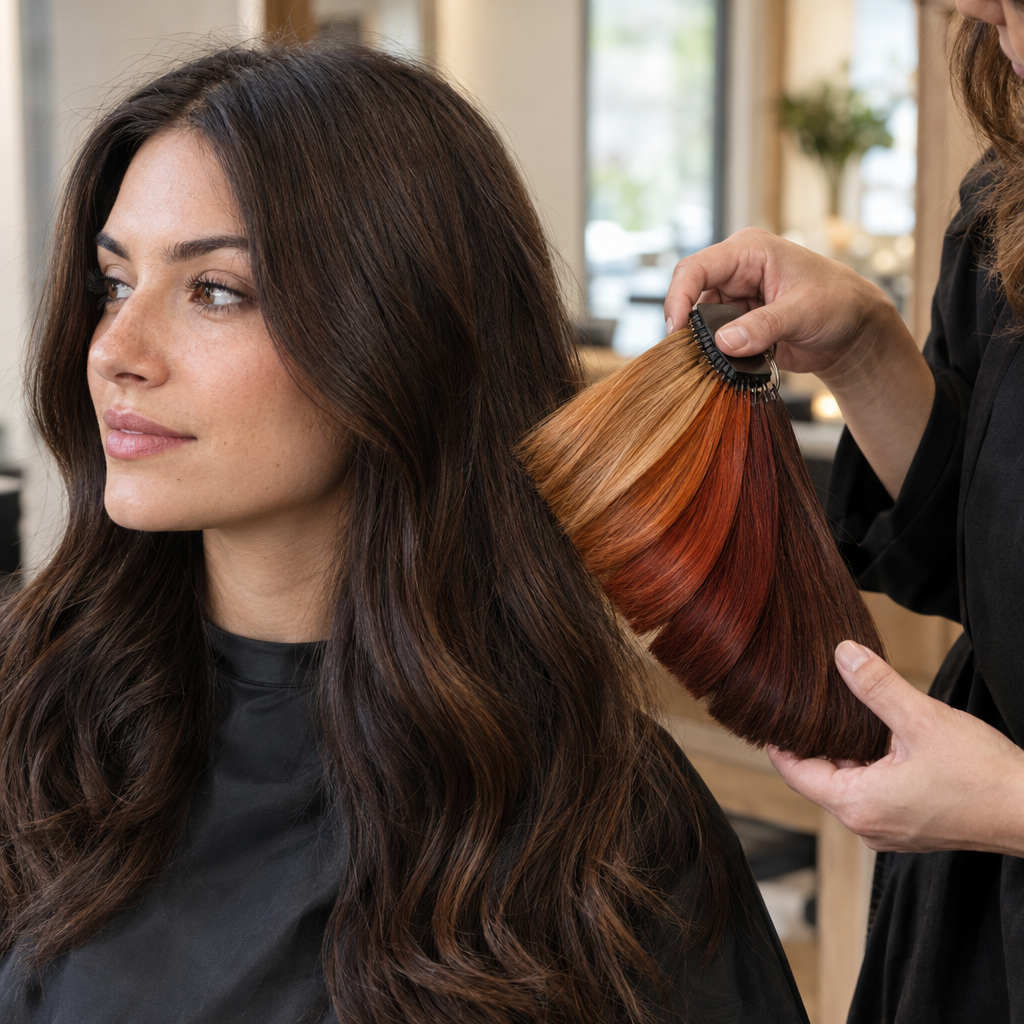
Copper usually has a noticeable orange or orange-gold character. Some versions lean golden and light, while others have stronger red tones or a deeper brown foundation.
Three terms help describe the differences:
- Depth: How light or dark the hair looks, separate from its warmth.
- Reflect: The orange, gold, or red tone visible when light reaches the hair.
- Intensity: How muted, moderate, or vivid the color appears. A medium-depth copper can be more intense than a lighter shade.
Five copper color directions
These categories overlap. They are illustrative reference directions, not fixed salon formulas. Saturation can be adjusted within any depth or reflect family, so light copper and golden copper can also be highly vivid.
| Copper direction | Typical depth | Dominant reflect | Example intensity |
|---|---|---|---|
| Light copper | Light | Soft orange-gold | Muted peach-copper or vivid pale orange |
| Golden copper | Light to medium | Gold with orange warmth | Muted honey-copper or saturated gold-orange |
| Bright orange-copper | Light to medium | Strong orange | Moderate orange or vivid tangerine-like copper |
| Red-copper | Medium to deep | Red with orange warmth | Muted red-brown or vivid red-orange |
| Deep brown-copper | Medium-dark to dark | Brown with red-orange warmth | Subtle warm reflect or moderately saturated copper-brown |
To communicate each direction clearly, pair the name with its intensity and a useful reference:
- Light copper: Choose an indirect-daylight photo showing both roots and lengths without overexposed highlights.
- Golden copper: Look for a daylight image where the golden tone remains visible outside shiny areas.
- Bright orange-copper: Choose a photo where orange is visible through the shaded lengths, not only under bright lights.
- Red-copper: A reference showing the hair in daylight and indoor light can help communicate the red-orange balance.
- Deep brown-copper: Use a photo that shows the brown foundation as well as the warmer reflect.
Names such as “ginger,” “strawberry copper,” and “deep copper” can overlap. A photograph labeled ginger might show pale golden-orange hair or a richer orange-brown shade. Describe what you see rather than relying on the caption.
How to choose your copper direction
Start with the amount of change you want, then consider complexion, contrast, and styling preferences.
A five-question decision framework
-
How light or dark should the result be? Choose light, medium, or deep before selecting the exact warmth. If you like your current depth, adding a copper reflect may be more appealing than making the hair much lighter.
-
How obvious should the orange be? Decide whether you want orange visible throughout the hair or mainly when light catches it. Bright orange-copper makes warmth central, while brown-copper keeps it more understated.
-
How much contrast do you want? Separate hair-to-skin contrast from the size of the color change. Deep copper on light skin may create strong contrast while still being a relatively small change from dark brown hair.
-
Are you comfortable with lightening? A bright reference shown on a light base may require substantial preparation when starting with darker hair. If you prefer to avoid lightening, ask what copper warmth is achievable at your existing depth.
-
Which kind of upkeep matters most to you? Vivid lengths may need tone refreshing even when the roots blend well. A softer shade can still show obvious regrowth if it differs considerably from your natural base.
For example, someone with medium-brown hair who wants a subtle change might choose medium-deep brown-copper with restrained orange warmth. Someone starting with light blonde who wants a statement color might prefer saturated orange-copper, while accepting that pale regrowth and fading may be more noticeable.
Use complexion as a clue, not a rule
Warm, cool, neutral, and olive undertones can all be paired with copper. Light and deep complexions can also work with many copper directions, depending on the contrast and intensity the wearer enjoys.
If bright orange feels stronger than you want, adjust one variable rather than rejecting copper entirely:
- Add brown depth for a more muted effect.
- Move toward gold for less red emphasis.
- Explore red-copper if you prefer a redder interpretation.
- Keep copper through selected lengths rather than choosing all-over intensity.
Compare reference colors beside clothing and makeup you already enjoy wearing. Indirect daylight is helpful because warm indoor bulbs can make both skin and hair appear more golden.
Related resource
Personal color analysis offers another framework for exploring warmth and contrast. Treat its categories as styling suggestions rather than rules about who can wear copper.
How your starting hair color changes the result
The same copper formula can look different on blonde roots, previously dyed lengths, and porous ends. Lift means lightening the existing base. Porosity describes how readily hair takes in and loses moisture. It can also influence how quickly differently treated sections absorb and release color.
Starting-color matrix
| Starting point | How copper may appear | Main planning considerations |
|---|---|---|
| Light blonde | Copper may appear especially bright or saturated | Pale or porous sections can absorb more color, develop unevenly, or release pigment sooner. A controlled application may be needed across roots and lightened lengths. |
| Dark blonde or light brown | Warmth may show readily without a dramatic depth change | Very bright targets can still require lift. Natural roots and highlighted lengths may develop differently. |
| Medium or dark brown | Copper may appear mainly as a warm reflect | A light or vivid orange result usually requires a lighter base. Naturally dark and artificially darkened hair need different plans. |
| Previously colored hair | Existing pigment can change depth, brightness, and evenness | Old dye bands, highlights, and porous ends may respond differently. Disclose permanent dye, lightening, henna, and other previous color treatments. |
| Predominantly gray hair | Results can range from translucent warmth to fuller coverage | Decide whether the goal is soft blending or more opaque coverage. Resistant strands and uneven gray distribution may affect uniformity. |
Gray can be present within any of the other starting colors. No starting base guarantees a particular result, especially when previous treatments or uneven porosity are involved.
Another color application also cannot be assumed to lighten permanent artificial pigment evenly. A colorist may need to assess the existing bands, roots, and ends separately before recommending a practical route to the target shade.
Turn reference photos into a clear salon request
Choose two or three reference photos, ideally showing each look in different lighting. A daylight photo and an indoor photo of the same color are more informative than several heavily edited images. If you are also considering a new haircut, Facefy’s Hair Style Try-On can help you explore how different hairstyles might complement your preferred copper shade before discussing the overall look with your stylist.
Reference-photo self-check
For each example, write down:
- Depth: Light, medium, or deep?
- Orange intensity: Muted, moderate, or vivid?
- Secondary reflect: More golden, red, or brown?
- Brightness: Noticeable throughout, or mostly in highlights?
- Roots: Matching the lengths, darker, or softly blended?
- Variation: Solid color, fine highlights, or brighter ends?
View examples of the same color in more than one lighting condition when possible. Looking at one photograph under different room lights does not reveal how the actual hair appeared in different settings. Additional photographs of the same look are more useful.
If you cannot find alternate views, treat the image as a direction rather than evidence of an exact shade. Studio lighting, editing, shadows, and shine can all change its appearance.
Also identify one thing you do not want. “I like this depth, but not the bright orange ends” is a useful instruction.
The four-part salon request formula
Desired depth + dominant reflect + brightness level + acceptable maintenance
Three complete examples:
“I want a medium-depth golden copper, with gold slightly stronger than orange and moderate brightness. I prefer a softly blended root and want a plan that avoids frequent full-length coloring.”
“I want a light, vivid orange-copper with clearly visible orange warmth and very little brown. I can manage salon appointments no more often than every eight weeks, and I am willing to discuss suitable home care between visits.”
“I want a deep brown-copper with a soft red-orange reflect and restrained brightness. I’d like to stay close to my natural depth and keep regrowth contrast low.”
The eight-week limit in the second example expresses that hypothetical client’s availability. It is not a promised or recommended maintenance schedule. The practical timing depends on the formula, starting base, hair condition, and desired finish.
Follow the request with your starting color, previous permanent dye, highlights, past lightening, and gray coverage goals. Reference photos guide the conversation, but they are not requests for exact duplication on a different head of hair.
Patch tests and strand tests serve different purposes
A skin precaution and a color preview answer different questions. Neither replaces the other.
| Allergy patch test | Hair strand test |
|---|---|
| Screens for a possible skin reaction | Assesses color on selected hair |
| Follows the label method and timing | Follows product or professional directions |
| Cannot predict the finished hair color | Cannot establish skin allergy safety |
| A negative result cannot guarantee no reaction | One section may not represent all the hair |
Follow the manufacturer’s directions and relevant professional guidance. Procedures and timing vary by product, so a generic online method should not replace the instructions supplied with your color.
Previous uneventful use does not remove the need to follow current precautions. A strand test can help reveal unexpected darkness, excessive warmth, uneven uptake, or how the selected hair responds. It cannot guarantee the same result across roots, highlighted sections, and differently treated ends.
Do not apply color to irritated, injured, or symptomatic skin. If you have had a previous dye reaction or have a current skin concern, seek appropriate medical advice before coloring. The FDA’s hair dye guidance provides further safety information.
How copper changes after coloring
A copper shade can change in several different ways. Identifying what you see helps you avoid refreshing the wrong area or adding an unsuitable tone.
| Change | What you notice | Useful response |
|---|---|---|
| Overall pigment fading | Lengths look less saturated | Adjust care and refresh selectively |
| Natural root regrowth | A different-colored root band appears | Plan root-specific maintenance |
| Warmth shifting | The color looks more gold, orange, or red | Reassess the remaining tone before adding pigment |
Overall pigment fading
The lengths may look less vivid even though the overall depth remains similar. This can be particularly noticeable when the original color was highly saturated.
Use gentler washing habits, avoid unnecessarily hot water, and limit excessive styling heat. Washing frequency, UV exposure, water conditions, porosity, and product choice can all affect how quickly the shade appears to change.
A suitable color-depositing conditioner may help maintain warmth, but use it only as directed. It can add an unwanted red or orange bias or build up unevenly on porous areas. Check a small strand first.
Visible natural root regrowth
New growth differs from the colored lengths. The contrast depends on your natural base and chosen copper depth, not simply on how vivid the copper is.
Root maintenance and refreshing the lengths may follow different schedules. Ask whether the plan should address only regrowth, only faded lengths, or both. Repeatedly applying permanent color through all the hair is not an automatic solution.
Warmth shifting as color wears
The color may remain noticeably warm but move away from its original balance. Golden, orange, red, and brown components can become more or less visible as pigment wears and the underlying base shows through.
If golden copper starts looking more orange than you wanted, adding more generic copper pigment may intensify the issue. Compare the current tone with your original reference and discuss a targeted adjustment.
Copper also does not have to remain obviously orange. A deeper brown foundation or stronger red reflect can become more prominent as the color changes. Set expectations around the chosen intensity, hair condition, and root contrast rather than assuming every copper shade changes in the same way.
What a virtual copper hair preview can and cannot show
A digital preview can help answer a styling question: do you prefer the overall effect of golden copper, vivid orange-copper, red-copper, or a deeper brown-copper direction?
Use the same clear photo when comparing shades so changes in pose, lighting, clothing, and background do not distract from the color difference.
A screen preview cannot reliably predict:
- Your underlying pigment or required lift
- The effect of previous permanent color
- Gray blending or coverage
- How porous sections will accept and retain pigment
- The exact appearance under real-world lighting
Camera lighting, the amount of visible hair, image editing, screen calibration, shadows, and shine also affect what you see. A simulated color is not a dye formula, strand test, coverage assessment, or guarantee of the finished result.
Use a preview to describe visual preferences such as “deeper and less orange” or “lighter with more gold,” then translate those preferences into a practical color plan.
Copper hair color FAQ
Can brunette hair become copper without bleaching?
A brunette base may show a copper reflect without bleach. Some permanent color can lighten natural pigment, but the amount depends on the product and starting hair. A light, bright copper may require more lift than a color-only approach can provide, especially over previous artificial dye.
What happens when copper is applied over previously colored hair?
Existing pigment can influence both depth and warmth. Dark bands may stay darker, highlights may become brighter, and porous ends may absorb color differently. Do not assume another dye application will evenly lighten artificial color.
Can copper hair color cover gray hair?
Suitable formulas can provide gray coverage, but the result depends on gray distribution, resistant strands, and the product used. Tell your colorist whether you want fuller coverage or translucent blending that keeps some variation visible.
How should I describe copper to a stylist?
Specify depth, dominant reflect, brightness, and acceptable maintenance. For example: “Medium-depth golden copper, moderate brightness, with a blended root and limited full-length refreshing.” Add reference photos and your color history.
Is a virtual copper preview reliable?
It is useful for comparing broad visual preferences, not predicting lift, gray coverage, or exact color development. A shade that looks appealing on screen still needs a practical plan for your starting hair and color history.
Do both a patch test and a strand test matter?
They answer different questions. A patch test follows product directions to screen for a possible skin reaction. A strand test explores color development and hair response. Neither cancels the need for product-specific precautions.
Resource: Compare copper color directions
Facefy’s Hair Color Try-On can help you compare golden, orange, red, and deeper brown-copper directions before selecting reference photos or discussing color with a professional.
The clearest copper choice is one you can describe beyond its name: how light, how orange or golden, how vivid, and how much upkeep you are comfortable with. Those details make the path from inspiration to a workable color plan much clearer.