Attractiveness Test: What AI Appearance Scores Really Mean
Learn what an AI attractiveness test measures, why photo conditions change scores, and how to interpret results without treating them as facts.
An AI attractiveness test examines visible patterns in a photo and generates an estimated appearance score. Depending on the tool, its analysis may reflect facial proportions, visible balance, and overall presentation. The result is an algorithmic interpretation of one image, not an objective measurement of beauty.
Lighting, camera distance, head angle, expression, styling, filters, and image quality can all change the estimate. Treat the score as informational or entertainment-based, not as a judgment of your attractiveness, health, identity, or personal worth.
What an attractiveness test can and cannot measure
A photo-based appearance assessment involves several kinds of information. The important distinction is between describing something visible and deciding that it is attractive.
| Part of the assessment | What the result may reflect | What it does not prove |
|---|---|---|
| Photo quality | How clearly the face appears under a particular combination of lighting, focus, angle, crop, and resolution | How the person looks across different settings or in person |
| Facial feature analysis | Estimated positions, distances, proportions, or symmetry cues visible in a two-dimensional image | Exact three-dimensional anatomy or a complete account of facial appearance |
| Appearance score | How the tool translates selected visual cues into an estimated rating according to its own criteria | A universal standard of attractiveness or a prediction of how other people will respond |
| Human impression | Only a limited snapshot of visible presentation, such as expression or styling | Voice, movement, personality, warmth, confidence, chemistry, or cultural and personal preferences |
| Health or clinical meaning | No reliable medical conclusion from an attractiveness score | A health evaluation, or recommendation for treatment |
Measuring a distance and deciding that the distance is attractive are different tasks. A numerical result may look precise, but that precision does not turn an aesthetic interpretation into an objective fact.
Why different photos can produce different scores
A score can change because the photograph represents your features differently, even when nothing about your face has changed.
Camera distance and head position
A close camera can exaggerate central features. In a close-up selfie, the nose is proportionally nearer the camera than the ears. That perspective can make the center of the face appear more prominent relative to its outer outline.
Moving the camera farther away changes that relationship. Focal length affects framing and often influences how far the photographer stands from the subject. This is separate from optical lens distortion, which bends or stretches how parts of an image are mapped.
Turning your head changes the visible width of each cheek and the alignment of facial features. Tilting it can make the eyes appear uneven in height. A system may interpret those photographic differences as differences in facial geometry.
Lighting and expression
Overhead light deepens shadows beneath the brows, nose, and chin. Soft frontal light usually reduces those contrasts. Neither setup reveals a more “true” attractiveness level. Each presents different visual information.
A smile raises the cheeks, changes the eye opening, widens the mouth, and alters visible lower-face proportions. A half-smile or raised eyebrow can also create temporary unevenness that looks structural in a still image.
Hair, makeup, and processing
Hair changes the perceived outline of the face. Bangs can obscure the forehead, while facial hair can change the visible jaw contour. Makeup alters contrast and emphasis without necessarily changing underlying structure.
Beauty filters and some portrait-processing features may smooth skin, reshape contours, or change apparent eye size. Portrait modes that only blur the background are different, but edge-processing errors can still affect the face boundary.
Other sources of variation include:
- Crop: Tight framing may remove part of the chin or forehead.
- Focus and resolution: Blur or small images make feature boundaries harder to identify.
- Compression: Repeatedly saved or shared images can lose detail.
- Obstructions: Glasses, bangs, facial hair, hands, and heavy shadows can conceal useful information.
Reduced visibility can make an estimate less stable. It does not mean those everyday aspects of your presentation need changing. It means the image provides less information for analysis.
Worked example: reading the spread between scores
Suppose three deliberately varied photos receive hypothetical scores of 6.2, 6.5, and 7.1 on a ten-point scale. The highest and lowest results are 0.9 points apart.
That spread describes variation across those three images. It is not a confidence interval for your attractiveness, and there is no universal threshold that makes a particular difference meaningful or unimportant. The comparison only shows how the tool responded to the selected photos and conditions.
How to choose a suitable photo
For a clearer comparison, aim for an ordinary, well-lit portrait rather than a heavily processed or unusually posed image.
- Place the camera at eye level. Keep your head upright and face the camera directly.
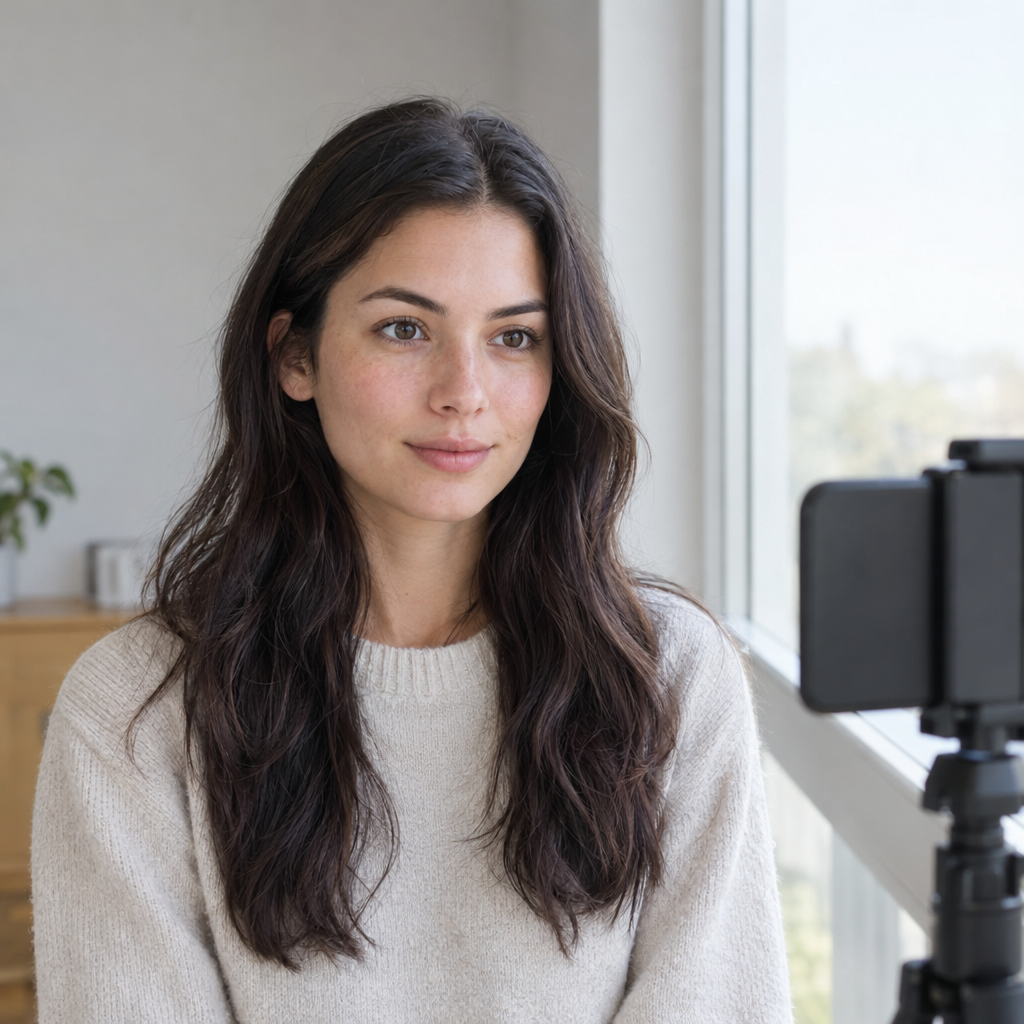
- Avoid an extreme close-up. As a practical starting point, place a phone roughly 1 to 1.5 meters away using a stand or timer. Crop afterward if needed. This is a setup suggestion, not an accuracy threshold.
- Use soft, even light. Face a window with indirect daylight rather than standing directly beneath a ceiling light.
- Choose a relaxed expression. Avoid deliberately lifting your brows, tightening your jaw, or pursing your lips.
- Keep the whole face visible and sharp. Include the forehead and chin, move obstructing hair aside, and keep hands away.
- Turn off beauty filters and reshaping. Use an original image rather than a screenshot or heavily compressed copy.
- Keep framing consistent. For comparisons, use a similar head size, distance, and crop.
Glasses, makeup, facial hair, and styling are valid parts of how you present yourself. You do not have to remove them, but changing them between photos introduces another variable. If glasses create glare, adjust the light rather than changing several things at once.
Before uploading, read the service’s current privacy and image-handling information, including any available retention and deletion details. Use your own photo or obtain permission from the person pictured.
How to interpret an attractiveness score
Three questions help separate useful observations from overinterpretation.
1. Was the image suitable?
Look for clear focus, an unobstructed face, even lighting, a direct angle, and limited perspective distortion.
If the image is blurry, strongly tilted, filtered, or partly hidden, do not interpret a detailed score as equally detailed knowledge about your face. Numerical precision does not remove uncertainty from the source image.
2. What does the comparison actually test?
A comparison of deliberately varied photos can show whether the score is sensitive to the expression, lighting, or other inputs you changed. Use the range between the results, as in the worked example above, rather than selecting one number as definitive.
This type of comparison does not test same-image repeatability. It also does not establish that the tool is reliable across photographs, cameras, settings, or people beyond the selected images.
There is no universal meaningful-change threshold for attractiveness scores. Similar results show that the tool responded similarly to those particular inputs, not that the score is objectively accurate. Different results may indicate sensitivity to the variables you changed, but they do not prove exactly which internal feature or calculation caused the change.
3. Does the explanation separate observations from judgments?
“Head rotation changes the visible cheek widths” describes an image effect. “This proportion makes someone more attractive” introduces an aesthetic judgment.
Read any sub-scores within the same limits. A number labeled “balance” or “proportion” is generated within the tool’s framework, not an independent fact about your desirability.
Scores from different tools are not necessarily comparable, even if both use a ten-point scale. Their definitions, inputs, and scoring methods may differ.
Do not use an appearance score to decide whether you need a cosmetic procedure or to repeatedly seek reassurance about your looks.
Why symmetry, proportions, and the golden ratio do not define beauty
Symmetry describes correspondence between facial features across a central dividing line. Natural faces commonly contain some asymmetry, and pose, lighting, and expression affect how much is visible in a photograph.
Proportions describe relative distances or widths. For example, dividing a visible facial length by a visible width produces a ratio. The calculation describes the chosen measurements. It does not assign them an aesthetic value.
The golden ratio, approximately 1.618, is a mathematical relationship sometimes applied to facial measurements. Choosing which facial points to compare is a separate decision. Different endpoints can produce different ratios, and matching that number does not establish universal beauty.
Glossary: different kinds of facial analysis
- Attractiveness analysis: An estimated aesthetic interpretation generated within a particular scoring framework. Preferences are not universal.
- Facial symmetry analysis: A comparison of visible left-to-right correspondence. Pose and expression can affect apparent balance.
- Facial proportions and ratios: Relative distances and widths measured between selected points. Different endpoints can change the result.
- Face shape detection: An estimate of facial outline and contour categories. Categories can overlap and may be affected by hair, pose, and crop.
- Clinical facial assessment: An evaluation of health, function, symptoms, or treatment needs conducted by an appropriately qualified professional.
These approaches answer different questions. An outline category can support styling decisions without grading attractiveness. A ratio can describe a relationship without recommending a change.
Age, ethnicity, gender presentation, styling, cultural context, and individual preference can influence how appearance is perceived. No single geometric template captures that variety. Clinical evaluation belongs with appropriately qualified professionals, not a photo-based appearance score.
Try the three-photo sensitivity check
If you choose to explore scores, a short comparison can reveal whether the result is sensitive to selected presentation changes.
Use the same camera, distance, crop, background, and styling for these three images:
| Photo | Expression | Lighting |
|---|---|---|
| A | Neutral, front-facing | Soft and even |
| B | Natural smile, front-facing | Same as photo A |
| C | Neutral, front-facing | Gently different light direction |
For photo C, keep the face clearly visible. A modest change in light direction is more useful than making the image extremely dark.
Compare direction and spread
Write down the three results once. Then compare:
- A versus B: This comparison mainly explores sensitivity to expression.
- A versus C: This comparison mainly explores sensitivity to lighting direction.
- Overall spread: Note the difference between the highest and lowest results.
If photo B changes the score, expression may be influencing the visible cheeks, eye openings, mouth, or lower-face relationships. If photo C produces the larger change, shadows and contrast may be particularly influential.
These are clues about sensitivity to the selected inputs, not proof of exactly how the system works. Because the photos are intentionally different, the exercise does not test whether the identical image would receive the same result again. It also cannot establish reliability outside these three photographs.
Isolate one variable when comparing photos
A one-variable comparison changes one factor while keeping everything else as similar as practical. The A/B comparison aims to change expression while holding lighting steady. The A/C comparison aims to change lighting while returning to the neutral expression.
In practice, perfect control is difficult. A smile may slightly change head position, and adjusting the light may alter exposure or shadows elsewhere. Interpret the comparison conservatively rather than treating it as a laboratory measurement.
Do not simultaneously change distance, smile, makeup, and lighting, then attribute the difference to one of them. If several factors changed accidentally, the result cannot identify which factor mattered most.
Stopping rule: After the three-photo check, do not keep uploading images merely to pursue a preferred number. Use the observed range as evidence of photo sensitivity, then move on from the score. If the exercise feels discouraging or creates an urge for repeated reassurance, stop sooner.
Using Facefy’s appearance assessment thoughtfully
After considering image suitability, consistency, and the distinction between observation and judgment, Facefy’s Attractiveness Test offers a way to explore an AI-generated appearance assessment.
Use a clear photo and, if you want context for the result, the small controlled comparison above. Keep the purpose informational or entertainment-based: learning how an image is interpreted, not establishing an authoritative rating of yourself.
External resources
- Camera lenses and perspective from Cambridge in Colour explains how focal length, field of view, framing, and camera position interact in photography.
- Distortion in imaging systems from Edmund Optics explains optical distortion, which is distinct from perspective changes caused by camera position.
- Golden Ratio from Wolfram MathWorld provides the mathematical definition of the ratio commonly represented by the Greek letter phi.
Common questions about attractiveness tests
Are AI attractiveness tests accurate?
They may produce tool-specific estimates under certain conditions. That is different from accurately measuring beauty, for which there is no universal objective score. Consistency alone does not establish validity.
Why did two photos receive different scores?
Angle, camera distance, lighting, expression, styling, crop, and image processing can change the information available to the system. A different score does not necessarily indicate any change in your face.
Can an attractiveness test show how other people see me?
No. It cannot represent every person’s preferences or recreate an in-person impression that includes movement, voice, interaction, and context.
Are AI attractiveness scores biased?
They can be. Automated aesthetic judgments may reflect limitations in their design, inputs, and scoring criteria. Without specific evidence, you cannot assume a system works equally well across all appearances, ages, or photographic conditions.
Is an attractiveness test the same as a symmetry assessment?
No. A symmetry assessment focuses on visible correspondence across the face. An attractiveness score makes a broader aesthetic interpretation that may include geometry and other image characteristics. Neither establishes universal appeal.
Can an attractiveness test detect health or skin conditions?
No. An appearance score is not a diagnostic assessment. Questions about symptoms, skin changes, or facial function belong with a qualified healthcare professional.
Should I take the score seriously?
Take the limitations seriously rather than treating the number as a verdict. It can be a limited observation about how one system interprets one photograph. If it does not help you understand that photograph, there is little reason to keep returning to it.