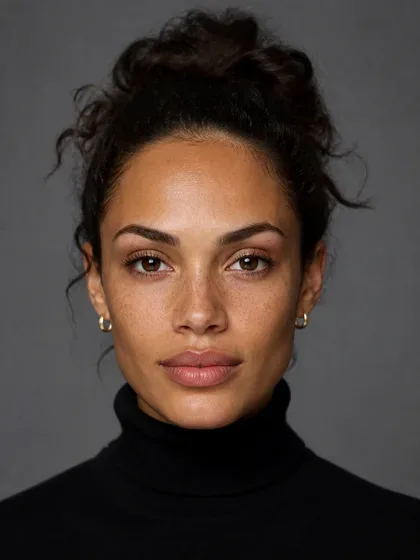
Face Analysis: What It Measures and How to Interpret the Results
Learn what face analysis can assess, how photos affect results, how to compare estimates, and how to protect your privacy when using AI tools.
Face analysis is the manual or software-assisted assessment of visible facial characteristics, including face shape, relative dimensions, feature spacing, and approximate symmetry. It can help describe a face or inform styling and photography choices, but a photo-based result is an estimate, not a fixed fact.
Camera distance, head position, expression, lighting, hair, makeup, crop, and image quality all affect what an analysis can observe. It cannot objectively determine attractiveness or personal worth, and visible facial features do not establish health, ethnicity, ancestry, personality, or intelligence.
For a convenient starting point, Facefy’s AI Face Report lets you explore a photo-based analysis of visible facial characteristics. Rather than relying entirely on manual observation, you can use its estimated results to better understand your facial features and explore styling or photography choices. The report is informational and should not be treated as a clinical assessment or an objective judgment of attractiveness.
What face analysis means
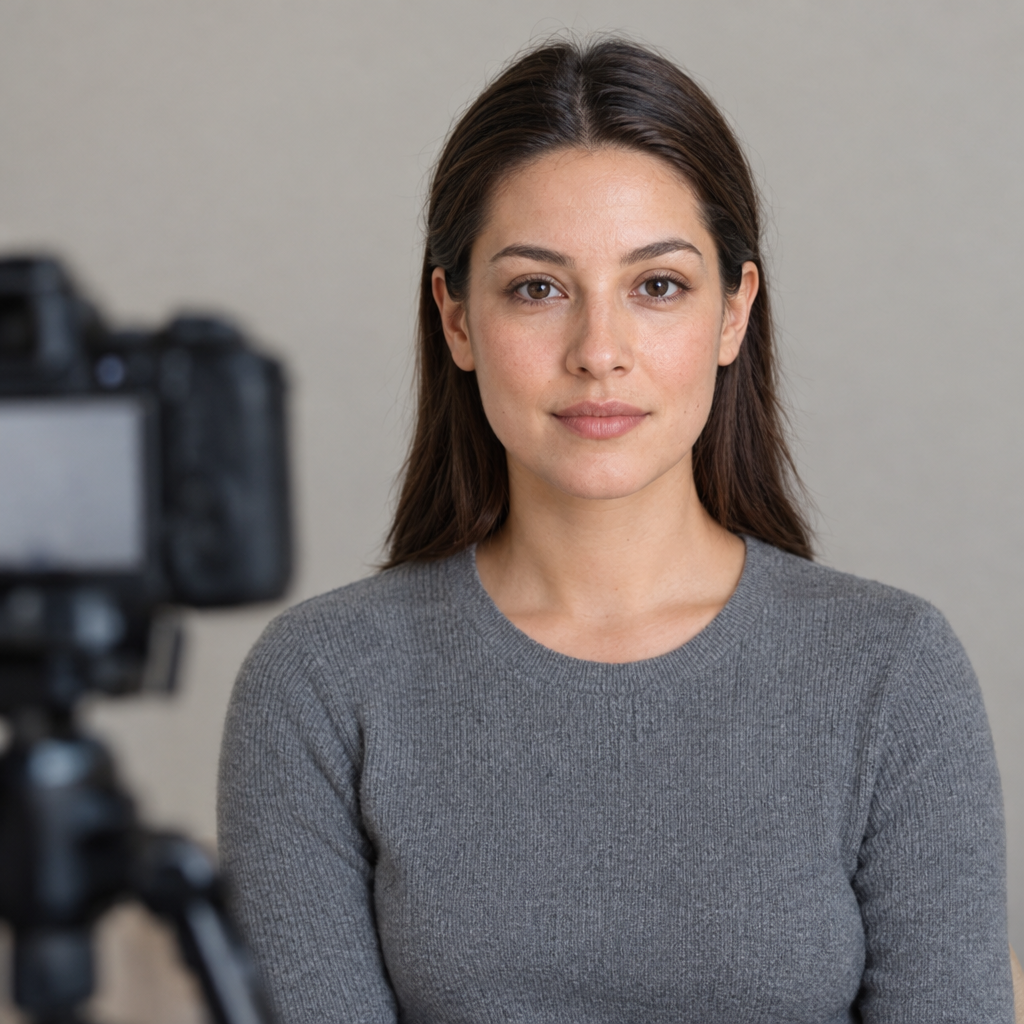
“Face analysis” covers several different tasks. An appearance tool might describe facial proportions, while a recognition system tries to match a face to an identity. These are different purposes, even when both begin with a photograph.
For appearance analysis, observable characteristics include:
- Face length compared with width.
- Relative forehead, cheekbone, and jaw widths.
- Jaw contour and chin shape.
- Spacing between features.
- Positions of recognizable reference points.
Those reference points are called facial landmarks. Examples include the inner and outer eye corners, nose tip, mouth corners, and bottom of the chin. Some boundaries, such as a hairline or softly defined jaw, are harder to place consistently than a distinct eye corner.
The important distinction is between observation, preference, and clinical assessment. “The cheekbone area appears wider than the jaw” is a descriptive observation. “I prefer frames that echo that outline” is a styling preference. Neither establishes a medical finding or an ideal appearance.
Types of face analysis and what they can tell you
Several methods may be described as face analysis, but their outputs should not be treated as interchangeable.
| Analysis type | Typical outputs | Cannot establish |
|---|---|---|
| Geometry and proportions | Width-to-length ratio; landmark spacing | Health or an ideal face |
| Appearance and styling | Shape category; styling suggestions | Objective attractiveness |
| Skin-focused analysis | Visible color variation; surface patterns | The cause of a skin concern |
| Recognition and identity matching | Similarity score; candidate match | Personality or trustworthiness |
| Clinical evaluation | Findings interpreted with medical history and examination | Conclusions outside the clinician’s evidence and scope |
Geometry and proportions describe relationships between visible measurements. They can support comparisons within a photograph, but they do not reveal exact three-dimensional anatomy.
Appearance and styling analysis connects visible characteristics to options such as hairstyles, frames, or makeup placement. Face-shape classification belongs here. It should combine length, forehead width, cheekbone width, and jaw contour rather than classify a face from one measurement. Categories often overlap.
Skin-focused analysis may highlight visible redness, uneven color, or texture. Lighting, makeup, focus, and image processing can change those appearances. A consumer appearance-analysis tool cannot diagnose a skin condition.
Recognition and identity matching compare an image with a reference image or collection. A similarity score or match-confidence estimate is not a guarantee of identity. Identity checks belong in dedicated, consent-based systems, not appearance tools.
Clinical evaluation may use photographs as one part of a broader assessment by a qualified professional. Medical history, symptoms, physical examination, and appropriate testing may also be needed. A general appearance report is not a substitute for that process.
Attractiveness scoring is different again. It converts a system’s interpretation of appearance into a rating rather than simply reporting dimensions. That rating is not an objective measure of beauty.
How manual, landmark-based, and AI analysis differ
Manual observation compares visible relationships
Manual analysis uses a mirror, photograph, or simple measurements to compare features. You might look at whether the forehead and jaw appear similar in width or whether the face looks longer than it is wide.
This approach is useful for broad styling descriptions. Its limits include observer judgment, unclear boundaries, and photographic distortion. A measurement made carefully on a distorted photograph still describes that photograph.
Landmark-based analysis compares reference points
A landmark-based method identifies points and calculates distances or angles between them. Its usefulness depends partly on whether those points are placed consistently.
For example, “face width” might mean the widest visible cheek outline in one method and the distance between selected cheek landmarks in another. Those definitions can produce different results without either calculation being mathematically incorrect.
AI-assisted analysis estimates patterns
AI-assisted methods use computer vision to estimate patterns from an image. Depending on the system, outputs may include landmarks, ratios, categories, or descriptive assessments. Not every system uses the same measurements or definitions.
A precise-looking number does not establish accuracy. A result displayed to two decimal places can still depend on an uncertain jaw boundary or a slightly rotated head.
Three normalized measurements, explained simply
A normalized measurement compares one distance with another. Unlike a raw pixel count, a ratio can remain comparable when an image is resized evenly without changing its contents.
| Measurement | Plain formula | What it describes |
|---|---|---|
| Relative facial width | Face width ÷ face length | Width compared with height |
| Relative eye spacing | Inner-eye gap ÷ face width | Spacing relative to facial width |
| Lower-face share | Lower-face height ÷ total face height | Lower region’s share of height |
Use consistent endpoints:
- Face width: the visible cheek-to-cheek width, using the same boundary convention.
- Face length: hairline to bottom of chin, if that is the chosen definition.
- Inner-eye gap: distance between the inner eye corners, not between the pupils.
- Lower-face height: base of the nose to bottom of the chin.
For example, a photographed width of 180 pixels divided by a length of 240 pixels gives 0.75. Doubling both dimensions gives the same ratio. Moving the camera closer or tilting the head, however, can change the apparent relationship.
You can explore relative facial proportions for more detail on these comparisons. Ratios describe geometry, not universal beauty standards. Facial thirds, fifths, and golden-ratio comparisons are reference frameworks, not targets everyone should match.
Hairlines, beards, soft jaw contours, and blended shape characteristics can also make a single classification uncertain. A description such as “longer overall, with a rounded jaw” may be more useful than insisting on one shape label.
What facial symmetry analysis actually compares
There are several ways to compare approximate facial symmetry, and they answer different questions.
Landmark-based bilateral comparison examines corresponding points relative to a center line. It might compare the height of the mouth corners or each eye corner’s distance from that line. Both the landmarks and the center line must be estimated from the image.
Mirrored-image comparison duplicates one half of a portrait to create a composite. This shows what that constructed image looks like, not what a person should look like.
Pixel-level comparison compares visual details such as brightness, color, and texture. A shadow, strand of hair, or glasses reflection can produce a large difference without indicating a structural difference.
Head rotation changes perspective. Smiling can move one mouth corner more than the other. Hair or glasses can conceal landmarks, and a close camera can exaggerate differences in distance from the lens. These effects can change the estimate while the underlying structure remains unchanged.
Natural variation is common. Perfect mirroring is not expected, and a symmetry estimate is neither a diagnosis nor an objective attractiveness measurement.
Why the same face can produce different results
A photograph records a three-dimensional face from one viewpoint. A face-analysis result can change when the image changes for three main reasons:
- Perspective changes visible proportions. Features closer to the camera can appear larger relative to features farther away. Camera position therefore affects the relationships recorded in the image.
- Movement changes landmark positions. Turning the head, moving the chin, smiling, squinting, or clenching can shift the points used for measurements.
- Visual boundaries become clearer or less clear. Shadows, hair, facial hair, glasses, cropping, blur, and compression can make the hairline, cheeks, jaw, or eye corners harder to locate.
A changed result does not necessarily mean the face changed. It may mean the system received different visual evidence.
How to take a consistent photo for face analysis
The aim is a clear, repeatable image, not a specially flattering portrait.
-
Face the camera directly. Keep your head level and look toward the lens. Turning or leaning changes the apparent position and width of facial regions.
-
Relax your expression. Let your lips rest naturally and avoid squinting or clenching. These actions move landmarks and alter contours.
-
Set the camera at eye level. Support the phone or camera rather than holding it high or low. This reduces avoidable changes in apparent forehead, nose, jaw, and chin proportions.
-
Use soft, even front lighting. Face a bright window without direct sun, or use a diffused light near the camera. Strong side or overhead light can make shadows look like structural boundaries.
-
Reveal the outline. Move hair away from the forehead, cheeks, and jaw. Remove glasses if practical and avoid filters that reshape features. Facial hair may still conceal the jaw, so interpret that boundary cautiously.
-
Give the camera some distance. Around 1 to 2 metres away is a practical starting point when the camera can retain enough detail. Use a timer or ask another person to take the photo. Distance matters more than filling the frame at capture.
-
Keep the full outline in the crop. Include the hairline, outer facial boundaries, jaw, and chin, with a little space around the head. Crop afterward if needed without removing those reference areas.
-
Keep the image clear. Clean the lens, hold the camera steady, and check focus. Avoid heavily compressed copies when the original is available.
-
Check permission and privacy first. Use your own photograph or one you have informed permission to upload. Review how the service handles images and associated data.
This setup reduces avoidable variation. It does not turn a photograph into a complete anatomical measurement.
Use three photos to check whether a result is stable
A limited comparison can reveal whether an output is repeatable enough for your purpose.
- Photo A: Follow the capture steps above.
- Photo B: Take another image with the same lighting, distance, expression, and camera position.
- Photo C: Change only one variable, such as a slight head turn or the direction of the light.
Use the same analysis method for all three. Compare whichever outputs it provides, such as shape category, landmark placement, ratios, or descriptive observations.
| What happens | How to interpret it |
|---|---|
| A and B agree | Repeatable under those conditions |
| A and B differ substantially | Low-confidence estimate |
| Only C changes substantially | Sensitive to the changed variable |
| Nearby shape labels alternate | Blended characteristics may fit |
“Substantial” means the difference changes the practical interpretation. Examples include a rounded shape label switching to an angular one, a landmark visibly shifting away from the same feature, or a measurement changing enough to alter the advice.
For numerical scores, there is no universal acceptable difference across unrelated systems. Treat a score as low confidence when modest photographic changes substantially alter its interpretation.
Agreement does not prove accuracy. If two controlled photos agree but the altered image does not, the result may be repeatable only under restricted conditions. Do not average unrelated scores or keep retaking photos until a preferred label appears. Three images are enough for this limited check.
Choose the analysis that matches your goal
Start with the decision you want to make, then choose the relevant information.
| Your goal | Suitable approach | Main limitation |
|---|---|---|
| Choose a hairstyle | Approximate face-shape assessment | Texture and density matter too |
| Choose glasses | Width and frame-proportion review | Physical fit needs checking |
| Plan makeup placement | Feature-position observation | Personal style guides choices |
| Improve a portrait | Proportion and perspective review | Lighting changes visible contours |
| Explore appearance | Descriptive visual assessment | Not a beauty judgment |
| Address skin concerns | Qualified healthcare assessment | Consumer tools cannot diagnose |
| Confirm identity | Dedicated, consent-based recognition | Similarity is not certainty |
For hairstyles, a shape description can help you decide where you want volume, length, or face-framing pieces. Hair texture, density, growth patterns, and daily styling effort may matter more than the category itself.
Related resource: Face Shape Detector
For glasses, photographed face width, bridge area, and frame proportions can guide an initial shortlist. They cannot establish whether a bridge slips, temples press, or lenses sit comfortably. Those questions require trying frames on.
For makeup, visible feature positions can help you choose placement. The goal might be emphasizing the eyes or creating a particular color effect, not correcting normal features.
For portraits, comparing camera distance, angle, and lighting often gives more useful information than an appearance score.
For general exploration, prefer descriptive observations that answer a question you actually have. If a result does not support a practical choice, there may be little reason to pursue a more detailed score.
What face analysis cannot reliably determine
A general appearance tool cannot diagnose dermatological, dental, neurological, genetic, developmental, or mental-health conditions. Some clinical assessments use photographs alongside other evidence, but that does not make a consumer appearance tool a diagnostic system.
Visible characteristics also do not establish ancestry, ethnicity, personality, intelligence, trustworthiness, sexuality, or criminality. Software output does not make those inferences responsible or reliable.
Apparent age is an estimate, not a confirmed chronological age. Expression, styling, lighting, and image quality can influence it.
Attractiveness is subjective and culturally variable. No shape label, symmetry score, facial ratio, or golden-ratio comparison objectively determines beauty or worth.
An AI-generated appearance score represents how a particular system interprets patterns in an image under its own criteria. It does not show how everyone will perceive that person, and scores from different systems may not be comparable.
The useful question is not “What does this result say about my value?” It is “Does this observation help with the styling or photography choice I wanted to make?”
Check these five privacy questions before uploading a face photo
Facial images can be identifying. Read the applicable policy rather than assuming all services handle them alike.
- Are uploaded photos stored? Look for whether storage applies to the original image, a processed version, or derived facial data.
- How long are photos and derived data retained? Check whether the policy gives a defined retention period.
- Can the image or derived data be reused for model training or another purpose? Look for the stated uses and any available controls.
- Can you delete the photo and associated data? Check what deletion covers and how to request it.
- If the image shows someone else, have they given informed consent? Permission to take or share a photograph does not automatically mean permission to upload it for analysis.
If the policy is unclear about something important to you, choosing not to upload is a reasonable option.
Common questions about face analysis
How accurate is AI face analysis?
There is no single accuracy figure that applies to every task or system. Locating a visible eye corner, assigning a face-shape category, and producing an attractiveness score are different activities.
Reliability depends on the image, the method, and what is being estimated. Repeatable descriptive observations are more useful than unexplained precision, but repeatability alone does not prove correctness.
Can face analysis tell me my face shape?
It can suggest an approximate category by combining face length, forehead width, cheekbone width, and jaw contour. One trait is not enough. A longer face can still have a rounded or angular jaw.
Overlapping descriptions are valid. “Mostly oval with a broader forehead” may be more informative than a rigid label.
Why do my results change between photos?
Pose, distance, expression, lighting, crop, obstructions, and image quality change the information available to the system. A different lens may also lead you to photograph from a different distance.
If small changes produce very different outputs, reduce your confidence in that result rather than treating each new output as a discovery about your face.
Do symmetry or golden-ratio scores measure beauty?
No. They describe selected comparisons under a chosen method. Neither perfect mirroring nor a particular proportional relationship is required for an appealing appearance.
Golden-ratio comparisons do not establish a scientifically universal ideal face. Their interpretation also depends on which distances were selected and how they were measured.
Is face analysis the same as facial recognition?
No. Appearance analysis describes visible traits or relationships. Facial recognition attempts to match identity against reference images.
The shared use of a face photo does not make the purposes, privacy implications, or outputs equivalent.
Can a face analysis reveal ethnicity or personality?
It cannot responsibly establish either from appearance. Facial characteristics are not reliable evidence of ancestry, character, intelligence, or behavior.
What makes a face-analysis result useful?
A useful result is understandable, reasonably stable under consistent photo conditions, and relevant to a specific decision. It explains an observation without turning it into a diagnosis or a judgment.
For styling and photography, a modest description such as “the face appears longer than it is wide” may be enough. You do not need a definitive label or a higher score to make a confident personal choice.
Explore your results with an AI Face Report
If you want a broader photo-based overview, the AI Face Report can help you explore visible facial characteristics in one place. Treat its results as estimated visual analysis, consider the photo conditions, and focus on observations that support a practical styling or photography goal.