24 Hair Color Ideas, From Subtle Dimension to Bold Contrast
Explore 24 hair color ideas by contrast, lightening, commitment, and upkeep, with technique comparisons and salon consultation tips.
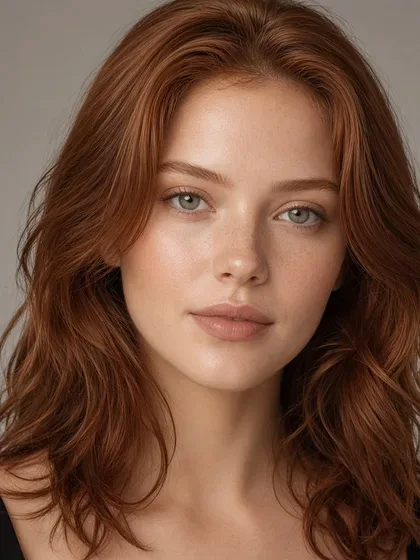
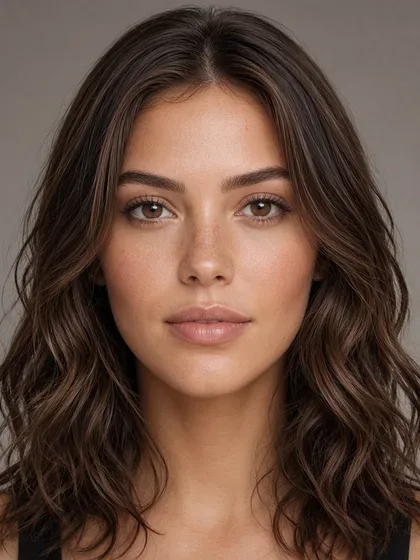
Hair color ideas range from glossy espresso and chestnut ribbons to honey blonde, copper, platinum, gray blending, pastel ends, and vivid panels. Build a useful shortlist by deciding how much change you want, then considering your current color, previous dye, willingness to lighten, and realistic upkeep. If you want to compare shades before committing, Facefy’s Hair Color Try-On lets you preview different color directions on a photo; treat the results as a visual guide, since lighting, camera settings, and screen color can affect how each shade appears.
A reference photo shows a direction, not a guaranteed result. Your starting pigment, texture, porosity, hair condition, and color history affect what is achievable and how the finished color looks.
Start with a practical hair color shortlist
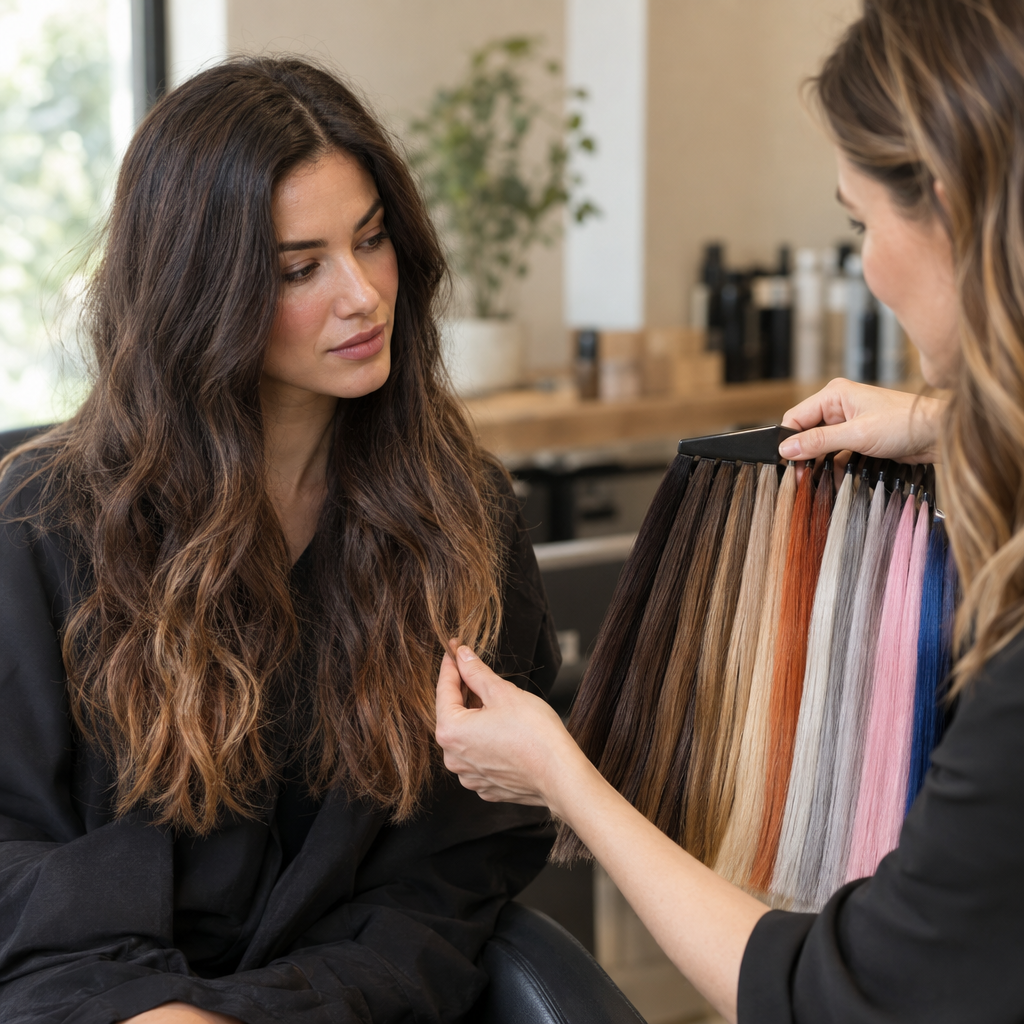
Choose a change level before choosing an exact shade:
| Change level | Ideas to explore | Main consideration |
|---|---|---|
| Subtle dimension | Espresso, chestnut, gray blending | Keep contrast gentle |
| Moderate change | Bronde, honey, beige, auburn | Balance brightness with depth |
| High-contrast transformation | Platinum, bold copper, vivid red | Allow for substantial commitment |
| Creative placement | Pastel ends, hidden vivid panels | Decide where color shows |
These groups describe the intended effect, not a fixed process. Copper can be a soft shift on naturally light hair or a demanding transformation on dark-dyed lengths.
Record these six details first
- Current depth: Is your hair very dark, medium brown, dark blonde, or light blonde? Note differences between roots and ends.
- Artificial-color history: Record permanent dye, lightener, direct dyes, henna, and other color still present in the lengths.
- Gray-coverage goal: Do you want full coverage, softer blending, or to leave your gray visible?
- Desired contrast: Choose barely noticeable tonal movement, visible ribbons, or clearly separated light and dark sections.
- Lightening tolerance: Are you comfortable with no lift, selected lighter sections, or extensive lightening over several appointments?
- Realistic maintenance: Write down your appointment budget, preferred interval, and tolerance for fading or visible roots.
Colorists commonly use a 1-to-10 depth scale, where 1 generally represents very dark hair and 10 very light blonde. Names and numbering vary between brands. Use the scale to communicate relative lightness, not to select a formula yourself.
A color family describes an overall direction. “Beige blonde,” for example, does not identify one transferable mixture. A colorist adjusts the formula for your base, existing pigment, condition, and intended finish.
A quick feasibility comparison can prevent an unrealistic shortlist. For someone with dark brunette hair, older permanent color through the ends, limited lightening tolerance, and a preference for soft grow-out, chestnut ribbons may fit the brief. Platinum conflicts with several of those limits because it requires much more lift, creates stronger root contrast, and involves more maintenance tasks.
Subtle dimension: six lower-contrast ideas
These options keep the difference between your base and added color relatively small.
Here, commitment describes how difficult the change may be to reverse or replace. Upkeep describes the number and type of tasks involved in preserving the look, not the likelihood of damage.
- Low upkeep: The color can fade or grow out softly without losing its main effect. Occasional tonal refreshes may be enough.
- Moderate upkeep: The result may involve both tonal refreshes and periodic placement or root work, but small changes in tone or regrowth remain acceptable.
- High upkeep: Visible roots, warmth, fading, or loss of saturation can noticeably change the intended result. More than one maintenance task may be needed.
- Very high upkeep: Precise root lightness, very pale tone, or vivid saturation is central to the look. Regrowth and tonal changes are difficult to ignore.
These are relative labels. Someone comfortable with gradual fading may experience a vivid color as less demanding than someone who wants the original saturation maintained. Approximate planning windows appear later in this guide, but no interval applies universally to every shade.
1. Espresso gloss
A deep, reflective brunette finish suits someone who likes their dark base but wants a richer tone.
- Lightening: Usually none on a compatible dark base.
- Commitment: Low for a sheer tonal adjustment; higher when substantially darkening lighter hair.
- Upkeep: Low to moderate, depending on fading and root contrast.
2. Chocolate brown gloss
Soft brown warmth adds richness without the more obvious red reflect of auburn. It is useful when a compatible brunette base looks flatter or cooler than desired.
- Lightening: Usually none on a compatible base.
- Commitment: Low for a subtle deposit-only change.
- Upkeep: Low to moderate.
3. Chestnut ribbons
Fine, warm-brown sections break up a deeper base without turning the overall result blonde. Ask for the ribbons to remain close to your background depth.
- Lightening: Limited to moderate, depending on the base.
- Commitment: Moderate.
- Upkeep: Moderate, with softer grow-out when sections start below the roots.
4. Mushroom brown lowlights
Muted brown pieces add cooler-looking depth to lighter brunette or blonde hair. Lowlights darken selected strands; they do not make a very dark base lighter.
- Lightening: Usually little or none for the lowlights themselves.
- Commitment: Moderate, particularly on porous blonde lengths.
- Upkeep: Low to moderate.
5. Caramel babylights
Very fine golden-brown highlights create dispersed warmth rather than broad stripes. Keeping them only slightly lighter than the base preserves a subtle effect.
- Lightening: Some is usually needed.
- Commitment: Moderate.
- Upkeep: Moderate; near-root placement can need more frequent attention.
6. Soft gray blending
Highlights, lowlights, or translucent color soften the boundary between pigmented and gray strands. Some gray remains intentionally visible.
- Lightening: Variable; highlights may require it, while lowlights may not.
- Commitment: Moderate.
- Upkeep: Moderate, often with less obvious regrowth than opaque coverage.
Placement changes how subtle dimension reads. Fine ribbons can look distinct on straight hair, weave through bends on wavy textures, and appear intermittently around curved strands on curly or coily hair. Extremely fine sections may be less visible in dense, tightly textured hair, so section size matters as much as shade.
Moderate change: six dimensional brunette, blonde, and red ideas
These choices create a visible shift while preserving some depth or a blended transition.
7. Bronde balayage
Brown roots and blonde lengths create a middle ground between brunette and blonde. It suits someone who wants brighter ends without an all-over blonde appearance.
- Lightening: Moderate on many bases; more on very dark hair.
- Commitment: Moderate.
- Upkeep: Moderate.
8. Honey highlights
Golden sections add warm brightness through the hair. They work well when you want the warmth to remain visible rather than aiming for a cool finish.
- Lightening: Usually required.
- Commitment: Moderate.
- Upkeep: Moderate, with root attention influenced by placement.
9. Beige blonde balayage
Neutral-looking blonde ribbons create brightness with a soft root transition. “Beige” can lean warmer or cooler, so use photos to clarify your preference.
- Lightening: Moderate to substantial, depending on your base.
- Commitment: Moderate.
- Upkeep: Moderate; tonal refreshes may precede another lightening appointment.
10. Dimensional copper
Lighter and deeper copper pieces produce movement rather than a uniform orange-red field. Retaining some depth can make the overall shift feel less dramatic.
- Lightening: Depends on starting depth and desired vibrancy.
- Commitment: Moderate to high.
- Upkeep: Moderate to high.
11. Auburn all-over color
Red-brown richness gives a clear warm shift without the intensity of vivid red. A deeper auburn can be more understated than a bright copper.
- Lightening: May be unnecessary on compatible bases.
- Commitment: Moderate to high; red pigment can persist.
- Upkeep: Moderate, with separate considerations for roots and fading.
12. Cherry cola brunette
A dark brunette base carries a red-violet reflect that becomes more noticeable in brighter light. It suits someone who wants noticeable color without a predominantly light result.
- Lightening: May be limited unless brighter red-violet is wanted.
- Commitment: Moderate.
- Upkeep: Moderate.
Warmth and depth are separate choices. Honey blonde, copper, and auburn can all look warm, but they differ in lightness and pigment direction. A request such as “medium-depth auburn, more brown than orange” is more useful than asking for “a warm color.”
High-contrast transformation: six higher-commitment ideas
Some of these options require extensive lightening. Others create a dramatic change through saturation or a strong difference from your natural roots.
13. Platinum blonde
Very pale blonde creates an unmistakably light overall appearance. It is a substantial commitment when your natural base is much darker.
- Lightening: Substantial on most starting bases.
- Commitment: High.
- Upkeep: Very high, especially with an all-over root-to-end finish.
14. Icy ash blonde
A pale base with a cool finish produces a silvery-looking blonde. Toner cannot reliably create this effect over hair that has not reached sufficient lightness.
- Lightening: Substantial on most bases.
- Commitment: High.
- Upkeep: Very high; cool tone and regrowth both need attention.
15. Black-to-blonde ombré
Dark roots transition into clearly lighter lengths, creating a pronounced gradient. Keeping the roots dark reduces root-color maintenance, but it does not reduce the processing demands on the ends.
- Lightening: Significant through the lengths.
- Commitment: High.
- Upkeep: Moderate to high.
16. Bold full-head copper
Saturated copper creates brightness across the whole head rather than in selected ribbons. Expect more obvious regrowth if your natural color is substantially different.
- Lightening: Variable, depending on the base and color history.
- Commitment: High.
- Upkeep: High.
17. Vivid burgundy or black cherry
Strong red-violet saturation creates a bolder effect than a translucent cherry cola reflect. Deep versions can remain dark while still looking intensely colored.
- Lightening: Depends on desired brightness.
- Commitment: High; residual pigment may complicate later changes.
- Upkeep: High.
18. Full-head vivid red
Intense red makes color, rather than subtle dimension, the main feature. A bright reference image may require a lighter base than expected.
- Lightening: Pre-lightening may be needed for brightness.
- Commitment: High.
- Upkeep: High.
Previously applied dark pigment can make these transformations uneven or slow. Moving from dark-dyed hair to pale blonde may require multiple appointments, and the reference result may not be achievable without compromising condition. A realistic endpoint depends on how the hair responds, not simply how long the appointment lasts.
Creative placement: six ways to use pastels and vivid color
Targeted placement limits where the change happens, but a small colored section is not automatically low commitment.
19. Bright money piece
Concentrated light sections around the front create contrast where it is immediately visible. Width determines whether the result reads as a soft accent or a bold frame.
- Lightening: Targeted lightening is usually needed.
- Commitment: Moderate.
- Upkeep: Moderate to high because front regrowth is conspicuous.
20. Jewel-tone peekaboo panels
Emerald, sapphire, or violet sections sit beneath the surface, appearing as the hair moves or is tied up. Deep shades and pale jewel tones need different starting bases.
- Lightening: May be needed for clear, vivid color.
- Commitment: Moderate.
- Upkeep: Moderate, with fading dependent on the shade.
21. Pastel ends
Pale pink, lavender, or peach near the tips creates a soft-colored finish. A small placement can still require substantial preparation.
- Lightening: A very light base is usually required.
- Commitment: High, though the colored area can eventually be trimmed.
- Upkeep: High because pale tones can fade quickly.
22. Split dye
Two clearly divided color fields create a strong, graphic effect. The division can follow the center part or another deliberate boundary.
- Lightening: Depends on the two chosen shades.
- Commitment: High.
- Upkeep: High, especially when the sides fade differently.
23. Graphic color blocking
Broad sections create visible boundaries between colors. The result depends on panel shape and placement as much as the shades themselves.
- Lightening: Often required for bright or pale blocks.
- Commitment: High.
- Upkeep: High.
24. Prismatic or rainbow panels
Several vivid shades form a multicolor accent in selected sections. Distinct colors require careful placement and may fade at different rates.
- Lightening: Substantial preparation may be required.
- Commitment: High.
- Upkeep: Very high.
Before choosing a placement, consider how you actually wear your hair:
- Usual part: A panel placed beneath it may disappear when you switch sides.
- Tied-up styles and braids: Hidden sections can become the most visible color.
- Natural curls and shrinkage: Ask where the colored section will sit when dry, not only when stretched.
- Surface versus underneath: Decide whether the color should show all day or mainly with movement.
Once you have two or three directions, comparing their broad visual effect can help narrow the conversation:
- Facefy’s Hair Color Try-On can help you compare shortlisted color directions on your photo. Treat the preview as inspiration, not a prediction of how dye will behave.
Lighting, exposure, filters, and image quality can shift the apparent tone. A photo-based preview cannot establish how old pigment will lift, how porous lengths will absorb color, or how many appointments you will need.
How hair coloring techniques change the result
A shade tells the colorist which color family you like. A technique helps explain where you want that color to appear and what the transition may look like as your hair grows.
| Technique | Placement and visual effect | Typical lightening need | Grow-out character | Relative upkeep |
|---|---|---|---|---|
| All-over color | Broad root-to-end coverage with a uniform result | None to substantial, depending on the change | Regrowth can form a distinct line when the natural and colored shades differ | Moderate to very high |
| Gloss | Whole head or selected areas for tonal adjustment and shine | Usually little or none | Typically fades gradually, though roots can show if the gloss substantially darkens or changes the natural tone | Low to moderate |
| Traditional highlights | Selected strands beginning near the roots and continuing through the lengths | Usually required | A near-root gap becomes visible as the hair grows; contrast depends on highlight thickness and base color | Moderate to high |
| Balayage | Selectively painted sections with varied starting points | Usually required | Offset placement generally creates a softer transition without one uniform root line | Moderate |
| Ombré | Darker upper section transitioning into lighter ends | Often significant through the lengths | Natural or intentionally dark roots are retained, so growth usually extends the darker area rather than creating a sharp line | Moderate to high |
| Money pieces | Concentrated front sections around the face | Targeted lightening is common | Front regrowth is exposed and can become visible sooner than color placed farther back | Moderate to high |
| Peekaboo panels | Colored sections concealed beneath the surface | Depends on the desired shade | Regrowth may remain hidden when hair is down but become exposed in tied-up or moving styles | Moderate, potentially high for pastels |
| Color blocking | Broad, deliberately separated areas | Variable; often required for bright or pale blocks | Regrowth interrupts the graphic boundary and may be exposed or concealed depending on panel placement | High |
The same technique can produce very different maintenance needs. Fine highlights close to a similar natural base may grow out more quietly than broad pale sections on dark hair. A balayage can retain a soft root transition while still needing tonal attention through the lengths.
Semi-permanent, demi-permanent, and permanent color
Semi-permanent color commonly means direct, deposit-only pigment without developer. It does not lighten natural hair and may fade gradually or leave staining.
Demi-permanent color generally uses a low-strength developer for tonal adjustment, darkening, or gray blending, with little or no lift.
Permanent color uses an oxidative process and can change natural pigment or provide gray coverage. It is not a reliable way to lift previously dyed dark lengths.
Terminology and behavior vary by product and region. “Gloss” describes a service or effect, not one universal chemistry, and “semi-permanent” does not guarantee an easy return to your original shade.
Plan for fading, roots, and refresh appointments
Use these as approximate planning windows, not fixed schedules:
- Gloss or toner: Often around 4 to 8 weeks.
- Root-focused permanent color: Often around 4 to 8 weeks.
- Dimensional balayage: Often around 8 to 16 weeks.
- Many pastel or vivid shades: Often around 2 to 6 weeks.
These windows describe common planning patterns, not requirements. Your maintenance schedule depends on how much change you are willing to accept between appointments.
A balayage appointment may be relatively infrequent while the blonde tone needs attention sooner. Platinum and very pale blonde can require both regrowth appointments and separate toner or gloss planning. Agree on that schedule with your colorist rather than assuming all blonde maintenance is interchangeable.
Washing frequency, water temperature, shade, porosity, new growth, styling products, heat exposure, and personal preference can substantially change these intervals. Someone comfortable with softened pastel ends may wait longer than someone who wants the original saturation maintained.
Lighting also changes perception. Warm indoor bulbs can make beige blonde look more golden, while cooler lighting may emphasize ash tones. Flash changes shine and contrast, and edited photographs may exaggerate saturation. Compare reference images in similar lighting whenever possible.
Starting hair conditions that change what is feasible
Previously dark-dyed hair
Artificial pigment may lift unevenly, revealing warmer bands or darker ends. Applying a lighter box shade over it will not reliably create a lighter result.
Tell the colorist about all color still present in the lengths, even if it was applied years ago. Major correction may need several appointments.
Very dark natural hair
Blonde, pastel, and bright vivid results commonly require more lightening than deeper brunette or red-violet changes. Warm underlying pigment usually becomes visible during the process.
If minimal lightening is your priority, compare deeper tonal shifts before committing to pale blonde references.
Gray blending rather than full coverage
Blending reduces contrast while allowing gray to remain visible. Highlights, lowlights, glosses, or demi-permanent color may be used, depending on gray distribution and the desired finish.
Full coverage aims for a more uniform result. It can create a stronger regrowth line when the chosen shade differs considerably from the incoming gray.
Neither approach is automatically lower maintenance. A soft blend may tolerate gradual growth, while a precise cool tone can still need regular refreshing. Full coverage may require closer root attention but less variation through the lengths.
Porous or compromised hair
Porous areas may grab pigment strongly, fade quickly, or develop an uneven tone. Hair that has already undergone substantial processing may have limited tolerance for further lightening.
The appropriate next step may be a smaller tonal adjustment, a staged plan, or postponing additional processing.
Curly or coily hair
Shrinkage changes where a colored section appears when dry. Section size and placement should account for the natural pattern rather than being judged only on stretched hair.
- Compare your usual shape and curly or coily styling options before deciding where a panel or ribbon should sit. This can help you discuss when the color will be visible, but it does not predict how the hair will lift or accept dye.
Lightening can also affect texture and condition. Previous chemical services and the current strength of the hair matter when deciding how far to lift.
Naturally light hair
Some pastels and bright shades may need less lightening, but naturally blonde hair is not automatically pale enough for every pastel. Direct pigments can also stain, particularly on porous lengths.
Discuss the route back to your preferred blonde before choosing a strong blue, green, or red.
Straight or wavy textures
Straight hair can reveal fine placement lines and abrupt transitions clearly. Natural waves may break up those lines, making the same placement look more blended.
Ask to see the intended result in your usual finish. A heavily styled reference can disguise boundaries that are more visible when the hair lies flat.
Basic safety before coloring
A strand test and an allergy-alert test serve different purposes.
A strand test applies the planned product to a small, less visible section of hair. It can help show how the existing color responds, how quickly the shade develops, and whether the strand appears able to tolerate the process. It cannot guarantee that every section of hair will behave the same way.
An allergy-alert test follows the product manufacturer’s instructions to check for a possible skin reaction. Timing and application directions vary, so use the instructions supplied with that specific product. The U.S. Food and Drug Administration’s hair-dye guidance also advises following package directions and performing the recommended skin test before use.
Neither test guarantees a reaction-free or completely predictable result. Do not apply color to irritated or injured skin. Discuss scalp concerns with an appropriate professional, and seek medical advice about a known or suspected allergy before further use.
Build a consultation-ready color brief
Bring information about your natural texture, usual part, and everyday styling. Show how you normally arrange your hair so the placement works beyond a salon finish.
Then complete these five fields:
- Three reference images: Choose photos with comparable lighting, placement, and overall contrast where possible. Include at least one showing texture similar to yours.
- Features I like in each image: Identify something specific, such as deep roots, narrow golden ribbons, a brown-dominant red, or a hidden violet panel.
- My acceptable lightness range: Describe a range rather than one exact shade. For example: “Keep my roots dark; I am comfortable with caramel through dark-blonde ends, but not pale blonde.”
- My maintenance ceiling: State appointment frequency, budget, home-care willingness, and tolerance for roots or fading. For example: “I can return every 10 to 12 weeks and accept a softer tone between visits.”
- My complete color history: Include permanent color, dark dye, lightener, henna or plant-based color, direct dyes, smoothing or other chemical services, and approximate dates. Note which parts of the hair were treated.
A completed brief might read:
- Starting point: Medium brunette roots with lighter, previously highlighted ends.
- Preferred direction: Warm bronde with narrow honey ribbons and retained depth near the roots.
- What matters most: A soft transition, visible brightness around the front, and no pale platinum sections.
- Lightening limit: Comfortable with selected lightening if the existing ends can tolerate it.
- Maintenance limit: Willing to refresh the tone between larger placement appointments and comfortable with gradual grow-out.
- Color history: Permanent brunette color more than a year ago, followed by partial highlights six months ago.
Reference photos communicate direction, not an identical formula or guaranteed result. A useful request leaves room for the colorist to preserve what matters most to you, such as warmth, contrast, or hidden placement, while adapting the process to the hair you have.