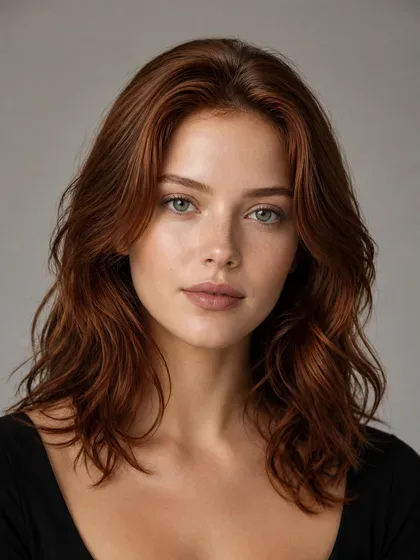
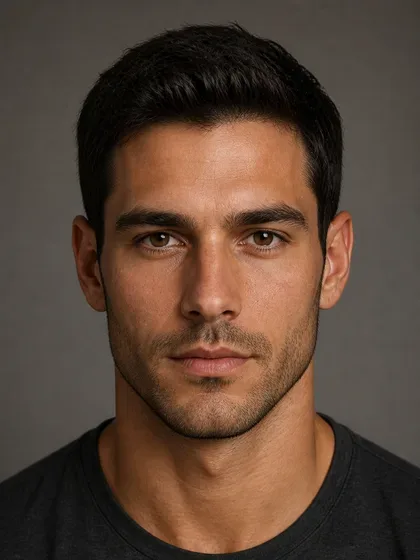
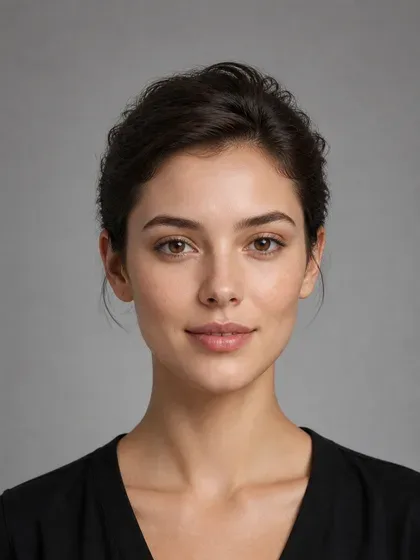
Square Face Shape: Key Signs and a Simple Self-Check
Learn the signs of a square face shape, check four facial dimensions at home, and understand soft square, mixed, and uncertain results.
A square face shape usually has a face length and width that look relatively similar, little taper from the forehead through the jaw, and a broad jaw with visible corners. The whole outline matters: a broad jaw alone does not make a face square.
The corners do not need to be sharp, and the chin does not need to be flat. Rounded transitions can fit a soft square pattern when the rest of the outline is consistent. These are approximate styling descriptions, not exact anatomical categories.
The three main signs of a square face shape
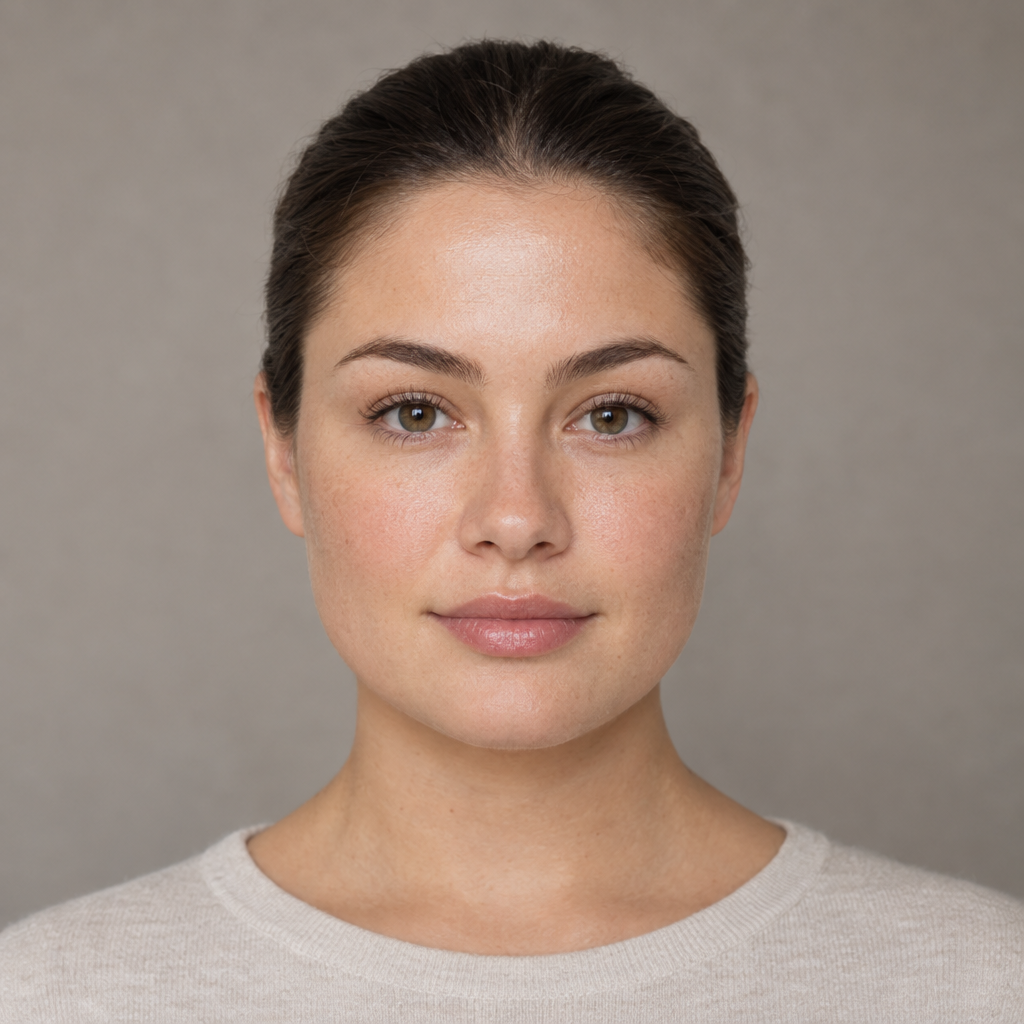
Look for these three traits together rather than deciding from your jawline alone:
- Relatively balanced length and width. The face does not look noticeably elongated compared with its overall width. You are looking for a general impression, not equal measurements or a particular ratio.
- Comparable width through the upper, middle, and lower face. The forehead, cheekbones, and jaw appear broadly similar in width. The sides show limited narrowing toward the jaw rather than a pronounced taper.
- A broad jaw with visible corners. There is a recognizable change in direction where each side of the face turns inward toward the chin. Those corners may look defined or gently rounded.
The chin often appears relatively broad or softly rounded rather than narrow and pointed. Its shape is a supporting clue, not a deciding feature.
For example, a person with visible jaw corners but a noticeably longer face does not necessarily have a square outline. Neither does someone whose cheekbones are much wider than both their forehead and jaw. The relationship between the features is what matters.
How to check your facial outline at home
Start by separating your facial boundary from your hairstyle. Pull hair away from the forehead and sides, face straight ahead, and relax your mouth and jaw. Avoid clenching, which can change the lower-face contour.
If facial hair conceals the jaw, use the visible boundary cautiously. There is no need to shave for this check, but the beard’s outer edge should not be treated as the jaw itself.
Use a mirror for an initial look. If you prefer to compare lines, use a front-facing photograph and draw four simple guides in a photo markup tool.
Make four observations
- Face length: Compare the distance from the center of the hairline at the upper forehead to the lowest point of the chin. Do not start at the top of your hair. If the hairline is difficult to locate, treat the length estimate as less certain.
- Forehead width: Look across the broadest visible part of the forehead, between its left and right skin boundaries. Ignore any width added by the hairstyle.
- Cheekbone width: Compare the widest visible points around the cheekbone area, usually below the outer corners of the eyes. Keep your expression relaxed.
- Jaw width: Look across the lower face from one jaw corner to the other. This is not the width of the chin tip.
On a photo, compare straight lines across the image rather than tracing the curves of the face. Keep all four observations on the same photo so their scale stays consistent.
Follow this decision path
- Does the face look relatively balanced in length and width? If it looks clearly elongated, keep the result open even if the jaw is angular.
- Are the forehead, cheekbones, and jaw broadly comparable in width? If one area is distinctly wider, the overall outline may be mixed or closer to another pattern.
- Is the lower outline broad, with visible jaw corners? If yes, and the first two observations also fit, a square description is reasonable.
Small differences are normal. Exact measurements and universal ratio cutoffs are unnecessary for this kind of styling assessment.
How confident should you be in the result?
Use the three signs as a practical guide, not a formal scoring system.
| Matching signs | Reasonable interpretation |
|---|---|
| All three broadly fit | Square is a useful estimate |
| Two broadly fit | Possible square influence or mixed outline |
| Only one fits | Not enough to call it square |
A soft square face shape generally keeps the relatively balanced length and width and broad lower outline, but has rounded jaw corners or a gentler transition into the chin. “Soft” describes the contour, not a separate measurement category.
Two matching signs do not automatically mean soft square. Ask which sign is less clear. Rounded corners within an otherwise square outline may support that description; a much narrower forehead or noticeably greater length may instead suggest a mixed pattern.
A rounded chin can also sit within a square or soft square outline. Look at how the jaw approaches the chin, not just the curve at its lowest point.
If the observations conflict, “mixed” or “uncertain” is a useful result. It is more informative than forcing a label that explains only one feature.
Check the result in a mirror and a photo
Use two ordinary views to see whether the broad pattern stays consistent.
In the mirror: Keep your head level, your expression relaxed, and your hair away from the sides. Notice the apparent length, widest area, amount of taper, and jaw contour.
In a photo: Use a straight-on image with the camera around eye level and your head centered. Avoid holding the camera very close to your face. Moving it farther away and using a timer can make a relaxed, centered view easier.
Compare the same four observations in both views. Do they suggest a similar outline? You do not need identical details, but the overall pattern should make sense in both.
If the face looks substantially different between views, leave the result uncertain. Camera distance, angle, lighting, expression, and image quality can change apparent dimensions and edge visibility. A photograph is a two-dimensional view, not a complete measurement of facial structure.
What can make a face look more or less square?
Several ordinary factors can change the outline you see without changing the underlying facial structure:
- Smiling: Raised or fuller-looking cheeks can change the apparent widest point and soften or shift the lower-face contour.
- Head rotation: Turning slightly can make the nearer side appear more prominent while compressing the farther side, making width comparisons less useful.
- Chin tilt: Lifting the chin can expose more of the jaw and foreshorten parts of the face. Lowering it can obscure the jaw corners. The effect depends on the viewing angle.
- Close camera distance: Nearby features can appear disproportionately prominent relative to the outer edges. A wide-angle lens used close up can make this perspective effect especially noticeable.
- Hair around the temples or jaw: Strands can conceal the true side boundary, creating apparent taper or hiding the jaw corners.
- Facial hair: A beard can add apparent lower-face width or cover the transition from jaw to chin.
- Contour makeup: Shading can make areas seem narrower, broader, or more angular even though the physical boundary is unchanged.
- Lighting and crop: Uneven light can hide one side or exaggerate a corner. A tight crop can cut off the hairline or chin, removing the reference points needed to judge length.
The useful distinction is between a visible facial edge and an edge created by hair, shadow, or framing. When you cannot separate them confidently, keep the observation approximate.
Face-shape labels are useful, but flexible
Natural faces rarely resemble perfect geometric shapes. Different naming systems may describe the same blended outline in slightly different ways.
For styling conversations, observable details are often more helpful than the label alone. “My forehead and jaw are similar in width, and my jaw corners are rounded” tells a hairstylist more than insisting on a precise category.
Square, soft square, mixed, and uncertain can all be reasonable descriptions depending on how consistently the traits appear. None describes attractiveness or determines which styles you are allowed to wear.
Once you have a useful outline description, there is no need to keep repeating the check until one category fits perfectly.
Common questions about square face shapes
Can a square face have a rounded chin?
Yes. A rounded chin can fit a square or soft square pattern if the overall face has relatively balanced length and width, comparable widths through the forehead and jaw, and a broad lower outline. The chin alone does not decide the category.
Does a broad jaw automatically mean a square face?
No. Face length, forehead width, cheekbone width, and side taper also matter. A broad jaw is one clue within the whole outline.
Should I trust the mirror or a photo?
Neither is automatically superior. A mirror lets you observe your face directly, while a photo makes approximate line comparisons easier. Agreement between a relaxed mirror view and a well-positioned front-facing photo is more useful than relying on either in isolation.
Why is my face shape difficult to identify?
Your dimensions may be close enough to fit several descriptions, or rounded transitions may make the jaw corners difficult to distinguish. Hair, expression, lighting, and perspective can also obscure the boundary. Difficulty choosing a label does not mean you measured incorrectly.
What if more than one face shape seems plausible?
Use a blended description or leave the category open. “Broad lower face with softly rounded corners” may be all you need to communicate the features you want a hairstyle, glasses frame, or makeup look to complement.
If you want a second reference after the manual check, Facefy’s Face Shape Detector can provide an optional photo-based estimate. Treat it as another visual reference, not an objective verdict or a reason to disregard a mixed result.