Oblong Face Shape: Key Signs and a Simple Self-Check
Identify an oblong face shape with key signs, a four-step photo and mirror check, close comparisons, and practical styling guidance.
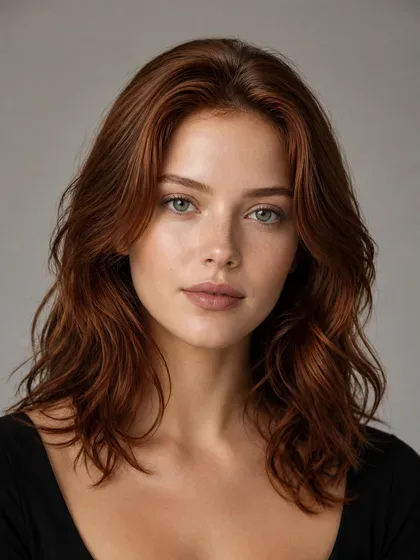
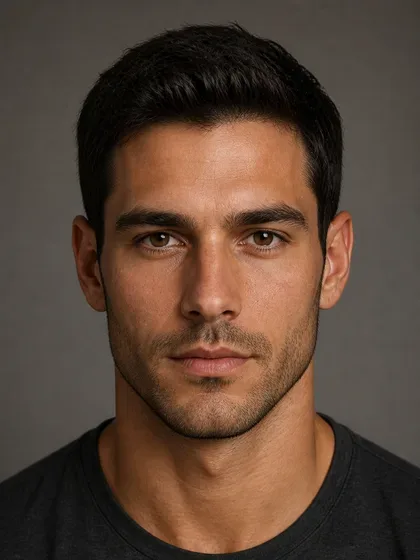
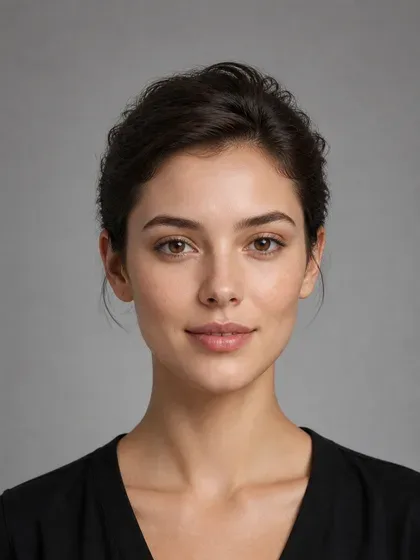
An oblong face shape generally looks noticeably longer than it is wide, with fairly similar widths across the forehead, cheekbones, and jawline. The sides often appear relatively straight, while the chin may be softly rounded or slightly narrow.
No single measurement confirms the category. The most useful approach is to compare the whole outline in a straight-on photo and a mirror, then consider how strongly the face tapers and how angular the jaw appears. Styling choices can change the visible silhouette, but they are options rather than rules about what you should wear.
Key signs to look for
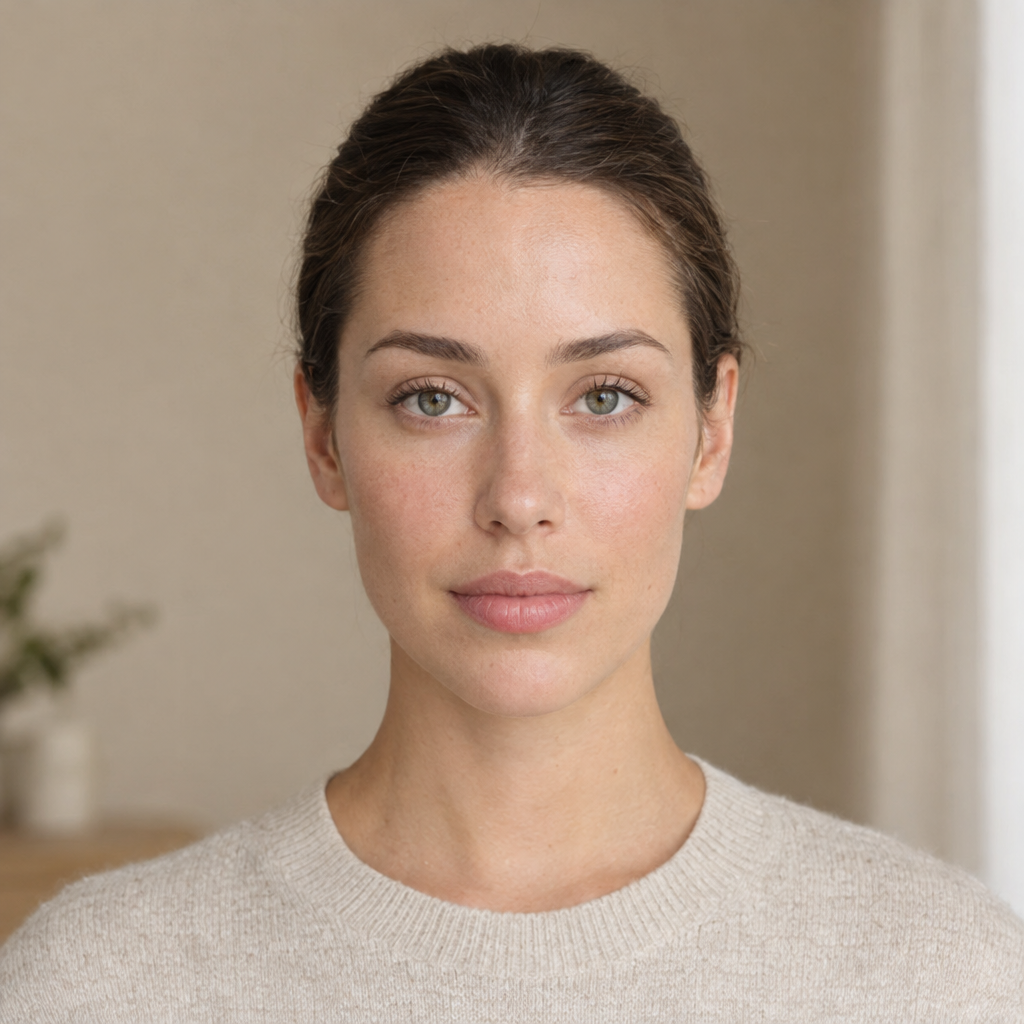
Look for a combination of these characteristics rather than relying on one isolated feature:
- Noticeable length: The distance from the hairline to the chin looks clearly greater than the width across the cheeks.
- Relatively consistent widths: The forehead, cheekbones, and jaw are not identical, but no single area strongly dominates.
- Fairly straight sides: The outline runs downward with less taper than a distinctly pointed lower face.
- A softer chin: The lower edge may be rounded or slightly narrow rather than broad and sharply squared.
Forehead height can contribute to the impression of length, but it is a supporting clue. Hair coverage and the position of the visible hairline can change that impression without changing the rest of the outline.
Treat the label as an approximate visual description. It does not determine attractiveness, and it is not a medical or biological classification. A description such as “longer outline with similar widths and a soft jaw” may be more useful than a category that only partly fits.
A four-step mirror and photo self-check
You need a mirror, a straight-on photo, and a simple way to compare distances on that photo. A ruler on a printed image or a basic on-screen measuring tool is enough. Exact real-world measurements are unnecessary because you are comparing proportions within the same image. You can also explore your facial proportions to better understand how different facial measurements relate to one another.
1. Prepare a clear view
Move hair away from the temples and lower face, keep your head level, and relax your expression. Position the camera at eye level and several feet away if space allows. Crop the image afterward instead of taking a close selfie.
Use even light so both sides of the outline remain visible. Avoid beauty filters, portrait reshaping, or perspective adjustments. A neutral expression is useful because smiling can widen the cheeks and change the visible jaw contour.
2. Record four dimensions
Take all four measurements from the same image and use the same unit for each one.
Record: face length ___ | cheekbone width ___ | forehead width ___ | jaw width ___
Measure each dimension as follows:
- Face length: Measure vertically from the visible center of the hairline to the lowest point of the chin.
- Cheekbone width: Measure straight across between the widest visible points of the upper cheeks, excluding the ears.
- Forehead width: Measure across the widest visible forehead area near the temples, following the facial outline rather than the outer edge of the hair.
- Jaw width: Measure straight across between the broadest visible points of the lower jaw, usually near its corners.
Use straight lines rather than following the curve of the skin. Measuring from the chin to one jaw corner and doubling the number produces a different distance, so it should not replace straight-across jaw width.
Do not guess where a hidden or receded hairline begins. If the central hairline is unclear, record face length as uncertain and rely more on the visible outline and other dimensions. Likewise, do not measure the outer edge of a beard as the jaw. If facial hair conceals the jaw corners, lower your confidence instead of estimating their position.
3. Compare the pattern, not a fixed ratio
There is no universal length-to-width ratio that proves a category. Look for the broader pattern:
- Face length appears clearly greater than cheekbone width.
- Forehead, cheekbone, and jaw widths are reasonably similar.
- The sides do not taper dramatically toward the chin.
- The lower face looks softer than a strongly squared outline.
A small difference between the three width measurements is normal. Camera angle, hair coverage, facial hair, and difficulty locating landmarks can all affect the result. Give more weight to measurements taken between clearly visible points.
4. Check the result in a mirror
Compare the straight-on photo with a relaxed mirror observation. Ask:
- Does the outline still look noticeably elongated?
- Is the widest area similar in both views?
- Does the lower face look softly rounded, tapered, or angular?
- Can you see the temples, hairline, and jaw corners clearly enough to judge them?
If several observations agree in both views, the description is reasonably useful. If the photo and mirror disagree, use a mixed description and avoid forcing a category. For example, you might describe your face as elongated with gentle tapering or as long with pronounced lower-face corners.
How it compares with similar outlines
Length alone does not separate the closest categories. The widest area, degree of taper, and shape of the lower face provide the most useful distinctions.
| Outline | Overall length | Widest area | Lower-face contour | Forehead-to-jaw relationship |
|---|---|---|---|---|
| Main pattern | Noticeably longer than wide | No strongly dominant area | Relatively straight sides with a softer chin | Fairly similar widths |
| Oval | Moderately longer than wide | Often the cheekbones | Gently curved and tapering | Both areas narrow gradually from the cheeks |
| Rectangular | Noticeably longer than wide | Forehead and jaw may look similarly broad | More pronounced lower-face corners | Relatively straight with a broad lower outline |
| Heart-shaped | Variable | Usually the forehead or upper face | Tapers toward a narrower chin | Upper face is noticeably wider |
Terminology varies between styling guides. Some use “long” as an umbrella term for any elongated outline. Others separate softer elongated faces from those with a broad, angular jaw. The visible distinctions matter more than the exact label.
How to interpret a mixed result
If your features overlap, use these distinctions:
- Long outline, similar widths, and a softer chin: The main pattern is likely the closest description.
- Long outline and strongly angular jaw corners: Give more weight to guidance that accounts for a broad or squared lower face.
- Long outline with balanced, gradual tapering: The gently curved comparison may fit better than length alone suggests.
- Clearly wider forehead with a narrowing lower face: The upper-heavy comparison may explain the proportions more accurately.
Confidence can be thought of in three simple levels:
- Higher confidence: Length, width pattern, side contour, and jaw shape all point in the same direction in both the photo and mirror.
- Moderate confidence: The face looks elongated, but taper or jaw shape falls between two descriptions.
- Lower confidence: Hair, facial hair, cropping, camera angle, or unclear landmarks prevent a consistent comparison.
A mixed result is normal. Face categories overlap, and many people have features associated with more than one outline.
How styling changes the visible silhouette
Hair does not change facial structure, but its placement can change the frame around the face. Three design choices have the strongest visual effect.
1. Volume beside the cheeks
Fullness around the cheeks adds horizontal emphasis near the middle of the face. This can make the complete silhouette appear wider relative to its height.
Placement matters more than total volume. Hair that expands around the cheekbones creates a different effect from volume concentrated above the crown or below the shoulders.
2. A horizontal line near the forehead
A fringe, visible brow line, or strong upper edge on glasses interrupts the continuous vertical line from forehead to chin.
A full fringe creates a more defined boundary. A side-swept, wispy, or separated fringe provides a softer interruption. None is required if you prefer an open forehead.
3. Controlled crown height
Moderate crown lift avoids adding substantial height to an already elongated silhouette. This does not mean the roots need to be flat. A little lift can create movement, particularly when balanced by fullness at the sides.
You can also choose a tall or sculpted shape because you enjoy the effect. These principles describe visual outcomes rather than restrictions.
Hair options organized by visual effect
Choose the effect first, then consider length, density, texture, natural growth pattern, and the amount of daily styling you want to do.
| Desired effect | Useful feature | Main trade-off |
|---|---|---|
| More width through the middle | Cheek-level fullness | May require regular reshaping |
| A horizontal forehead line | Fringe | Usually needs more frequent trims |
| Less vertical emphasis | Moderate crown lift | Depends on natural root direction |
| Keep length while adding movement | Outward-bending front sections | May require heat or setting products |
Short and medium cuts
A rounded crop can retain fullness at the sides rather than concentrating height on top. Ask where the widest part of the finished cut will sit and whether that point will remain near the cheeks as the hair grows.
A bob can create a clear horizontal edge, but its effect depends on where that edge falls. A version ending near the chin emphasizes the lower face, while one finishing lower can create a longer vertical line. A softly graduated shape can add movement without removing too much fullness from the perimeter.
Medium cuts can use cheek-level bends or side volume to broaden the middle of the silhouette. If the ends are heavily thinned, however, the shape may become narrower and more vertical than expected.
A useful salon request is: “I want the widest part of the finished shape to sit beside my cheeks rather than above my crown.”
Fringe options
Full, center-separated, side-swept, curly, and wispy fringes can all introduce a horizontal element. Practicality depends on how the hair naturally falls.
Consider these factors before choosing one:
- High or receded hairline: Ask how much hair needs to be brought forward and whether it will stay in place naturally.
- Low hairline: Discuss how the fringe can avoid looking shorter or heavier than intended.
- Fine or lower-density hair: A lighter fringe may preserve fullness elsewhere, although it creates a softer horizontal line.
- Strong directional growth: Expect more styling if the front must sit against its natural direction.
- Active routine or humid climate: Consider how often the fringe may separate, bend, or need resetting.
Before committing, decide whether you are comfortable dampening and reshaping the front on mornings when it does not sit as planned.
Long hair without a major change
Long hair remains a valid choice. If you want more width through the middle, consider an off-center part, a soft bend near the cheekbones, or front sections that move outward instead of falling directly downward.
Tucking one side behind the ear creates asymmetry and exposes more of the face, but it does not automatically add width. Evaluate the complete outline rather than treating one technique as a shortcut.
If you prefer a sleek and vertical result, there is no need to change it. The goal is to understand the effect so you can choose it deliberately.
Adjust the plan for texture and density
Plan curls according to their dry shape and shrinkage rather than stretched or wet length. Ask where the front and side sections will finish after drying naturally. Removing too much length can shift fullness upward instead of placing it beside the cheeks.
For curly and coily textures, compare cuts suited to your natural texture and discuss the dry outline with your stylist. A reference photo cannot show exactly how your own hair will shrink, separate, or respond to humidity.
Fine hair often benefits from restrained layering that preserves the outer edge. Dense hair may benefit from selective internal weight removal, but excessive thinning can cause unwanted expansion, uneven ends, or flyaways.
Protective styles provide other ways to control where fullness appears. Part placement, braid size, gathered height, and where the lengths begin to spread all affect the silhouette. Comfort should come first, so avoid excessive extension weight or tight tension solely to create width.
Make the salon request specific
Instead of asking only for something “flattering,” describe the result you want:
- Where the widest part of the finished outline should sit.
- Whether you want the forehead open or partly covered.
- Where the front sections should finish when dry.
- How much crown lift you prefer.
- Whether you air-dry, blow-dry, diffuse, or regularly use hot tools.
- How often you are willing to trim a fringe or reshape the perimeter.
For example: “Keep the overall length, preserve fullness at the ends, and create movement beside my cheeks. I usually air-dry, so I do not want a fringe that needs daily straightening.”
Facial hair options for an elongated outline
Facial hair changes the visible frame of the lower face. If you want more horizontal emphasis, retaining some fullness at the sides while limiting length directly beneath the chin can help.
Different approaches produce different effects:
- Short boxed beard: Creates definition without adding much downward extension.
- Fuller side growth: Adds width around the lower cheeks and jaw.
- Moustache emphasis: Introduces a horizontal focal point above the mouth.
- Clean-shaven finish: Leaves the natural lower contour more visible.
Growth pattern, density, comfort, cultural preference, and upkeep matter more than a predetermined shape. A pointed or longer beard is also an option if you prefer to emphasize vertical length.
When evaluating proportions, separate the natural lower-face outline from the beard’s outer edge. A beard can make the jaw appear wider, narrower, longer, or more angular than the underlying contour.
Glasses, earrings, and necklines
Accessories can repeat the same width and horizontal-line effects used in hair choices.
Glasses
Frames with noticeable lens depth occupy more vertical space, while a distinctive brow line interrupts the apparent length of the face. Decorative outer corners or temples can draw attention outward.
Start with frames approximately as wide as the broadest part of your face, then prioritize fit. They should not pinch the temples, slide down the nose, or rest uncomfortably on the cheeks. Very narrow frames may reinforce vertical length, but oversized frames are not automatically more balanced.
Prescription requirements and professional lens recommendations should guide the final choice.
Earrings
Hoops, curved shapes, clusters, and shorter drops can place width beside the face. Long, narrow earrings tend to repeat a vertical line.
Neither effect is inherently preferable. Consider where the earrings end relative to the lower face and how visible they remain when worn with your hair.
Necklines
Crew, boat, square, and wider open necklines introduce horizontal lines below the face. A deep V-shaped opening can extend the vertical line through the neck and chest.
Use this as a way to coordinate an outfit, not as a reason to avoid a favorite neckline.
Why the outline can look different in photos
Close phone photos can exaggerate central features and change the apparent relationship between the center and edges of the face. The effect comes largely from shooting distance and perspective, not simply from the camera itself.
Other variables also matter:
- Camera height: A high or low viewpoint changes the apparent forehead, chin, and lower-face proportions.
- Head rotation: Turning slightly hides part of one side and makes widths harder to compare.
- Chin position: Lifting or lowering the chin changes how much of the lower outline is visible.
- Hair coverage: Concealed temples or jaw corners can suggest more taper than is actually present.
- Facial hair: A beard can hide the natural jaw corners or create a new outer contour.
- Lighting and expression: Shadows and smiling can change the apparent cheek shape.
- Tight cropping: Missing hairline or chin context makes length comparisons less useful.
A farther-away, eye-level photo usually produces a more representative perspective than a close selfie. One clear image is enough for a practical assessment. Repeated measuring is unlikely to produce a perfectly fixed answer because the categories themselves are approximate.
Common questions
Do bangs suit a longer face?
Yes. Many fringe types introduce a horizontal line, but density, texture, hairline, natural growth direction, and upkeep determine which version is practical. A fringe is an option, not a requirement.
Can I keep long hair?
Yes. Length alone does not determine the effect. Volume placement, parting, texture, and the direction of the front sections influence the complete silhouette. Long hair can emphasize vertical length or create more width, depending on how it is shaped and styled.
Can someone fit two categories?
Yes. These descriptions overlap. An elongated outline may also have gentle tapering, prominent cheekbones, or angular lower corners. Naming the individual traits is often more useful than selecting one strict category.
Can changes in facial fullness affect the result?
Changes in facial fullness can alter the visible cheeks and lower contour. They do not provide a reliable basis for assigning a permanent category, and changing your weight is not necessary to suit a particular style.
Can the outline change with age?
The visible outline can evolve as the hairline, facial fullness, skin, and surrounding hair change over time. That does not mean you need to reassess it frequently. Reconsidering the description is only useful when it helps with a specific styling decision.
Are all elongated outlines the same?
No. A long outline with broad, pronounced lower corners differs from one with a softly rounded chin or gradual taper. Those distinctions help explain why two people with similar face lengths may prefer different approaches to volume, fringe placement, glasses, or facial hair.
Get an optional photo-based estimate
If your mirror and photo observations still feel mixed, Facefy’s Face Shape Detector can provide an optional estimate from a photo. Treat the result as another reference rather than a final verdict, since lighting, expression, camera angle, image quality, hair coverage, and facial hair can affect the analysis.