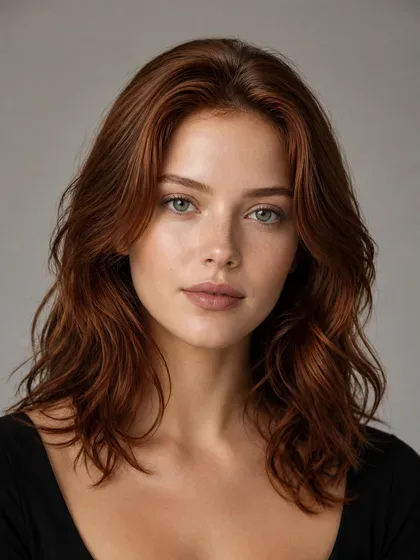
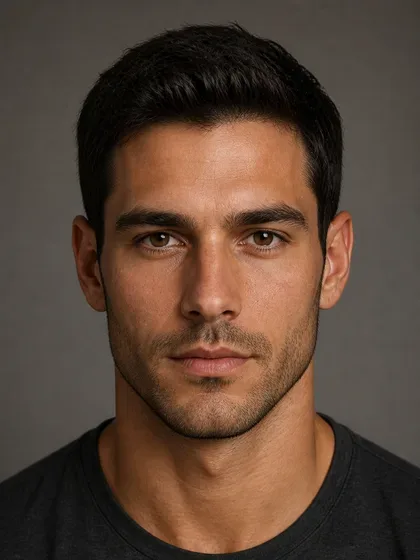
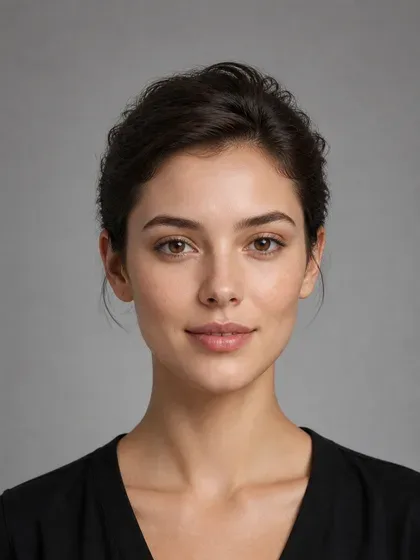
Face Shape Detector: Find and Understand Your Face Shape
Use a face shape detector with a clear photo, compare key facial proportions, interpret mixed results, and explore flexible styling ideas.
A photo-based shape detector estimates your likely facial outline by comparing visible length, forehead and cheekbone width, and jaw or chin contour. Common categories include oval, round, square, heart, diamond, oblong, rectangle, and triangle. Many people combine features associated with more than one category.
For a more consistent estimate, use a clear, front-facing photo with even lighting, a relaxed expression, and hair away from your facial boundaries. Treat the result as a visual description that can inform styling choices, not a definitive anatomical classification or a judgment of attractiveness.
What a detector can tell you
A detector can suggest which familiar outline most closely resembles the proportions visible in your image. The useful part is not just the label, but the pattern behind it: a longer outline, wider cheekbones, a broad jaw, or a narrower chin.
These categories are approximate. An oval result and an oblong result may describe similar contours, with the main difference being how elongated the face appears. Classification systems may also group or name shapes differently.
This type of appearance analysis does not establish health, ethnicity, personality, gender, or identity. It is distinct from medical assessment and facial recognition. Its practical purpose is simpler: to give you a starting vocabulary for describing your features and exploring styling options.
How to take a suitable analysis photo
A clear outline matters more than a polished portrait. Use this setup:
- Face the camera directly. Keep your head upright, gaze level, and shoulders relaxed. Avoid turning toward your preferred portrait angle.
- Relax your expression. Let your mouth rest naturally without a broad smile, pursed lips, or a clenched jaw.
- Use soft, even light. Face a window with indirect daylight rather than placing the window beside you. Strong side shadows can obscure one contour.
- Keep the camera near eye level. Avoid tilting it sharply up or down.
- Move beyond close-selfie distance. If practical, position the camera roughly 1 to 2 metres away and use a timer. This is a useful setup, not a required measurement. Keep enough detail to see the outline clearly.
- Reveal the facial boundaries. Move hair away from the forehead, temples, cheeks, and jaw. Remove glasses if they obscure those areas.
- Include the full face. Leave room above the hairline and below the chin. Avoid beauty filters, reshaping effects, and perspective-altering edits.
Adjust for hairlines, beards, and softer contours
Some features make the outline harder to read. You do not need to change them permanently to get a useful estimate.
- Bangs or a concealed hairline: Temporarily clip or sweep the hair aside. If the boundary remains hidden, give forehead width and facial length less weight.
- A receding hairline: Use the visible natural boundary rather than inventing a former hairline. A higher boundary increases hairline-to-chin length, so do not let that measurement alone decide the category.
- Voluminous hair: Follow the facial outline, not the outer silhouette of curls, waves, or lifted roots.
- A beard: Do not assume the beard’s edge is the jaw’s edge. Use visible cheek and chin boundaries where possible. An earlier clean-shaven photo may help if it still represents your current proportions.
- A soft or less-defined jawline: Trace the general direction from below the ears toward the chin. Look for rounding, tapering, or a relatively straight path rather than expecting a sharp corner.
Once your photo is ready, Facefy’s Face Shape Detector can provide an initial estimate to compare with the cues below. Before uploading a personal image, read the service’s current privacy and data-handling information. Use your own photo or one you have permission to upload.
The four cues that explain your result
You can use this method with a mirror or a straight-on photo kept on your own device. Exact measurements are optional. The goal is to compare several features together rather than chase a numerical cutoff.
1. Facial length: compact or elongated?
Compare the vertical distance from the visible hairline area to the bottom of the chin with the widest part of the face.
Ask: Does the face look roughly as long as it is wide, moderately longer, or distinctly elongated?
This helps distinguish compact patterns, such as round and square, from longer patterns, such as oblong and rectangle. Hairline position can influence the comparison, so length is only one clue.
2. Forehead width: how broad is the upper face?
Look across the visible forehead near the temples, excluding hair volume. Compare that span with the cheekbones and jaw.
Ask: Is the upper face broader, narrower, or approximately equal in width?
A broad upper face that narrows toward the chin may suggest a heart pattern. A forehead narrower than both the cheekbones and lower face points in a different direction.
3. Cheekbone width: where is the widest area?
Find the widest visible part of the cheeks, usually around the cheekbone region below the outer eyes. Do not use smile lines or the shadow beneath the cheeks as measurement boundaries.
Ask: Are the cheekbones clearly widest, or are the forehead and jaw almost as broad?
Prominent cheekbone width paired with a narrower forehead and jaw supports a diamond description. Gently wider cheeks can also appear in oval and round faces, making the other cues important.
4. Jaw and chin contour: rounded, straight, or tapered?
Follow the lower outline toward the chin.
Ask:
- Does the jaw curve smoothly or change direction at a visible angle?
- Does the lower face remain broad or narrow noticeably?
- Is the chin rounded, broad, or relatively pointed?
This cue helps separate round from square, and softer oblong contours from more angular rectangular ones. A pointed chin alone does not establish a heart or diamond category.
No single width-to-length ratio reliably settles the whole classification. A useful description combines length, relative widths, and lower-face contour.
Related resources: proportions and side-to-side variation
To understand facial proportions, distinguish an individual measurement from an overall outline. Two people can have a similar length-to-width relationship but different forehead widths and jaw contours.
Small side-to-side differences in the cheeks or jaw are common. If you want to compare the two sides of your face, first confirm that the head is level and the lighting is even. Persistent differences can simply be included in your description rather than corrected through image rotation, stretching, or forced alignment.
Facial outline comparison chart
Use these patterns as references, not templates every person must match.
| Category | Length pattern | Width and lower contour |
|---|---|---|
| Oval | Moderately longer than wide | Cheeks slightly broader; softly tapered jaw |
| Round | Similar length and width | Broad cheeks; curved sides and rounded jaw |
| Square | Similar length and width | Broad forehead and jaw; angular contours |
| Heart | Variable length | Broader upper face; narrowing jaw and chin |
| Diamond | Often longer than wide | Cheekbones widest; narrower forehead and jaw |
| Oblong | Noticeably longer than wide | Relatively even widths; softer lower contours |
| Rectangle | Noticeably longer than wide | Relatively even widths; broad, angular jaw |
| Triangle | Variable length | Jaw broader than forehead; substantial lower contour |
The terms oblong and rectangle sometimes overlap in styling guides. Here, oblong describes a longer outline with softer contours, while rectangle describes a longer outline with straighter sides and a more angular jaw.
Assess the overall silhouette rather than expecting your contours to match a perfectly regular diagram.
How to interpret mixed or borderline results
If two categories seem plausible, look for the feature that actually separates them.
| Commonly confused pair | First tie-breaker | Supporting cue |
|---|---|---|
| Oval vs. oblong | Moderate vs. pronounced elongation | Both can have soft jaws |
| Round vs. square | Curved vs. straighter lower outline | Rounded transition vs. distinct jaw angles |
| Heart vs. diamond | Forehead widest vs. cheekbones widest | Both can narrow toward the chin |
| Square vs. rectangle | Similar length and width vs. elongated outline | Both can have broad, angular jaws |
Someone with a long outline and a softly tapered jaw may reasonably describe their features as oval-oblong. If the forehead and cheekbones are almost equally broad and the chin narrows, heart-diamond may be more useful than insisting on one label.
A familiar category may not fit at all. In that case, use a plain description:
“A longer face with wide cheekbones and a softly tapered jaw.”
That description preserves useful styling information without requiring a perfect category match.
Check the estimate with three consistent photos
A small repeatability check can help you see whether a result reflects a recurring pattern or a photo-dependent difference. Three images are enough for this exercise.
- Photo one: Take a neutral, front-facing image using the setup above.
- Photo two: Take a fresh image with the same distance, lighting, expression, and framing.
- Photo three: Confirm that the camera is level and hair is not changing the visible outline, then take another image under the same conditions.
Compare the same four cues in every photo. Note whether the outline stays compact or elongated, which region looks widest, and whether the jaw remains rounded, straight, or tapered.
How to read the three results
These are practical interpretation examples, not validated confidence thresholds:
- All three results agree: A sequence such as oval, oval, oval, supported by moderate elongation and a softly tapered jaw in each image, makes oval a reasonable working estimate.
- One neighbouring label appears: With oval, oval, oblong, review the visible cues rather than counting labels alone. If all three images look moderately elongated and the oblong result came from a slightly higher crop or more concealed hairline, oval remains a useful working estimate. If the third photo is well controlled and shows distinctly greater elongation while the same soft contours remain, oval-oblong may be the more accurate description.
- The labels alternate while the cues remain similar: Neighbouring results can reflect a genuine boundary case. Use a blended description and note the stable traits, such as soft jaw contours or relatively even widths.
- The labels are incompatible: A sequence such as round, diamond, rectangle points to low consistency because those categories rely on substantially different width, length, and jaw patterns. Recheck camera position, crop, hair, expression, and lighting rather than choosing the most appealing label.
- Neither the labels nor the visible cues remain consistent: Treat the outcome as uncertain. You may get more value from a descriptive phrase than from another round of testing.
You can compare these photos locally before deciding whether to upload any of them. Repeated uploads are unnecessary once the main source of variation is clear.
Why two photos can produce different results
A detector interprets the face as it appears in an image. Changes in perspective, visibility, or expression can affect the category even when your underlying features have not changed.
Photo conditions that shift visible cues
- A very close camera: Central features can appear disproportionately prominent, while the outer face looks relatively narrower.
- A low camera position: The jaw and lower face may become more prominent relative to the forehead.
- A high camera position: The upper face may appear more prominent while the jaw and chin look smaller.
- A sideways head tilt: Horizontal width comparisons become less dependable because the face is no longer level.
- Turning away from the camera: The farther cheek becomes foreshortened, disrupting direct width comparisons.
- Smiling: Cheeks lift and may widen, while the mouth and lower-face contour change.
- A tight or uneven crop: Missing boundaries can make visual comparison unreliable. Stretching an image to fit a crop can directly alter its proportions.
- Hair over the forehead: The exposed upper face may appear narrower or shorter than it is.
- Facial hair: Beard volume can broaden, square, or lengthen the visible lower outline.
- Strong shadows: A shadow may create an apparent edge or conceal the actual boundary.
- Glasses and makeup: Frames and contour placement can redirect attention toward particular widths or lines without establishing the underlying category.
Structural cues versus visual framing
| Structural cues | Visual framing and photo effects |
|---|---|
| Bone proportions | Hairstyle and facial hair |
| Soft-tissue proportions | Makeup and glasses |
| Forehead, cheek, and jaw relationships | Lighting and shadows |
| Underlying chin and jaw contour | Expression and camera perspective |
The second group can change appearance without necessarily changing underlying proportions. For instance, a squared beard outline does not establish that the jaw beneath it is square.
Weight changes and normal changes in soft tissue can also affect visible contours. The degree varies between people, and a change in cheek fullness does not guarantee a completely different category.
Use your result as a styling starting point
The most useful question is not “Which styles am I allowed to wear?” It is “What do I want this style to emphasize?”
Step 1: Choose one visual goal
Pick an area or effect you want to explore:
- Draw attention toward the cheekbones.
- Highlight a broad or angular jaw.
- Emphasize facial length.
- Echo the natural curve of the cheeks.
- Add visual width near a narrower forehead.
- Create a softer frame around a defined lower outline.
Emphasis and balance are both valid choices. Neither is a correction.
Step 2: Compare an echoing approach with a contrasting one
Choose two genuinely different options rather than several nearly identical versions.
| Styling area | Echo existing lines | Introduce contrast |
|---|---|---|
| Hair | Rounded layers around curved cheeks | Added height and stronger lines |
| Glasses | Angular frames with defined contours | Rounded frames beside angular contours |
| Makeup | Blush following the cheek curve | Placement drawing attention upward |
| Facial hair | Follow the natural jaw outline | Adjust edge shape and side volume |
For example, if your cheeks have a rounded outline, soft layers can repeat that curve. A style with more height and less width at cheek level can create a longer-looking silhouette instead.
Neither approach is inherently more flattering. Hair texture, density, glasses fit, personal taste, and daily maintenance may matter more than the category.
Step 3: Preview the effect before committing
Try reversible changes first. Shift your part, pin the front sections away, compare glasses in person, or experiment with makeup placement.
For a haircut, compare reference photos featuring similar hair texture and starting length. Ask a stylist where the proposed cut will place volume and how it will behave without salon styling. A preview can help you judge the silhouette, but it cannot guarantee how your hair will fall or how much upkeep it will need.
Facial hair deserves a separate check. A fuller or more angular beard can emphasize the lower outline, but it can also obscure the features used in photo-based analysis.
These are optional styling experiments, not rules about attractiveness, femininity, masculinity, or personal worth.
Detector FAQs
How accurate is a photo-based detector?
It can offer a useful estimate of the proportions visible in a suitable image. Certainty is limited by overlapping categories, obscured contours, and photographic conditions. Agreement between the label and the visible cues is more informative than the label alone.
Can someone fit more than one category?
Yes. A blended description is reasonable when the length, relative widths, and jaw contour do not align with one familiar pattern. “Oval with a broader jaw” may be more useful than a forced single label.
Why does the result change between photos?
Perspective, head position, expression, framing, lighting, hair, and facial hair can alter the visible outline. Neighbouring results under consistent conditions may indicate a borderline category.
Can makeup change the apparent outline?
Makeup can change visual emphasis. Contour, highlight, and blush placement may make an area appear more defined or prominent, but they do not change the underlying bone proportions.
Can weight changes affect the result?
They can. Changes in soft-tissue distribution may alter cheek fullness and jaw visibility. The amount and pattern vary, so weight change does not predict a specific category.
Can I assess my outline without uploading a photo?
Yes. Use a mirror or a straight-on photo stored on your own device. Compare facial length, forehead width, cheekbone width, and jaw or chin contour. Precise measurements are not necessary for a useful descriptive assessment.
What is the difference between oval and oblong?
Both often have soft contours. Oval usually describes an outline that is moderately longer than wide, while oblong describes more pronounced elongation. A higher or receding hairline can influence that impression, so consider the relative widths and jaw contour too.
What is the difference between round and square?
Both may have similar overall length and width. Round outlines generally have more continuous curves, while square outlines tend to have straighter sides and a broader, more angular jaw.
If you fall between familiar categories, keep the description that captures your actual features. The label should support useful choices, not make your appearance fit a diagram.