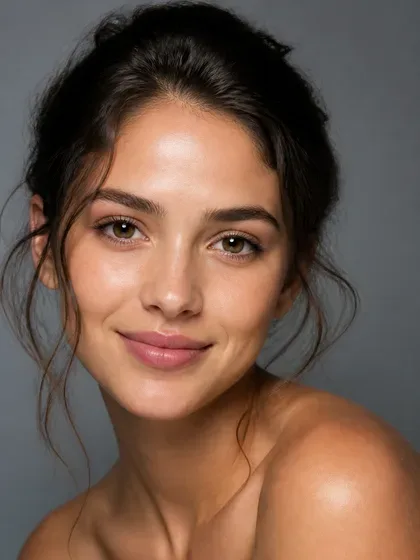
Am I Pretty? A More Honest Way to Understand Attractiveness
Wondering if you are pretty? Learn why attraction is subjective, how photos alter appearance, and how to assess yourself without harsh scores.
There is no universal test that can objectively answer “Am I pretty?” Prettiness is an impression shaped by personal preference, culture, expression, styling, familiarity, and connection. A photo can capture visible features, but it cannot establish how everyone will see you.
That does not make your question silly or unimportant. You may want reassurance, feel confused by an unfamiliar photo, or wonder how others perceive you. A more useful starting point is to separate your appearance from the conditions in which you see it, and both from the judgments you attach to it.
What “pretty” can and cannot describe
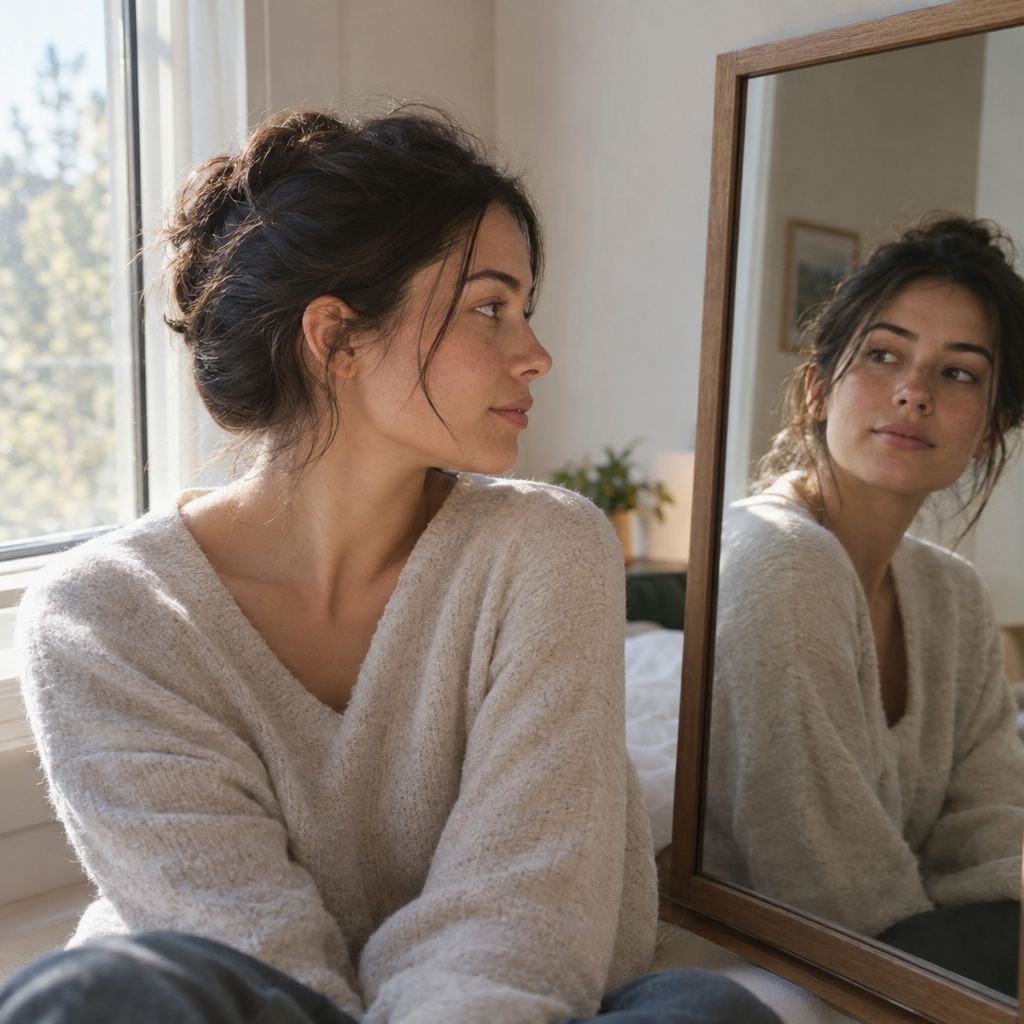
“Pretty” describes someone’s response to an appearance, not a fixed facial measurement. Four different things often get bundled into that one word:
| Part of the impression | Concrete examples | What it describes |
|---|---|---|
| Visible facial traits | Facial proportions; symmetry | Observable relationships between features |
| Photo conditions | Lighting; camera distance | How an image represents you |
| Styling and presentation | Hairstyle; clothing color choices | How you frame and emphasize features |
| Person-to-person attraction | Personal taste; interpersonal warmth | An individual’s response to you |
Facial proportions describe size relationships, such as the width of the mouth relative to the face. These relationships can be described or estimated from an image. Deciding that a particular relationship is beautiful adds a subjective interpretation.
The same distinction applies to symmetry. Geometry can describe how closely features align, but it does not establish a universal beauty standard. Neither symmetry nor proportions can determine whether someone will find you attractive.
Culture, familiarity, expression, grooming, confidence, and personal style can all contribute to an overall impression. Different people may notice or appreciate different things about the same person.
Why the same face looks different in mirrors and photos
A mirror gives you a familiar, laterally reversed view that changes as you move. A photograph freezes one angle, expression, and instant. Neither is a complete record of how you appear in everyday life.
| View | What it can show | Main limitation | What you cannot conclude |
|---|---|---|---|
| Mirror | Moving expressions; familiar reflection | Reversed view; lighting still matters | “This familiar version is the only real me.” |
| Close selfie | Detail from one nearby viewpoint | Perspective emphasizes nearer features | “This is exactly how people see my features.” |
| Distant portrait | Features from a farther viewpoint | Still one angle and moment | “This photograph objectively settles my attractiveness.” |
| Candid photo | An unposed expression or movement | May freeze a transitional expression | “One awkward instant represents my usual expression.” |
| AI analysis | An image-based estimated assessment | Depends on image and model | “This result tells me what everyone thinks.” |
Five camera variables that change the image
1. Camera distance changes perspective. When a camera is very close, nearer features can look larger relative to more distant ones. For example, a close selfie may emphasize the nose compared with the ears. Stepping back changes that relationship without changing your face.
2. Focal length or zoom changes framing. A wide-angle phone lens includes more of the scene and makes close selfies convenient. A longer focal length allows a similar head-and-shoulders composition from farther away. The farther camera position, rather than zoom alone, changes perspective and can make facial depth look less pronounced. Digital zoom from the same position mainly crops the image.
3. Camera height changes which surfaces are visible. A high camera can show more forehead and less of the underside of the chin. A low camera can emphasize the chin and nostrils. Neither angle reveals a more truthful version of you.
4. Light direction changes shadows. Side lighting can deepen the shadow beside the nose or beneath a cheekbone. Soft frontal light tends to make those shadows less prominent. Overhead light can create stronger shadows around the eyes.
5. Expression changes facial relationships. A smile lifts the cheeks, changes the mouth, and may narrow the visible eye opening. A candid frame taken while speaking can catch an expression that lasts only a fraction of a second.
Pose, crop, makeup, hair placement, and image quality matter too. Turning your head changes the visible outline; hair can cover part of it; makeup changes contrast. A tight crop removes context, while blur and image processing can soften detail. These are differences in presentation, not evidence that one version is inherently better.
Try this one-time photo reality check
If one photograph has unsettled you, a single controlled comparison can help show how much the setup matters. Skip this exercise if taking more photos usually makes you feel worse.
- Place the camera roughly at eye level. Keep your head comfortably upright rather than lifting or tucking your chin for a particular effect.
- Use soft light from in front of you. Face a window with indirect daylight, avoiding strong overhead light or direct sun.
- Move the camera away from your face. Around 1 to 2 metres is a practical starting point if space permits. Use a timer or ask someone to take the photo. Modest optical zoom can help with framing; avoid heavy digital zoom that loses detail.
- Keep your face visible. Use a relaxed expression and avoid heavy filters or edits. Move hair only if it obscures what you want to observe.
- Compare conditions, not attractiveness. Notice whether a shadow, angle, or close camera position explains what looked unfamiliar in the original photograph.
Controlled conditions can improve consistency. They do not reveal an objective “true appearance” or show how every person sees you.
Complete the check once. Do not keep taking photos until you find one that feels reassuring enough.
What shapes an in-person impression
People experience more than a still image of your face. They hear your voice, see your expressions change, and respond to conversation, movement, and interpersonal warmth.
Eye contact and confidence can contribute to an impression, but neither is a requirement for attractiveness. People differ in how they communicate, and being quiet or uncomfortable in front of a camera does not make someone less appealing.
Styling can change what draws attention without correcting anything:
- Hairstyle: A fringe, parting, or change in volume alters the frame around the face. How a cut interacts with your face shape can guide styling choices, but there is no universally best pairing. Clothing colors: A brighter neckline may draw attention toward the face; a muted color may create a subtler overall look. Facefy’s Color Analysis tool can help you explore color combinations that complement your natural features and personal style.
- Makeup: Lip color or eyeliner can emphasize particular features, if that is an effect you enjoy.
- Grooming: A routine you like can support comfort and self-expression without becoming an obligation.
Preferences vary across people, communities, and cultures. Respectful compliments, interest, and comfortable engagement may suggest attraction, but no single behavior reliably reveals another person’s thoughts. A lack of compliments is not proof that someone finds you unattractive, either.
Can AI tell whether you are pretty?
AI cannot determine universal attractiveness. An image-based system may analyze visible patterns and return an estimated appearance assessment. If it gives a numerical score, that number represents the system’s interpretation under its own criteria, not an objective beauty measurement or a representative vote from other people.
An AI result may change even when the person has not:
- Different crop: A tighter image removes hair, clothing, and other context. Depending on the system, it may also affect how the face is detected or assessed.
- Different expression: Smiling changes the relationships among the eyes, cheeks, and mouth.
- Different lighting or camera angle: Shadows and perspective alter the visible contours and relative sizes of features.
A score change does not represent a change in your worth or objective attractiveness. There is no universal attractiveness value for the score to uncover.
Before uploading a facial image, read the service’s privacy information. Look for how images are stored, whether you can delete them, whether they may be reused, and whether they are shared with third parties. Avoid repeated uploads intended to chase a higher result.
If you remain curious and can treat the result lightly, Facefy’s Attractiveness Test offers an optional AI-generated visual assessment for informational or entertainment purposes. It is not a verdict on whether you are pretty, and you do not need a score to make useful styling choices.
A three-question self-check that ends after one pass
Instead of assigning yourself a number, write a brief answer to each question:
-
Which features do I personally like, without considering trends or other people’s ratings? This might be your smile, freckles, hair texture, or the way your eyes look when you laugh. You do not need to rank every feature.
-
Which presentation choices help me feel most like myself? Think about hairstyles, colors, grooming, expressions, or clothing. “I feel comfortable with my natural texture and a favorite shirt” is a useful answer.
-
Does my judgment become harsher when my mood is low or after comparing myself with selected or edited images? Notice whether your opinion changes even though your appearance has not meaningfully changed.
Write your answers once, then stop. Do not repeat the exercise in search of a more favorable answer.
If you want to act on something, choose one comfortable, practical step, such as wearing a color you enjoy or simplifying a grooming routine. The aim is self-expression, not correcting your natural features.
When appearance worries keep taking over
Compliments may not change your self-perception when you are already judging yourself harshly. That does not mean the compliments are dishonest. It may mean reassurance is not addressing what is making the question feel so urgent.
If mirrors, rating tools, comparison feeds, or repeated photo checking leave you more distressed, step away from them. You do not have to settle the question of your attractiveness before taking a break.
You can also reduce one recurring comparison trigger. This might mean muting an account, putting away the camera after taking one photo, or leaving a rating forum. When you notice yourself ranking faces, redirect your attention toward something specific you want to do, enjoy, or connect over. You do not need to feel attractive every moment to participate fully in your life.
Two non-appearance next steps can help:
- Talk with someone you trust. Describe what has been happening rather than asking only for a rating. For example: “I keep checking photos and feeling worse afterward. Could we talk about that?”
- Consider support from a qualified mental health professional. This is appropriate when appearance worries repeatedly affect your mood, relationships, school, work, or daily life.
Support can focus on the distress and checking habits themselves. It does not require changing your appearance or accepting a label.
Questions people often ask about attractiveness
Why do I look pretty in the mirror but different in photos?
Your mirror reflection is familiar and reversed, while photographs use different distances, lighting, and angles. A photo also freezes a moment rather than showing your changing expressions. Unfamiliarity is not evidence that the photograph is worse or more truthful.
Does facial symmetry determine attractiveness?
No. It describes one geometric relationship, not a complete impression of a person. Preferences, expression, styling, and connection also matter. Normal differences between facial features do not need correction.
Why do I feel unattractive even when people compliment me?
Mood, comparison, and established self-critical habits can affect how you interpret praise. You may dismiss positive feedback while giving an unflattering photo extra weight. If that pattern is persistent or upsetting, talking about the distress may help more than collecting more reassurance.