Facial Aesthetics: Appearance, Treatments, and Photo Limits
Learn what facial aesthetics includes, how treatment types differ, why photos can mislead, and what to ask before choosing a provider.
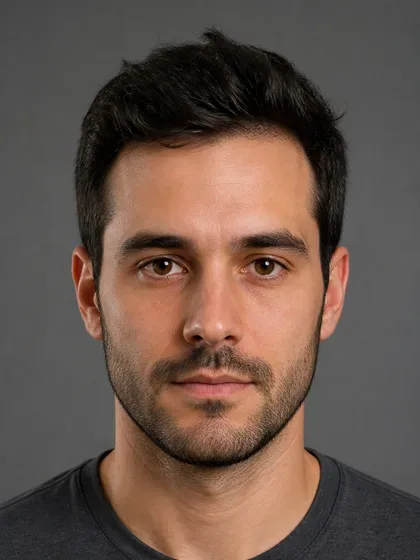
Facial aesthetics describes the visible qualities and relationships that influence how a face is perceived, including proportions, symmetry, contours, skin appearance, and expression. The term can refer both to understanding facial appearance and to cosmetic care or procedures intended to change it.
Attractiveness remains subjective. No ratio, symmetry score, AI result, or treatment defines an ideal face. A useful starting point is to separate what you can observe from what you personally prefer, then understand which options, if any, fit your goals.
What facial aesthetics includes
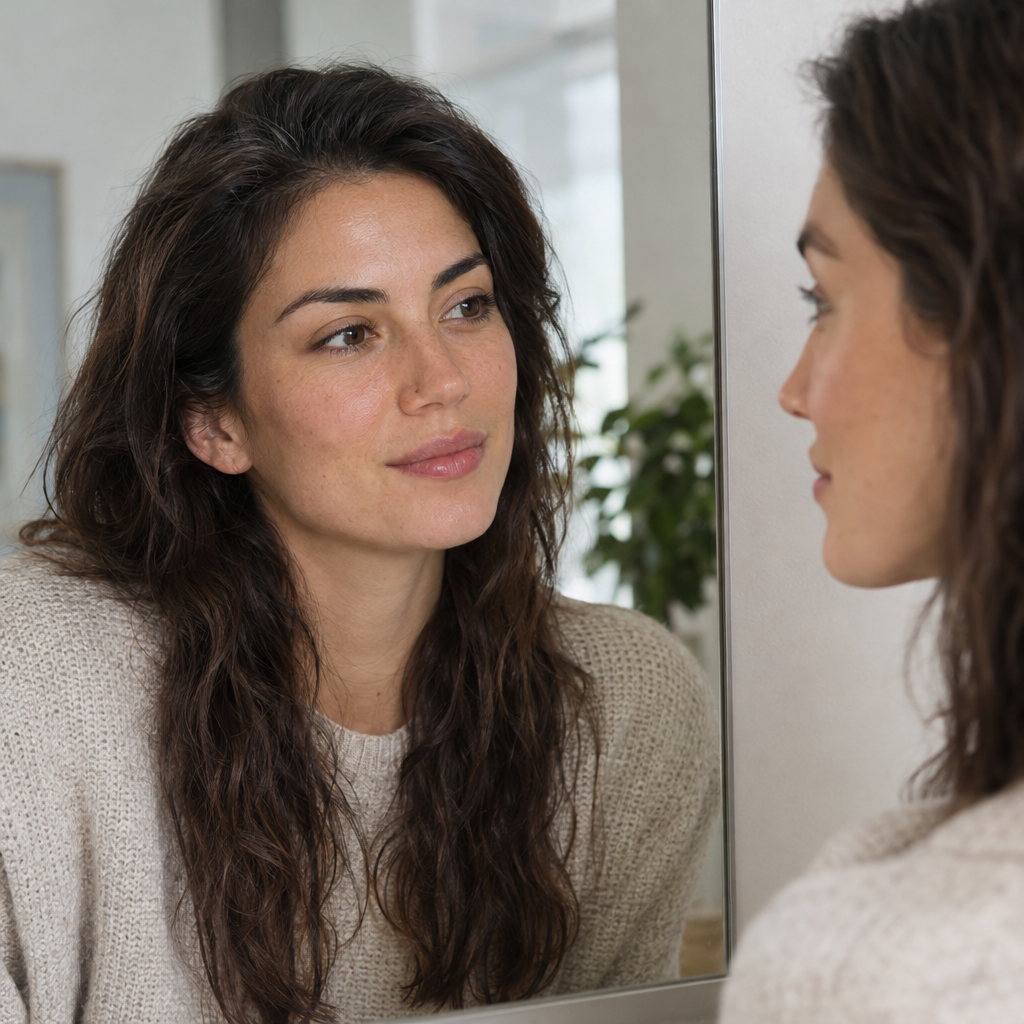
Facial aesthetics has two related meanings:
- Visual analysis: Looking at facial proportions, contours, skin appearance, expression, and the relationships among features.
- Clinical aesthetic care: Using skin care, office-based procedures, or surgery to address a specific cosmetic goal.
“Facial harmony” and “balance” describe how features relate to one another. They do not mean that every face should follow the same template. A prominent chin, rounded cheeks, or unequal eyebrow heights can all be part of someone’s ordinary appearance.
Observable characteristics also differ from aesthetic judgments. You can describe pigmentation, measure a distance, or identify a contour. Whether that characteristic looks appealing is a separate, subjective interpretation. Normal variation does not imply a need for treatment.
Four ways to understand facial appearance
Separating appearance into four categories helps prevent a photographic effect from being mistaken for a structural concern.
1. Structural features
These provide the underlying framework of the face. Examples include:
- Cheekbone contours
- Jaw position and shape
- Chin projection
- Dental alignment and bite relationships
Genetics and development influence this framework, and age-related changes can affect it over time. A photograph cannot establish whether a structural difference has any clinical significance.
2. Soft-tissue and skin characteristics
These influence the volume and surface appearance over that framework. Examples include:
- Facial fat distribution and cheek fullness
- Skin texture and visible pores
- Pigmentation and uneven coloration
- Wrinkles and changes in elasticity
These characteristics can change with age, sun exposure, health, and other factors. A hollow-looking cheek, for example, is not automatically a sign of a particular bone structure.
3. Temporary presentation variables
These change how features appear without necessarily changing the underlying anatomy:
- Lighting direction and shadow
- Head position and camera angle
- Smiling, squinting, or jaw tension
- Makeup and grooming
- Hairstyle and how it frames the face
A jaw contour that looks sharply outlined under side lighting may appear softer in diffuse daylight. Neither image alone tells the whole story.
4. Subjective interpretation
This is the meaning someone gives to what they see. Examples include:
- A personal preference for angular or rounded contours
- Cultural preferences about styling and appearance
- Age-related expectations or preferences
- Context, such as a formal portrait versus a candid smile
These influences help explain why two people can see the same face and respond differently. A measurement may be repeatable, but the preference attached to it need not be shared.
What makes a face appear balanced?
Facial balance involves relationships, not isolated features. A chin’s apparent projection depends partly on the profile around it. Cheek contours look different with a neutral expression than during a smile.
A short glossary of facial balance
- Proportions: Relative sizes and distances between selected points. Measurements depend on which landmarks are chosen and how the image is captured.
- Symmetry: Similarity between the two sides. It describes one aspect of appearance, not overall attractiveness.
- Contours: The outlines and transitions between areas such as the forehead, cheeks, jaw, and chin.
Proportion guidelines are reference tools, not universal ideals. A ratio cannot account for every combination of features, expression, age, or cultural preference. Measuring something precisely does not make its aesthetic interpretation objective.
Likewise, symmetry does not equal attractiveness. Faces commonly have some asymmetry, and people perceive them as moving, expressive wholes rather than as two halves that must match.
Skin appearance and expression also affect the overall impression. A smile changes cheek volume and the visible outline of the eyes and mouth without changing the underlying bone structure. There is no single preferred contour or proportion that every face needs to achieve.
What cosmetic options can and cannot change
The most useful comparison is not simply “surgical versus non-surgical.” Consider the tissue involved, likely maintenance, recovery, professional oversight, and limits on reversing a change.
The categories below are broad. Lasers and chemical peels, in particular, vary considerably in depth and intensity, so their category labels do not reliably tell you how much recovery or risk to expect.
| Comparison point | Non-invasive care | Minimally invasive and other office-based procedures | Cosmetic surgery |
|---|---|---|---|
| What it can affect | Surface hydration, comfort, and some aspects of texture or pigmentation, depending on the product. It does not reshape underlying bone. | Depending on the procedure, selected expression lines, volume, contours, pigmentation, or texture. | Selected structures through repositioning, removal, reshaping, or augmentation of tissue. |
| Whether tissue is penetrated | Routine topical care does not use needles or incisions, although ingredients can act within skin layers. | Injections penetrate the skin with needles or cannulas. Some energy-based procedures act through an intact surface, while resurfacing treatments intentionally affect or remove skin layers. | Surgery involves incisions and tissue manipulation. |
| Typical commitment | Usually a consistent routine rather than a single appointment. Benefits may depend on continued use. | One or more appointments, sometimes followed by maintenance. Requirements vary by treatment and response. | Surgical planning, an operation, follow-up, and a recovery period. Further procedures may sometimes be needed. |
| Recovery considerations | Often compatible with daily activities, but irritation, dryness, or allergic reactions can occur. | Bruising, swelling, peeling, redness, discomfort, or activity restrictions may occur. Some procedures involve substantial healing. | Swelling, bruising, scars, wound care, and activity restrictions vary by operation and individual circumstances. |
| Reversibility limits | Products can be stopped, but reactions or pigmentation changes may not resolve immediately. | Effects are not always readily reversible. The options depend on the treatment and material used. | Structural changes are not reliably reversible. Revision surgery has separate risks and cannot promise restoration of the original appearance. |
| Professional assessment | Basic care may require only general guidance. Persistent symptoms, uncertain skin changes, or prescription treatment call for an appropriate clinician. | A suitably licensed, trained clinician should assess anatomy, skin characteristics, medications, health history, and procedure-specific risks. | An appropriately qualified surgeon should assess suitability, expectations, health risks, and anesthesia requirements. |
Office-based procedures are not one interchangeable group. Needle-based treatments penetrate the skin. Some energy-based devices deliver energy through an intact surface, while resurfacing lasers and chemical peels intentionally affect skin layers. The depth of treatment has important implications for recovery and risk.
Injectable treatments also work in different ways. Muscle-relaxing injections reduce selected muscle activity and are generally used for certain expression-related lines. Dermal fillers place material beneath the skin to alter volume or contours. Their mechanisms, risks, expected duration, and reversal options differ.
The effects of muscle-relaxing injections usually diminish over time rather than being immediately switched off. Some fillers made with hyaluronic acid may be treated with an enzyme, but not every filler is dissolvable, and attempted reversal is neither guaranteed nor risk-free. A practitioner should identify the exact product and explain its specific limitations.
“Minimally invasive” does not mean minor risk. For example, the FDA’s information on dermal fillers explains that accidental injection into a blood vessel can cause serious complications, including tissue damage and vision loss.
Surgery can change selected anatomical features, but it cannot guarantee satisfaction or a particular response from other people. Across all three categories, outcomes depend on the treatment, product or device, practitioner, anatomy, and individual health factors. None is universally suitable, painless, or risk-free.
A five-question filter before considering treatment
Write a short answer to each question. “I’m not sure yet” is a useful answer too.
-
What specifically would I like to understand or change? Replace “I want to look better” with a concrete observation, such as “I notice a line between my brows when I frown.”
-
When is it visible? Is it present at rest, during expression, in person, or mainly in photographs? A movement-related feature is different from one that stays visible at rest.
-
Does it change across conditions? Consider lighting, camera distance, head angle, makeup, grooming, and hairstyle. If the concern appears only in close-up selfies, first consider the image conditions.
-
What kind of commitment do I want? Are you comfortable with a temporary effect, ongoing maintenance, or a lasting structural change? Temporary does not necessarily mean easily reversible.
-
What uncertainty, risk, cost, and downtime would I accept? Make your limits concrete: time away from work, restrictions on exercise, recurring costs, and willingness to accept complications or an imperfect result.
For example, “I only notice this in close selfies, and I do not want recovery time or maintenance” is a reason to pause rather than jump to a procedure. Your goal can remain exploratory. Choosing no treatment is a valid outcome.
How to prepare for a professional consultation
Bring your goal-filter answers, a list of medications and supplements, relevant medical history, allergies, and details of previous procedures. Reference photographs can help explain a preference, but another person’s result is not a promise of what is achievable for you.
Ask these questions:
- What are your credentials? What licensing, specialist training, and experience do you have with this specific procedure? Is there a relevant professional register I can consult?
- What supports your recommendation? What findings or clinical rationale make this option appropriate for my concern?
- What are the alternatives? Would observation, skin care, dental evaluation, another treatment, or no treatment be reasonable?
- What exactly would you use? Which product, device, technique, or implant, and why?
- What result is realistic for me? What can this option change, and what will it not accomplish?
- How long might the effect last? What maintenance could be needed, and which factors make duration variable?
- What are the risks? Which complications are common, which are serious, and what warning signs should I recognize?
- Who provides urgent support? Whom do I contact outside office hours, and how are emergencies handled?
- What will recovery involve? When could I return to work, exercise, makeup, and other activities in my circumstances?
- What is the total expected cost? Does it include follow-up, medications, facility fees, maintenance, and possible complication management?
Be cautious about guaranteed outcomes, pressure to decide immediately, vague credentials, dismissal of risks, or reluctance to discuss alternatives. You should have room to consider the information without committing on the spot.
Why photographs and AI results need context
A photograph records one presentation of a face, not its complete appearance. Several variables can change apparent proportions or visibility without changing the face itself:
- Camera distance: Very close photographs can exaggerate features nearer the camera.
- Lens perspective and framing: Wide-angle lenses often encourage close shooting. Perspective mainly depends on camera position and distance, not focal length alone.
- Head angle: Turning, tilting, or lifting the head changes visible contours and relative distances.
- Expression: Smiling, squinting, and jaw tension change soft-tissue positions.
- Lighting: Directional light emphasizes contours and texture, while diffuse light reduces some shadows.
- Image crop: Cropping can remove context, such as the hairline or jaw outline, and affect automated framing.
- Image quality: Blur, compression, filters, and retouching can obscure or alter details.
Makeup, facial hair, hairstyle, and glasses can also change what is visible.
A small, consistent-image self-check
If you want to understand a photographic difference:
- Use two or three existing, unfiltered images where possible, rather than taking a long sequence.
- Choose similar camera distance, framing, soft lighting, and a relaxed expression.
- Compare like with like, such as front views with front views, rather than a close selfie with a distant profile.
- Ask whether the observation persists or mainly follows a change in presentation.
This can help identify image effects, but it cannot establish a diagnosis or treatment need. If the images remain ambiguous, more scoring may add uncertainty rather than resolve it.
AI-generated assessments also depend on image inputs and the categories a system uses. They are estimated visual analyses, not objective verdicts about attractiveness or clinical evaluations.
When an appearance concern needs medical attention
New symptoms and treatment complications are different from ordinary cosmetic questions.
Seek medical help rather than relying on a photo or AI result
- Call emergency services for sudden facial weakness or drooping, especially with arm weakness, speech difficulty, confusion, or a severe headache. These can be signs of a stroke.
- Breathing difficulty or rapidly increasing swelling of the lips, tongue, or throat is an emergency.
- Sudden visual changes, vision loss, or severe eye pain after a facial procedure require immediate emergency assessment. Alert the treating clinician, but do not delay emergency care.
- New severe or rapidly worsening facial swelling needs urgent medical evaluation.
- Increasing redness, warmth, discharge, or fever after a procedure needs prompt professional attention because these may indicate infection.
- Severe or worsening pain, pale or dusky skin, or unexpected neurological symptoms after treatment require urgent assessment.
A photo-based tool cannot determine the cause or seriousness of these symptoms.
Common questions about facial aesthetics
Is facial symmetry the same as attractiveness?
No. Symmetry describes similarity between two sides of the face. Attractiveness involves personal preference, expression, feature relationships, and cultural context. A symmetry score cannot represent all of those factors.
Can skin care change facial structure?
Skin care can affect surface hydration, texture, and some pigmentation concerns. It does not reshape underlying facial bones or correct dental alignment. Claims that a routine topical product can structurally remodel the jaw or chin should be treated cautiously.
How long do non-surgical treatments last?
There is no single duration. It depends on the treatment, product, dose or settings, anatomical area, technique, and individual response. Ask about the expected range for the specific option, when the result can reasonably be assessed, and likely maintenance.
Are facial proportions objective?
Distances can be measured if the endpoints and method are clearly defined. Their aesthetic meaning is not universally objective. Different landmarks, photographs, and measurement methods can also produce different results.
What is the difference between facial aesthetics and cosmetic surgery?
Facial aesthetics is the broader subject of facial appearance and cosmetic care. Cosmetic surgery is one possible category within it. Learning about facial aesthetics does not imply that you need any procedure.
How should I choose a practitioner?
Look for appropriate licensing, relevant training, experience with the proposed treatment, realistic explanations, and clear follow-up arrangements. Credential systems differ by country, so check the relevant medical or professional register. A useful consultation should leave you understanding the options, their limits, and why declining treatment remains a reasonable choice.
Choosing your next step
Use your answers to the five-question filter during any consultation. Ask the practitioner to connect each recommendation to your specific goal, explain what it cannot change, and describe the risks, recovery, maintenance, alternatives, and option of doing nothing. If the explanation is unclear or you feel pressured, pause and seek another qualified opinion.
Related visual-analysis glossary
- Facial proportions: Relative distances and sizes measured between selected facial landmarks. Results can vary with the landmarks, method, pose, and photograph used.
- Left-to-right comparison: A way to explore visible similarities and differences between facial sides without treating symmetry as a measure of attractiveness.
- AI Face Report: An optional way to explore an estimated visual analysis. Treat the output as informational, not as a medical conclusion, beauty verdict, or reason to pursue treatment.